Knowledge Base
Property advice that actually helps
Researched, UK-specific guides for every stage of homeownership — from buying and surveys to retrofit, planning and major works.
 Energy & Retrofit
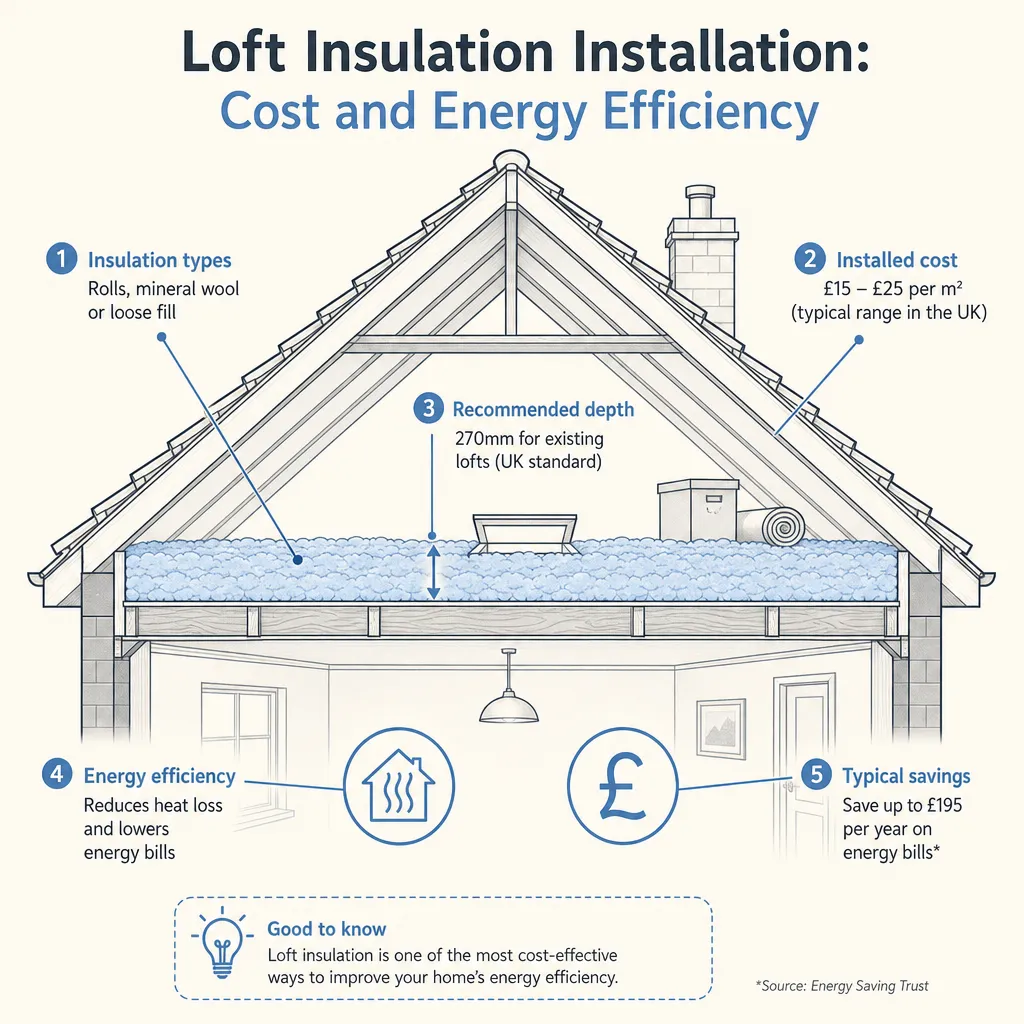
Loft Insulation Installation: Cost and Energy Efficiency
Loft insulation typically costs £300–£700 installed for a standard three-bedroom semi-detached using mineral wool. Cold loft insulation suits unoccupied lofts; warm loft insulation is needed for converted or habitable spaces. ECO4 and the Great British Insulation Scheme may fund installation at no cost for eligible households.
 Improvement & Build
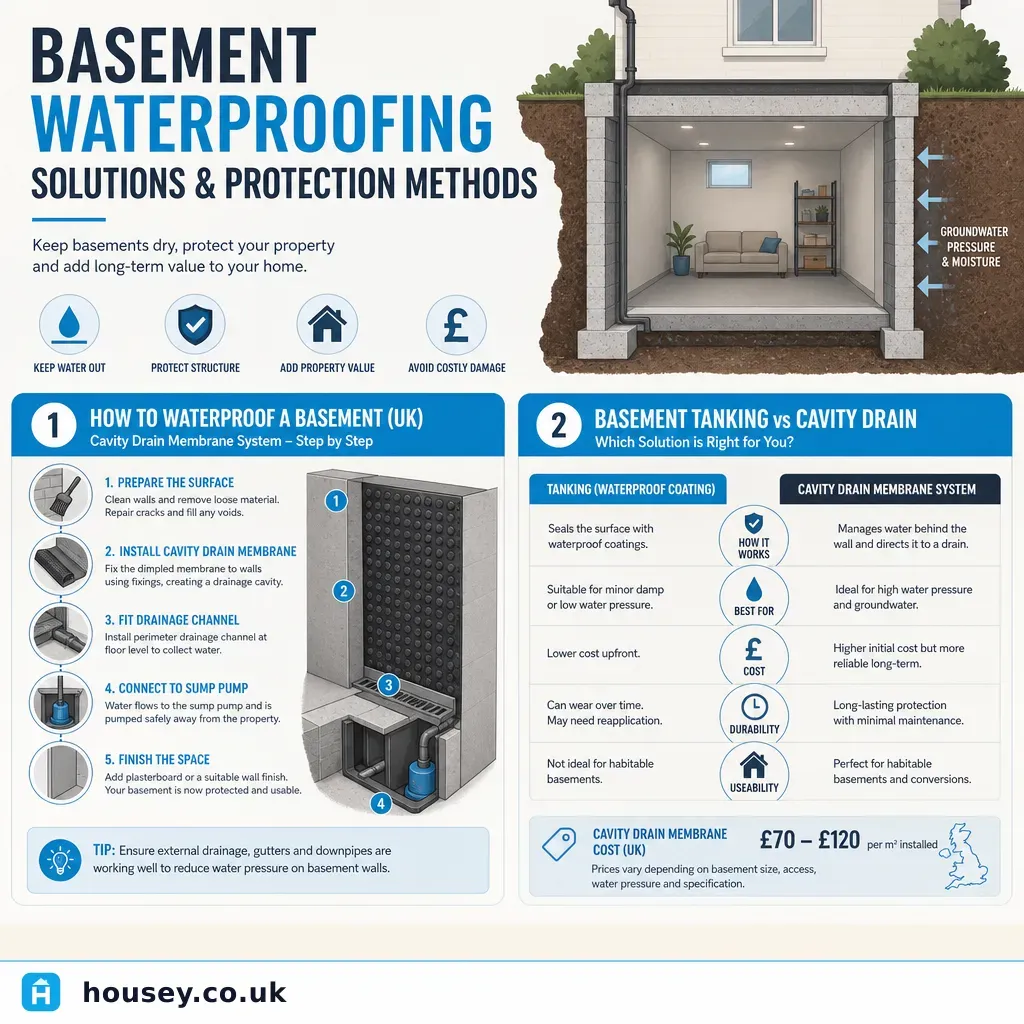
Basement Waterproofing Solutions and Protection Methods
Basement waterproofing in the UK uses one of three system types defined in BS 8102:2022: Type A (barrier tanking), Type B (structurally integral concrete), or Type C (cavity drain with sump pump). The right choice depends on groundwater pressure, basement use, and construction type. A Property Care Association (PCA) qualified specialist should survey and specify the system.
 Buying & Moving
Planning your house move before the festive season: timing and logistics
Moving before Christmas requires careful planning. Most conveyancing firms in England and Wales close between 24 and 27 December, and removal companies book up well in advance for early December dates. Completing before 12 December gives the safest buffer. If your chain is long or has already experienced delays, a January completion is usually lower risk than targeting the final week before Christmas.
 Buying & Moving
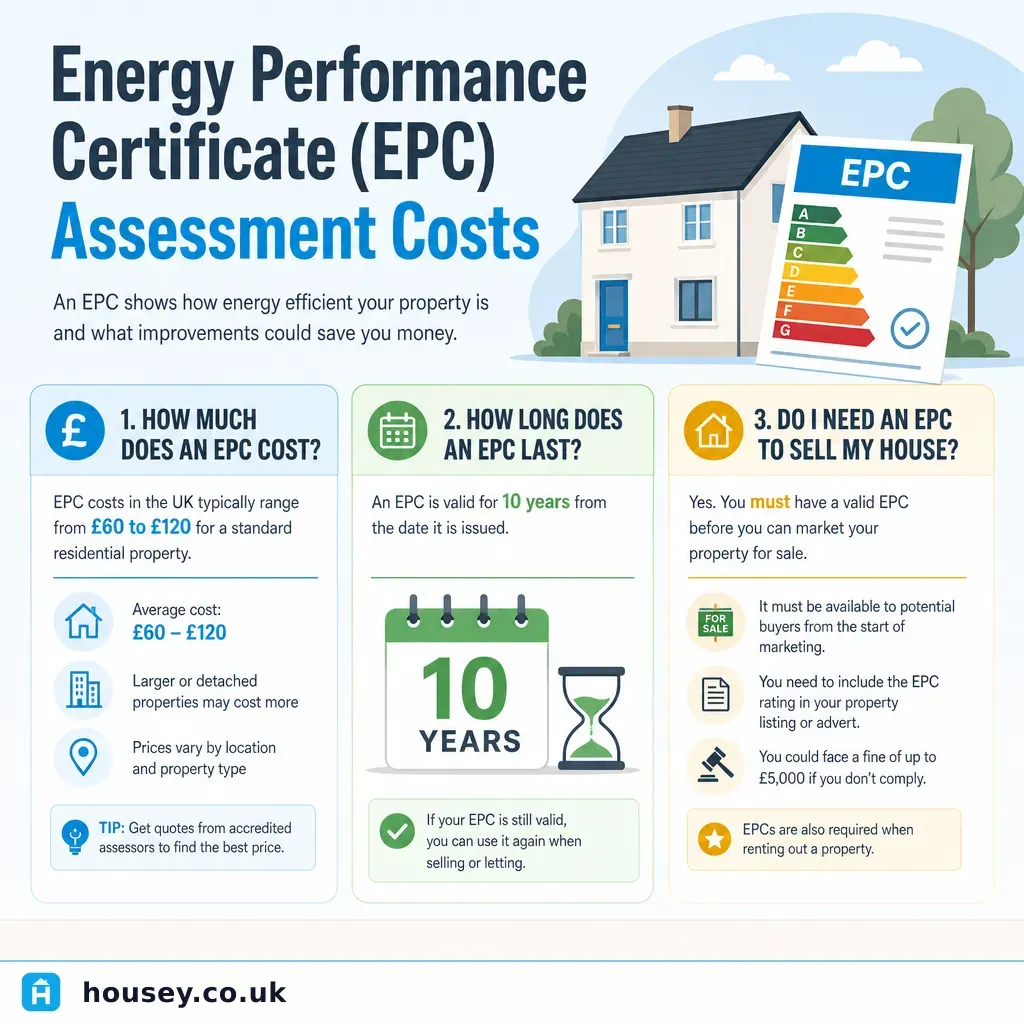
Energy Performance Certificate (EPC) Assessment Costs
An EPC typically costs between £60 and £120 for a standard UK home, though prices vary by property size and assessor. You legally need a valid EPC before selling or renting a property in England, Wales, and Scotland. EPCs are valid for 10 years. The assessment usually takes 45–60 minutes and must be carried out by an accredited domestic energy assessor.
 Improvement & Build
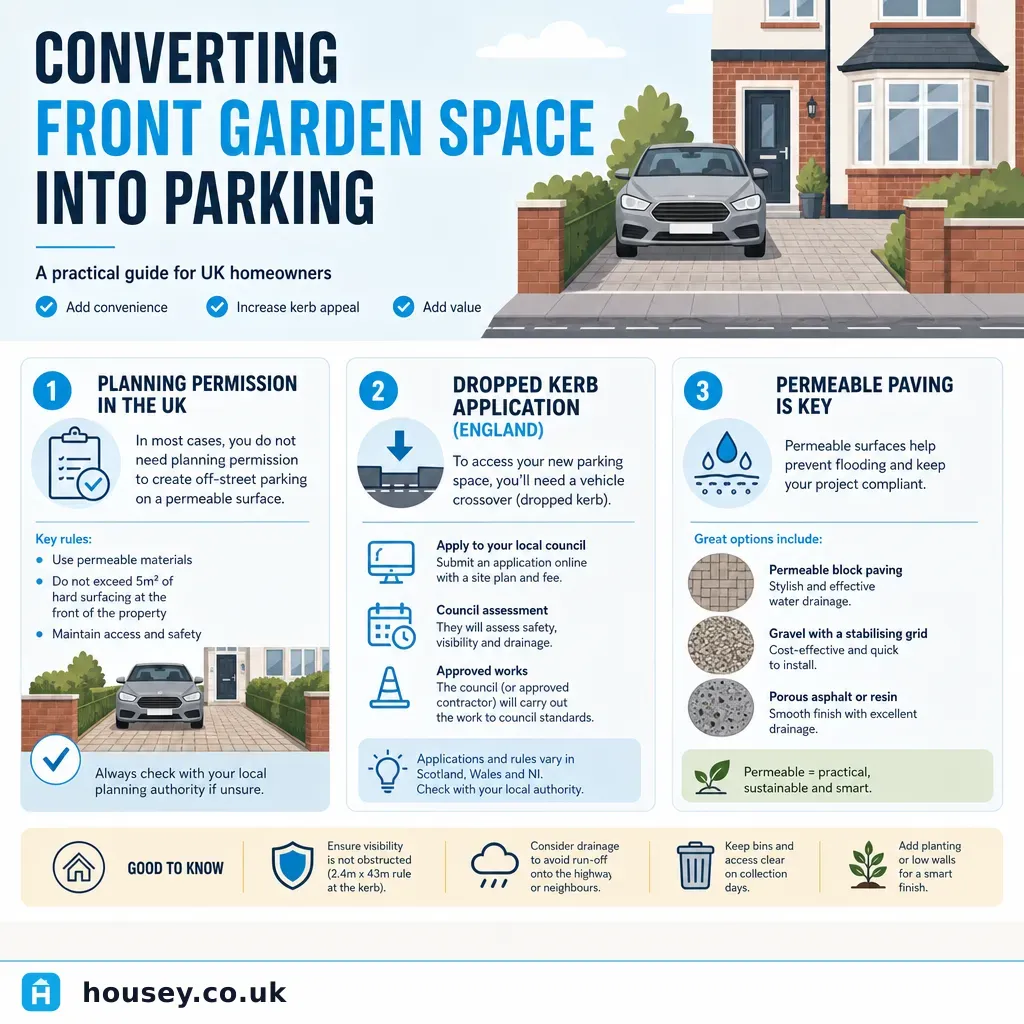
Converting Front Garden Space into Parking
Converting a front garden to parking in England requires permeable surfacing or planning permission if the area exceeds 5 m², plus a separate dropped kerb application to your local highway authority. Conservation area and listed building properties typically need full planning consent regardless of size. Costs, timelines, and approved surfaces vary by local authority.
 Surveys & Inspections
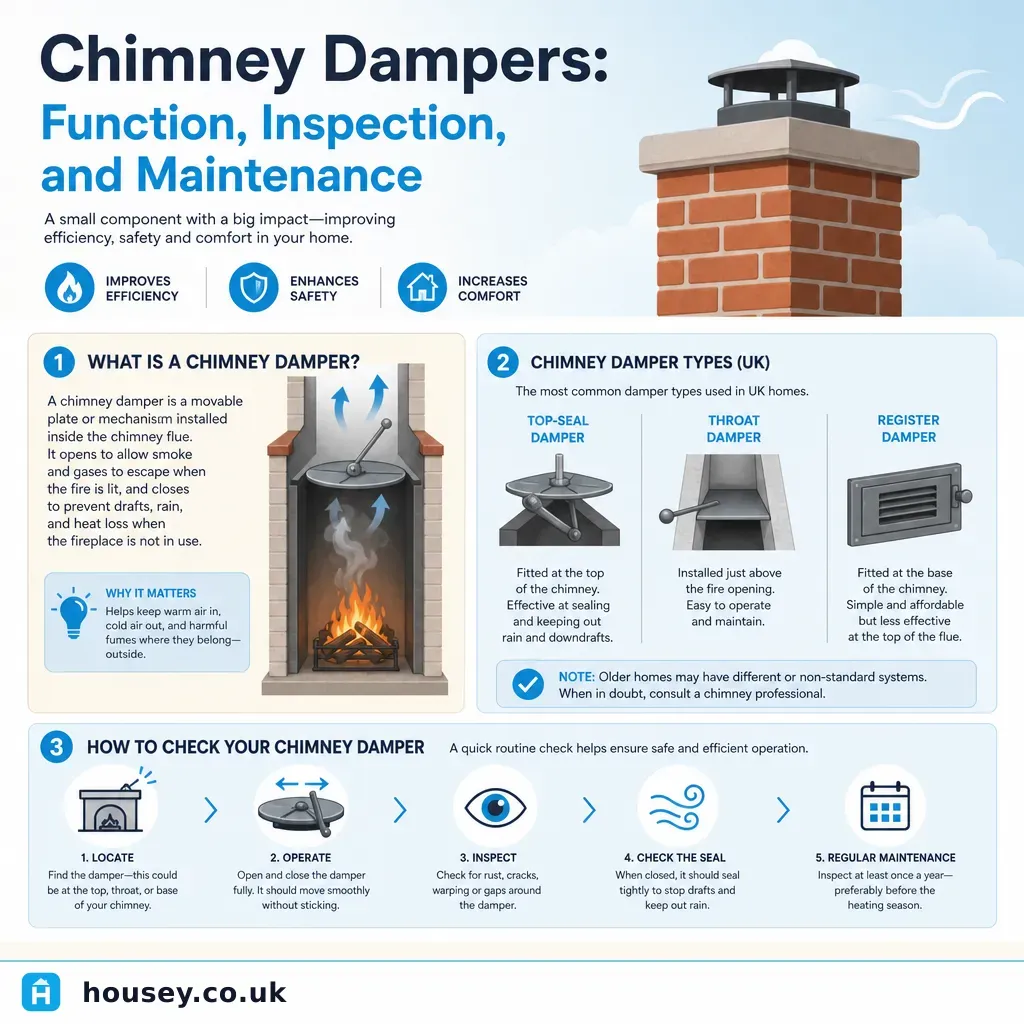
Chimney Dampers: Function, Inspection, and Maintenance
A chimney damper is a movable plate or valve in the flue that controls airflow when the fire is lit and seals the chimney when it is not. Keeping it in good working order prevents heat loss, damp ingress, and draught problems. Annual inspection by a HETAS-registered sweep is recommended for any active solid-fuel appliance or open fire.
 Surveys & Inspections
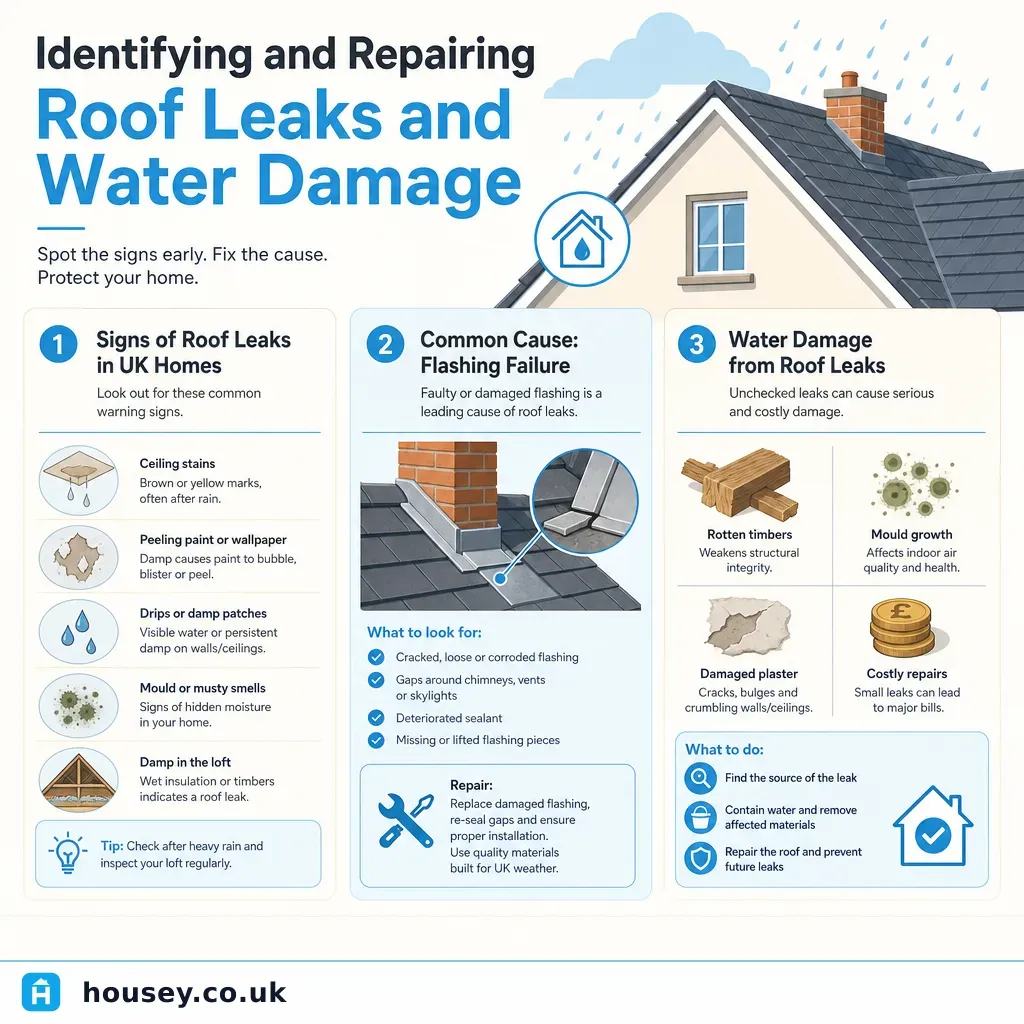
Identifying and Repairing Roof Leaks and Water Damage
Roof leaks in UK homes most often result from flashing failures at chimneys and dormers, cracked or slipped tiles and slates, deteriorated underlay, or blocked gutters causing overflow. Water can travel metres from the entry point before appearing inside. Identifying the source requires inspection of the roof covering and loft void — any roof access should only be carried out by a qualified professional.
 Surveys & Inspections
Identifying Unpleasant Odours in Your Home
Unpleasant smells in a UK home often point to damp, mould, a drainage fault, or — in the most urgent cases — a gas leak. Musty or earthy odours usually indicate moisture ingress or hidden mould. Sulphurous smells near appliances or meter cupboards may signal gas and require immediate action. Getting an accurate diagnosis early limits both the health risk and the remediation cost.
 Improvement & Build
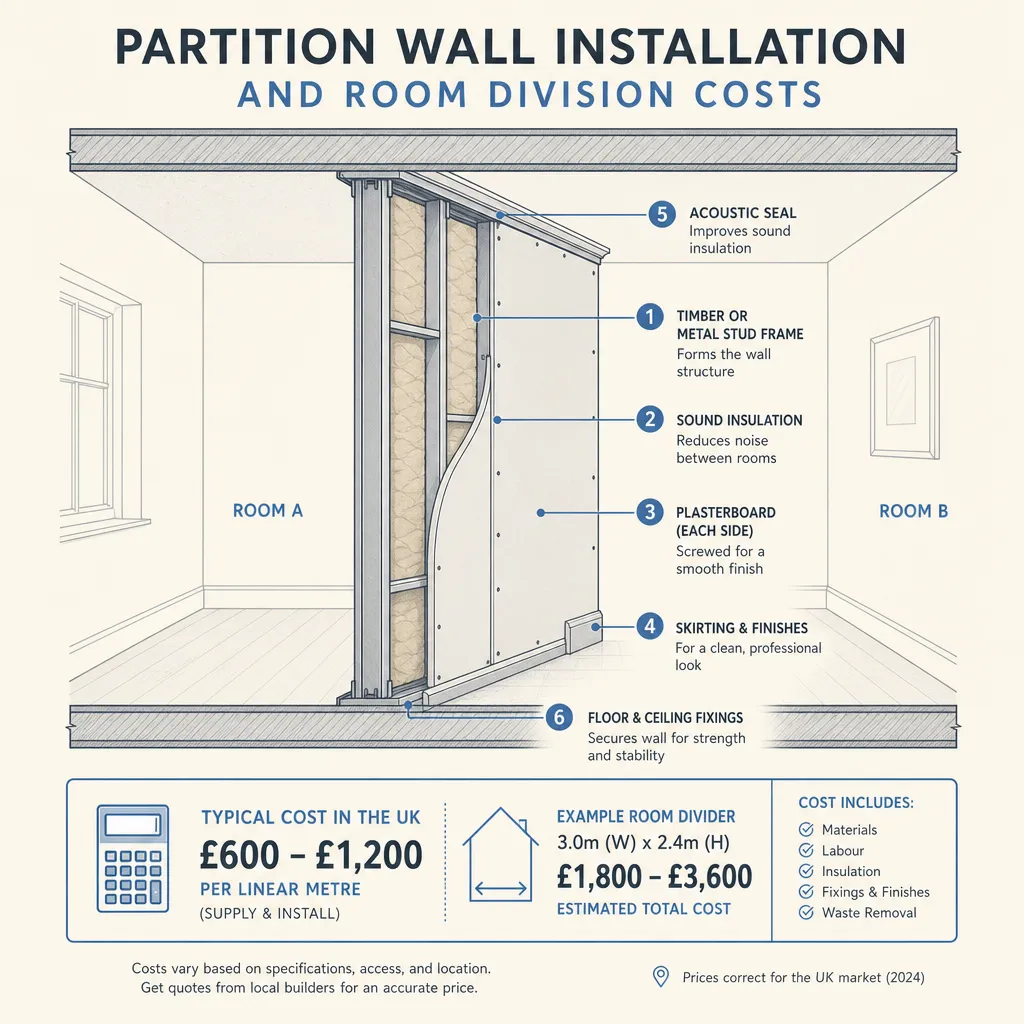
Partition Wall Installation and Room Division Costs
Installing a stud partition wall in the UK typically costs £800–£2,500 for a standard room divider, or roughly £30–£80 per m² installed. Costs vary by wall type — glass and acoustic partitions are significantly more expensive. Building regulations may apply if the work affects fire compartmentation, ventilation, or structural elements. Always get itemised quotes.
 Energy & Retrofit
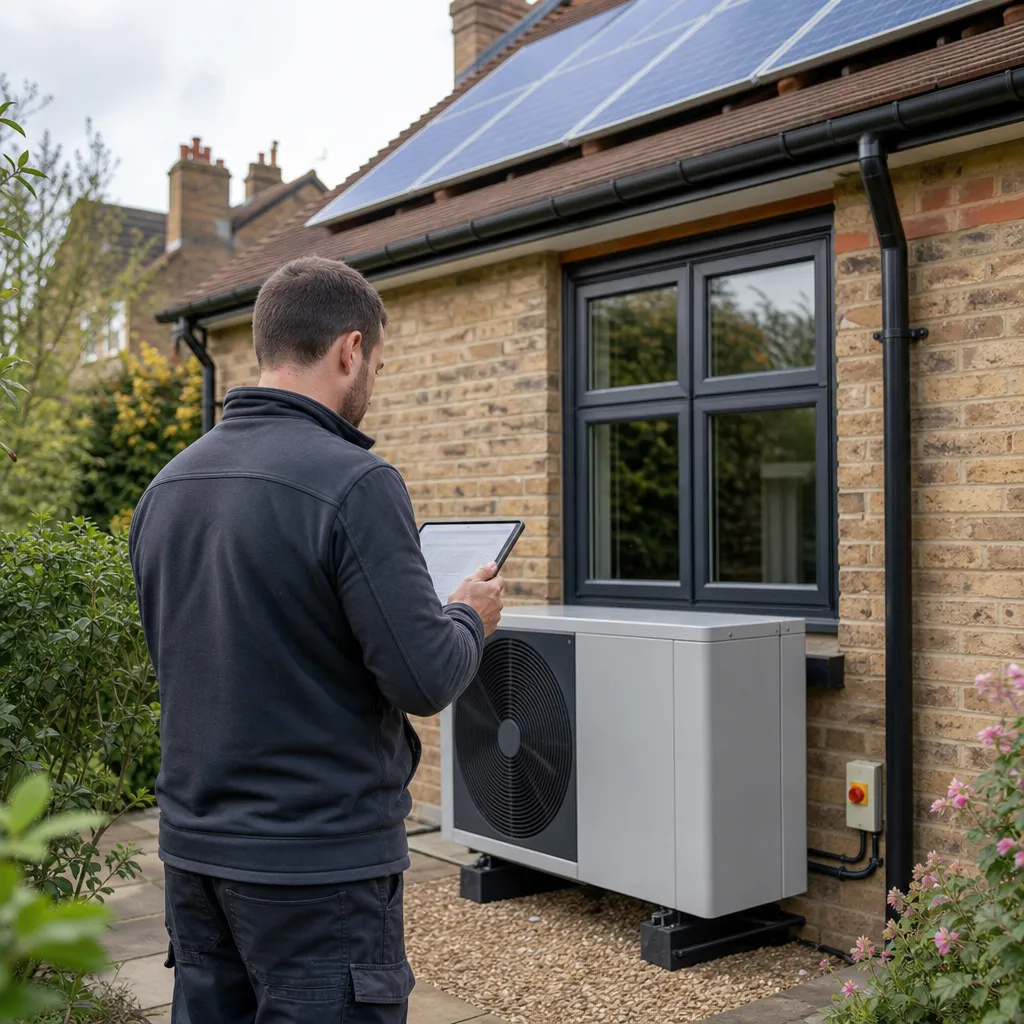
Finding a Renewable Energy Specialist for Your Home
Look for MCS-certified installers registered with TrustMark for any grant-funded work. Check they carry out a full site survey and a heat loss or irradiance assessment before quoting. Ask for references from similar UK properties and confirm they can handle any building control notification or planning requirements before you sign a contract.
 Improvement & Build
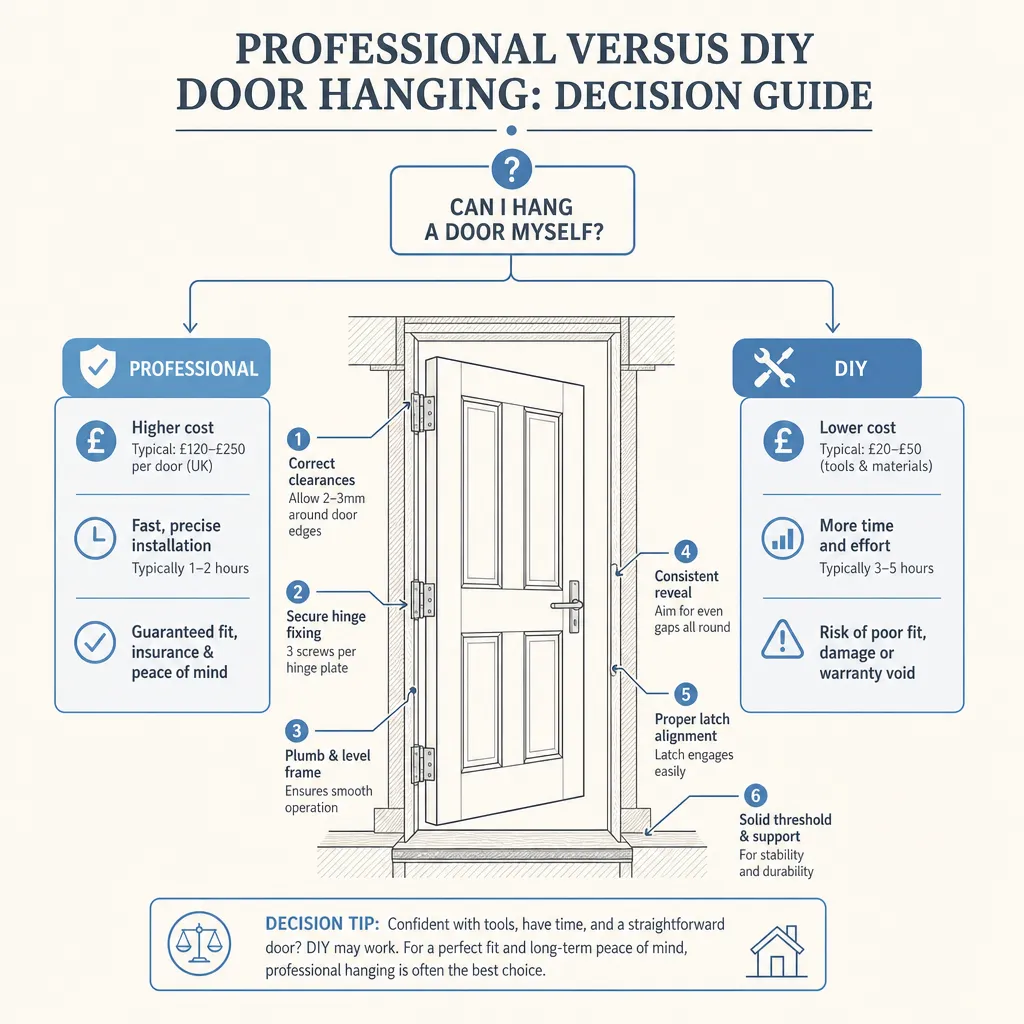
Professional Versus DIY Door Hanging: Decision Guide
Most internal doors can be hung by a competent DIYer with basic carpentry tools and patience, but external doors, fire doors, and out-of-square frames usually need a professional door fitter. The key factors are frame condition, door type, and your confidence with a plane, chisel, and drill.
 Improvement & Build
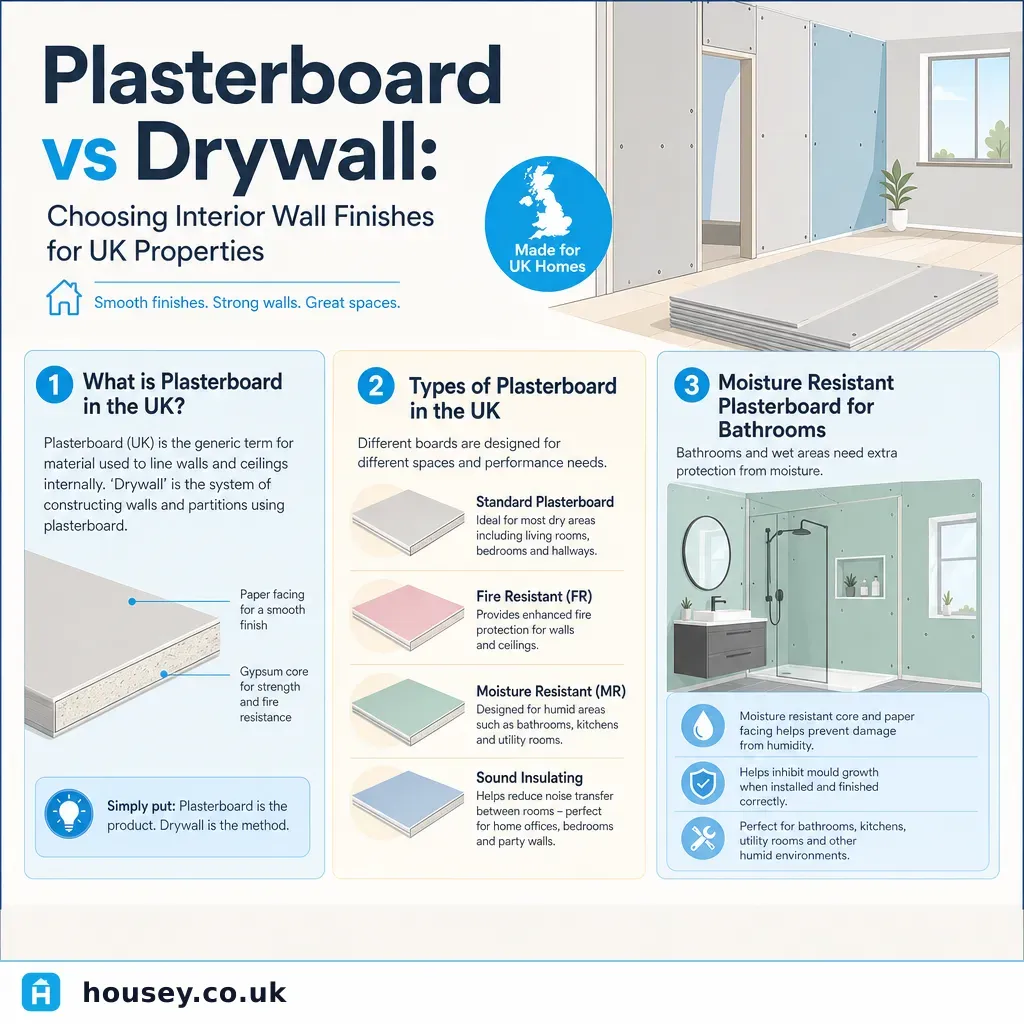
Plasterboard vs Drywall: Choosing Interior Wall Finishes for UK Properties
In the UK, plasterboard and drywall describe the same gypsum-core panel material. The practical difference is finishing method: UK plasterers typically apply a 2–3 mm skim coat of finishing plaster, while American-style drywall uses jointing compound and tape. Choose the board specification — standard, moisture-resistant, fire-rated, or acoustic — based on room use and Building Regulations requirements.