Knowledge Base
Property advice that actually helps
Researched, UK-specific guides for every stage of homeownership — from buying and surveys to retrofit, planning and major works.
 General property advice
Property Type Preferences: Understanding Market Demand
Semi-detached houses consistently attract the highest transaction volumes in England and Wales, making them the most liquid part of the UK market. Terraced houses dominate first-time buyer purchases. Flats face additional scrutiny around leasehold terms and building safety in some buildings. Detached houses command higher prices and strong buyer intent but suit a narrower pool of purchasers.
 Surveys & Inspections
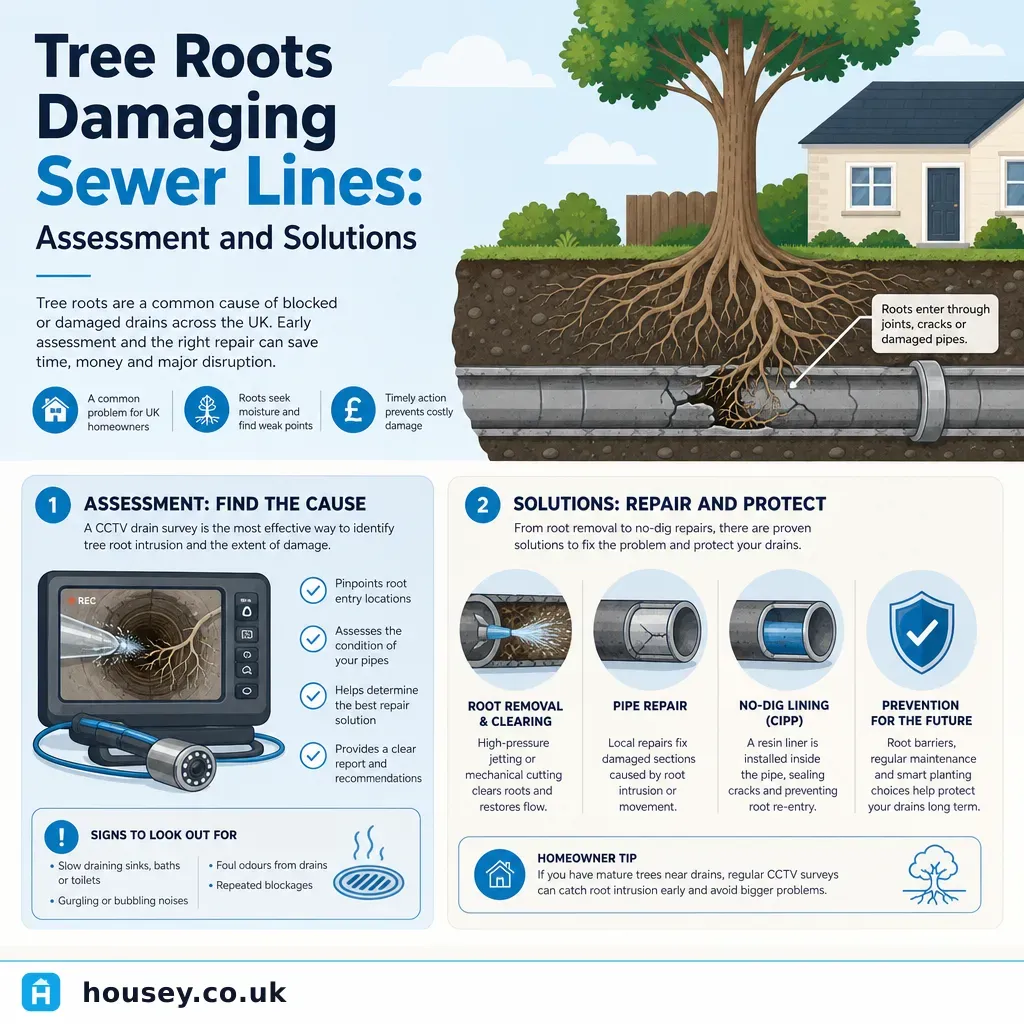
Tree Roots Damaging Sewer Lines: Assessment and Solutions
Tree roots enter UK drain pipes through hairline cracks and displaced joints, progressively blocking and damaging the pipe structure. A CCTV drain survey produces a WRC-coded condition report identifying the extent and severity of ingress. Responsibility for repair depends on whether the affected pipe is a private drain or an adopted public sewer under the Water Industry Act 1991.
 Improvement & Build
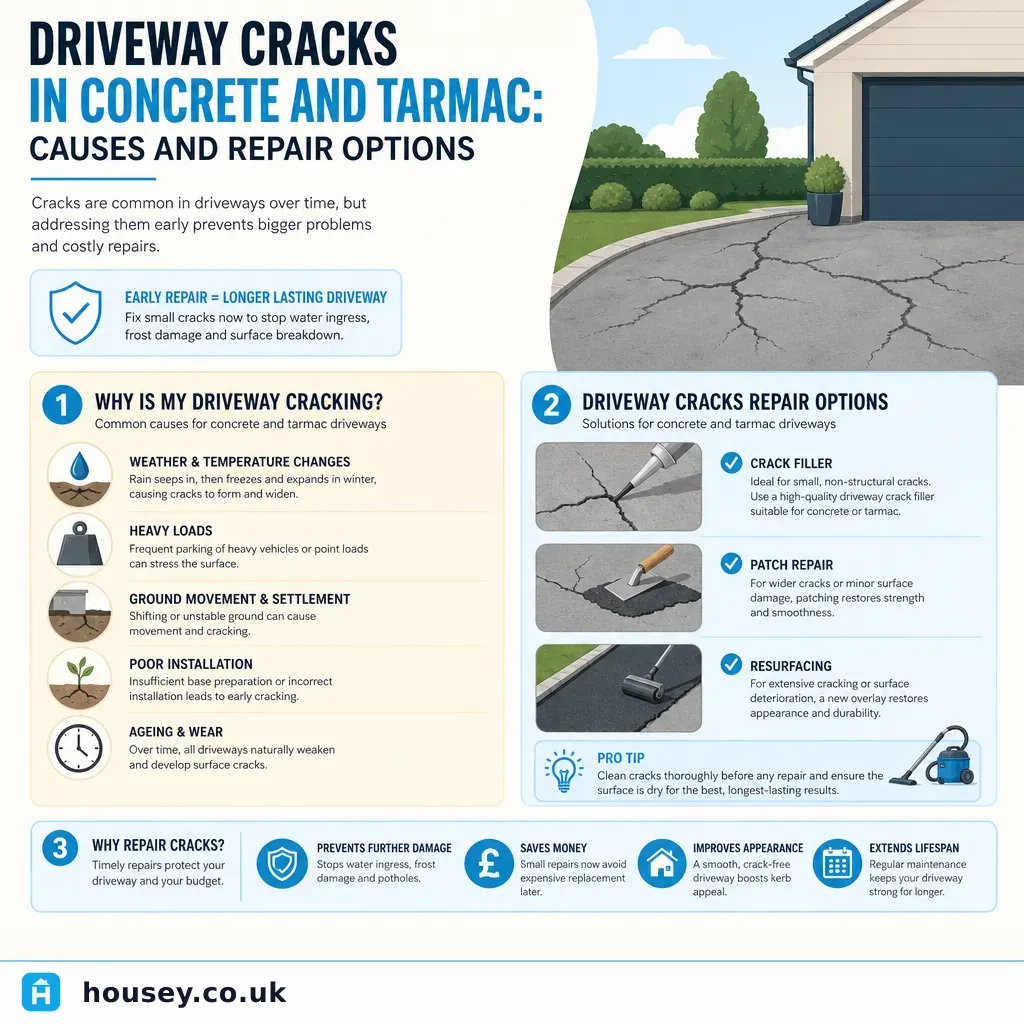
Driveway Cracks in Concrete and Tarmac: Causes and Repair Options
Driveway cracks in concrete or tarmac are most commonly caused by freeze-thaw cycles, subbase settlement, tree root pressure, or surface ageing. Hairline cracks under 3 mm can usually be sealed as a DIY task; wider cracks, surface depression, or heave suggest a deeper subbase problem requiring professional assessment. Replacing a front driveway over 5 m² with an impermeable surface typically requires planning permission in England.
 Improvement & Build
What Roofers Need to Know From Homeowners Before Work Starts
Before a roofer starts work, they need to know the property's age and roof construction, the full scope of damage or works required, whether the property is listed or in a conservation area, and access arrangements including scaffolding. Providing any previous roof surveys, guarantees, or building control documents helps the contractor quote accurately and avoids price changes mid-project.
 Buying & Moving
Cross-Border Property Move: England to Scotland — Process and Differences
Buying property in Scotland involves a separate legal process from England. Sellers must provide a Home Report before marketing; formal offers become binding when missives are concluded, eliminating gazumping; Land and Buildings Transaction Tax replaces Stamp Duty Land Tax; and only solicitors regulated by the Law Society of Scotland can act on a Scottish purchase. Instruct a Scottish solicitor before noting interest.
 Energy & Retrofit
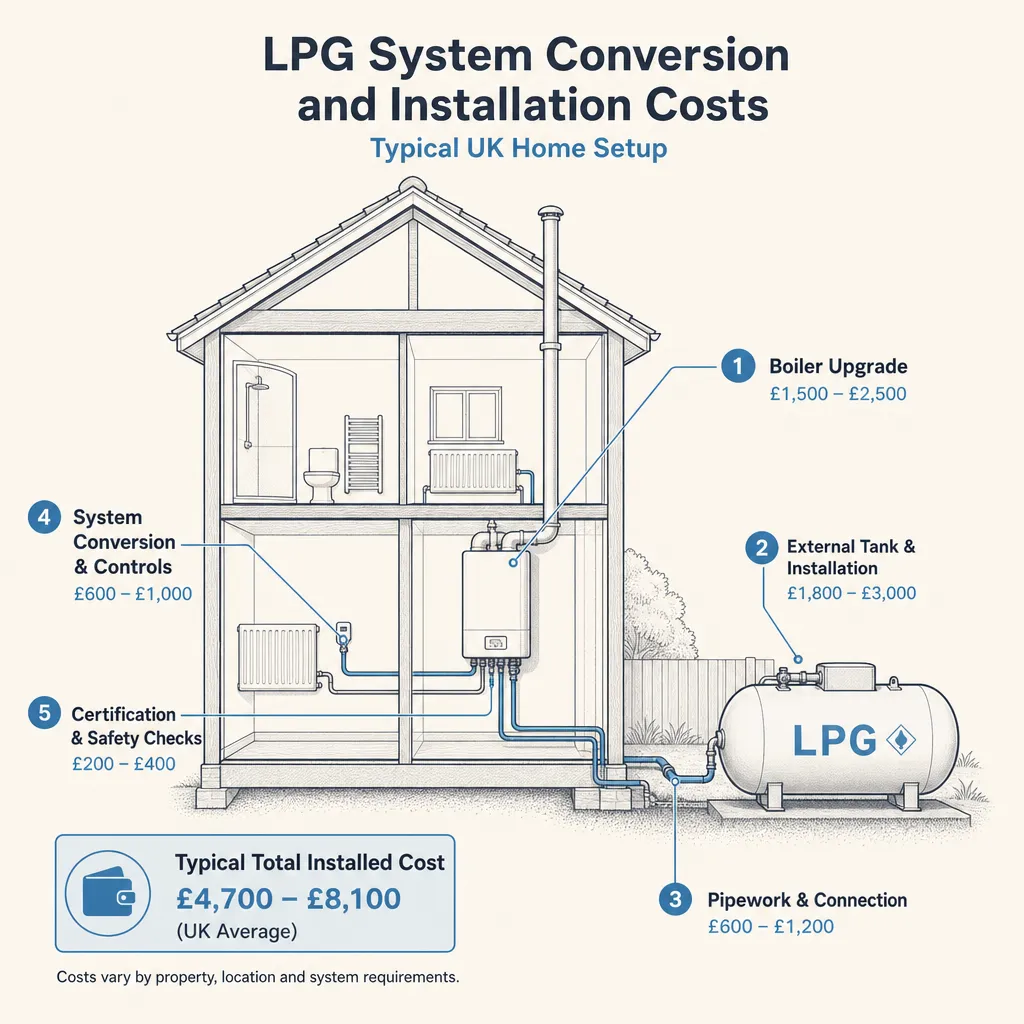
LPG System Conversion and Installation Costs
Converting a UK property to LPG typically costs £3,500–£10,000, covering a new LPG-compatible boiler, pipework, and tank installation. Running costs are higher than mains natural gas but LPG suits off-grid rural properties well. All installation work must be carried out by a Gas Safe registered engineer. Obtain at least three comparable quotes before committing.
 Surveys & Inspections
Modern Roof Surveying: Drone Technology and Data-Driven Inspection Methods
Drone roof surveys in the UK use cameras and thermal sensors to inspect roof condition without scaffolding, capturing data that identifies tile damage, moisture ingress, and insulation gaps. They are faster and cheaper to mobilise than traditional access methods, but do not replace a physical inspection for structural assessments, asbestos identification, or pre-purchase surveys. Operators must hold current CAA qualifications for commercial work.
 Improvement & Build
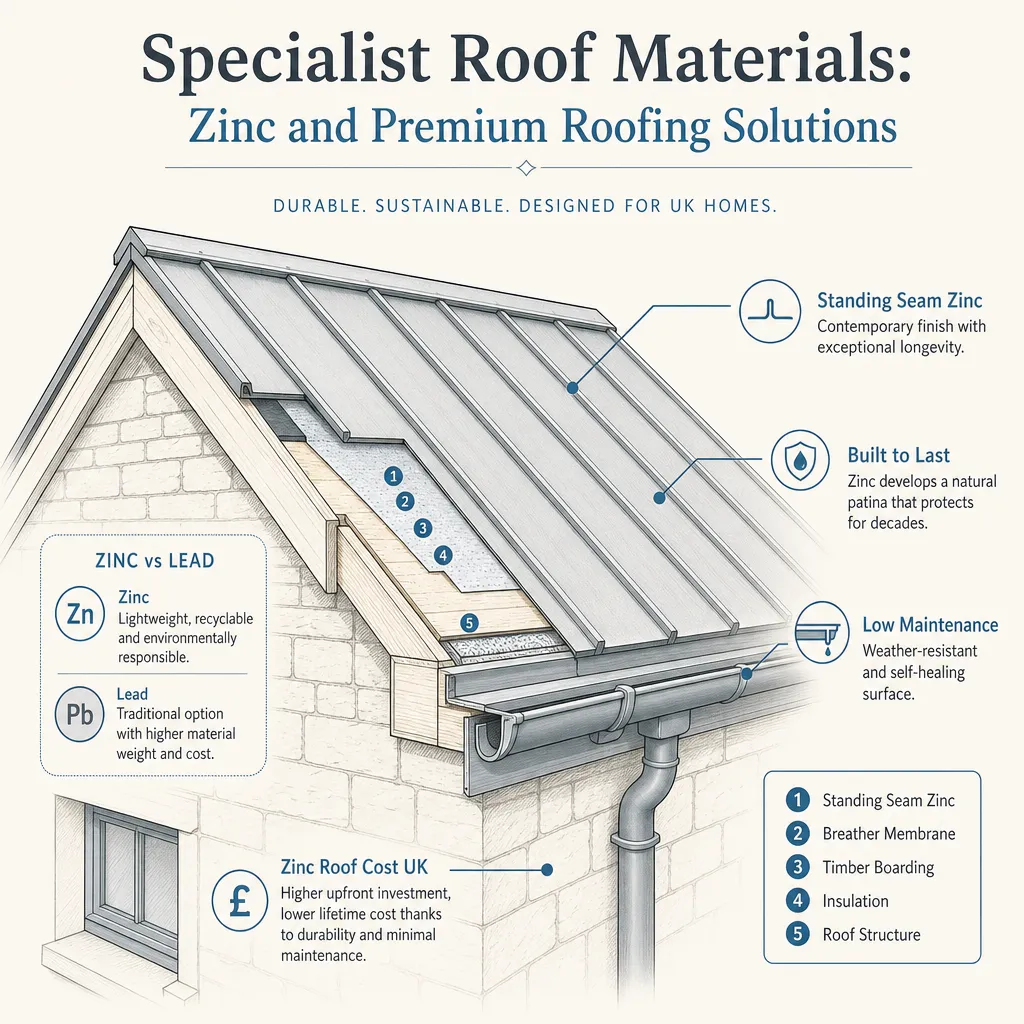
Specialist Roof Materials: Zinc and Premium Roofing Solutions
Zinc roofing (titanium-zinc) offers a service life of 60–100 years or more, a self-healing patina, and low maintenance, making it a strong choice for flat roofs, extensions, and loft dormers. It requires specialist metalwork contractors trained in standing seam installation and thermal expansion management — not standard roofers. Costs are broadly comparable with copper and lead for similar applications.
 Planning & Pre-Build
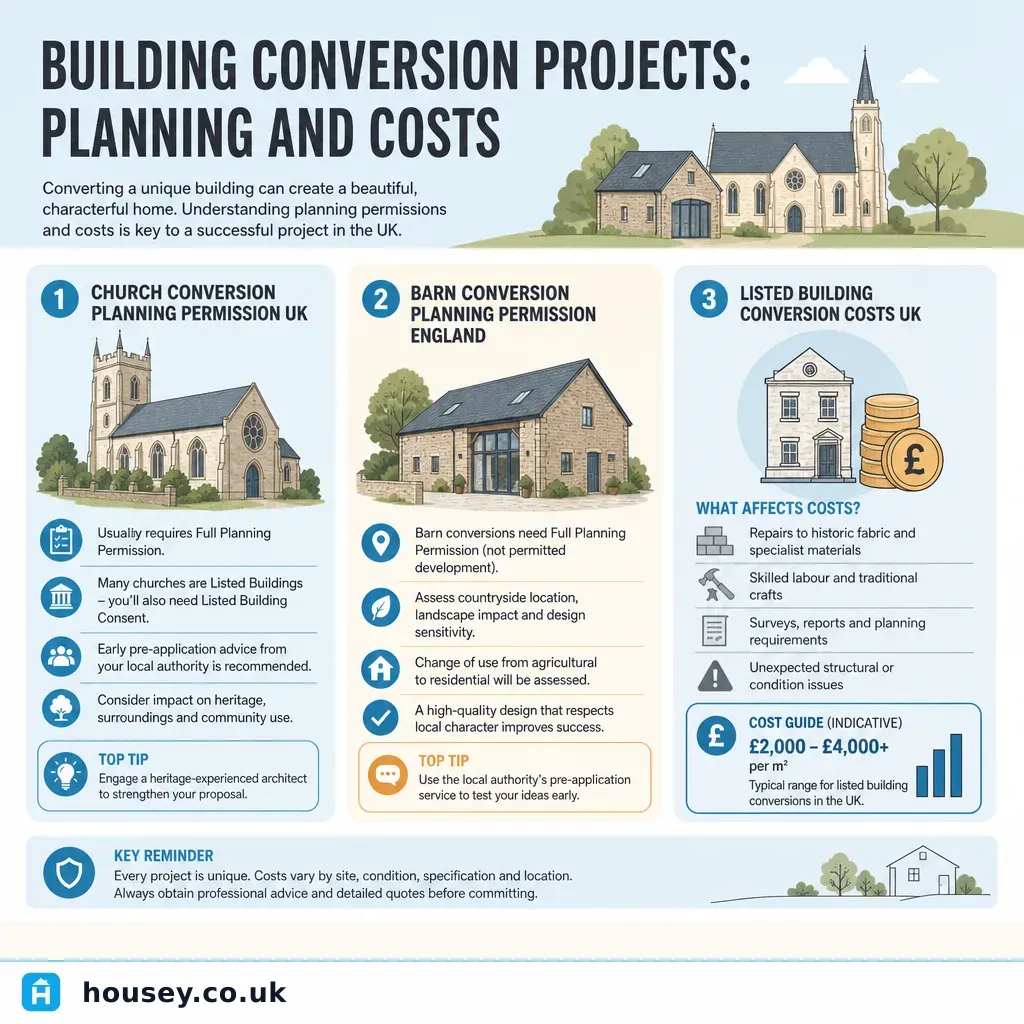
Building Conversion Projects: Planning and Costs
Converting a non-residential building in the UK — such as a barn, church, or commercial property — typically requires full planning permission and often Listed Building Consent. Costs range from roughly £1,200 to £4,000+ per square metre depending on the building type, condition, and heritage status. A planning consultant, structural engineer, and architect are usually essential from the outset.
 Improvement & Build
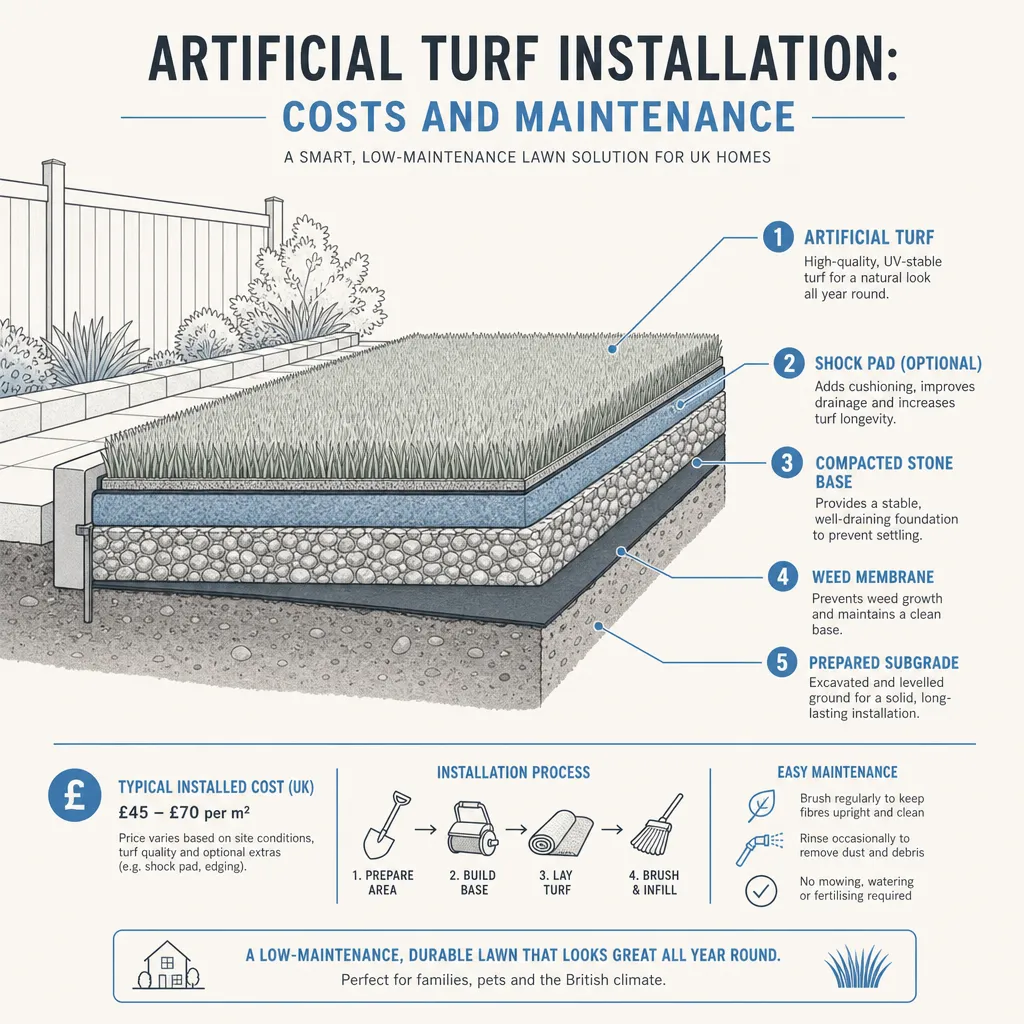
Artificial Turf Installation: Costs and Maintenance
Professional artificial grass installation in the UK typically costs £50–£90 per square metre all-in, including sub-base, edging, and infill. Performance depends heavily on sub-base quality and drainage design. Maintenance is lower than natural lawn but not zero — expect regular brushing, rinsing, and periodic infill top-ups to keep the surface draining and looking its best.
 Improvement & Build
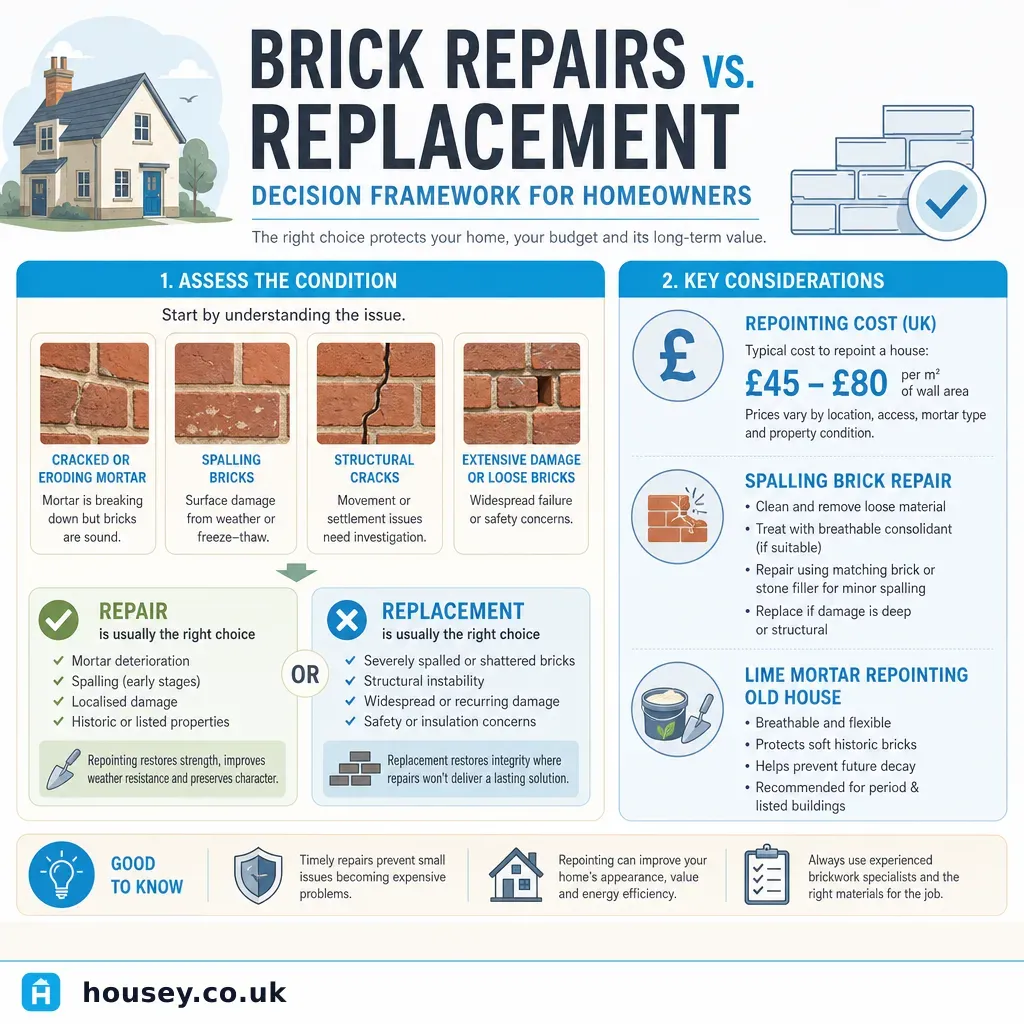
Brick Repairs vs. Replacement: Decision Framework for Homeowners
Whether to repair or replace brickwork depends on the type and extent of damage. Repointing addresses mortar joint failure; individual brick replacement is needed when bricks have spalled. Structural cracks require a structural engineer's assessment before any work begins. Pre-1919 properties should use lime mortar — not OPC cement — to protect the brickwork long-term.
 Improvement & Build
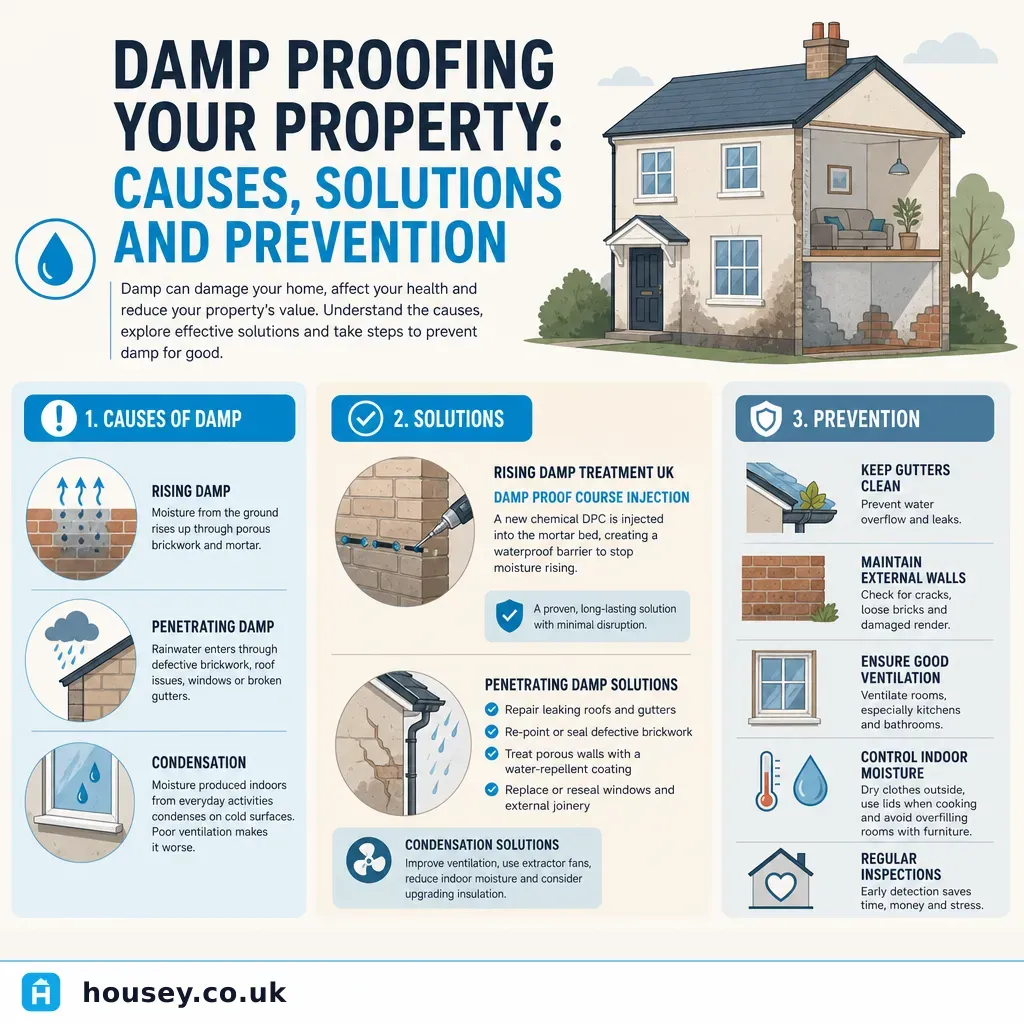
Damp Proofing Your Property: Causes, Solutions and Prevention
Damp in UK properties falls into three main types: rising damp caused by a failed damp proof course, penetrating damp from defects such as failed flashings or cracked render, and condensation from poor ventilation. Each needs a different solution. An independent specialist survey is the recommended first step before committing to any remediation treatment.