Knowledge Base
Property advice that actually helps
Researched, UK-specific guides for every stage of homeownership — from buying and surveys to retrofit, planning and major works.
 Buying & Moving
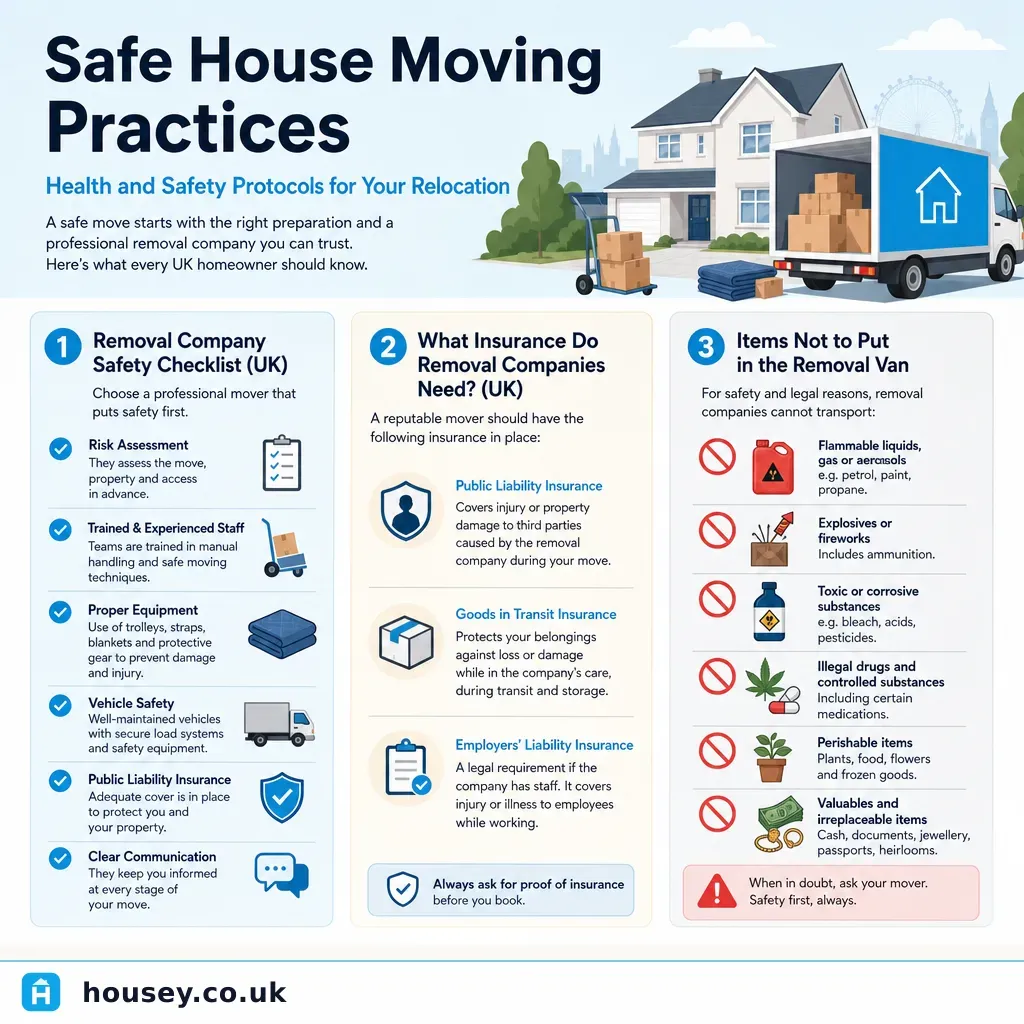
Safe House Moving Practices: Health and Safety Protocols for Your Relocation
A safe UK house move means hiring a removal firm with public liability insurance, using proper equipment for heavy items, and keeping medications, documents, and valuables in your own vehicle. Check your home contents insurance covers items in transit, wear appropriate footwear, keep pathways clear on moving day, and report any damage to the removal firm in writing within 24 hours.
 Buying & Moving
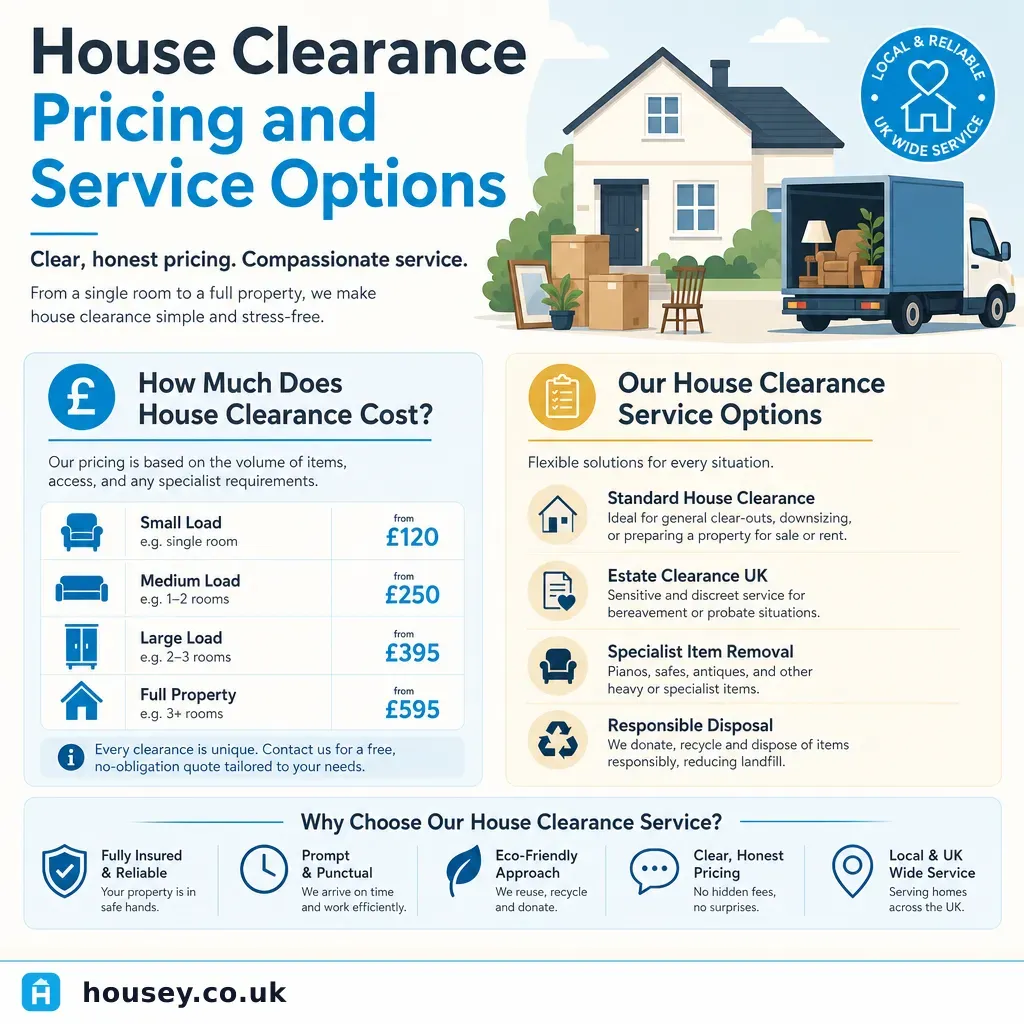
House Clearance Pricing and Service Options
House clearance costs in the UK range from around £150 for a one-bedroom flat to £1,500 or more for a four-bedroom house, depending on volume, location, and how much can be donated or recycled. Licensed waste carriers must be used. Always get at least three quotes and ask for a signed waste transfer note.
 Buying & Moving
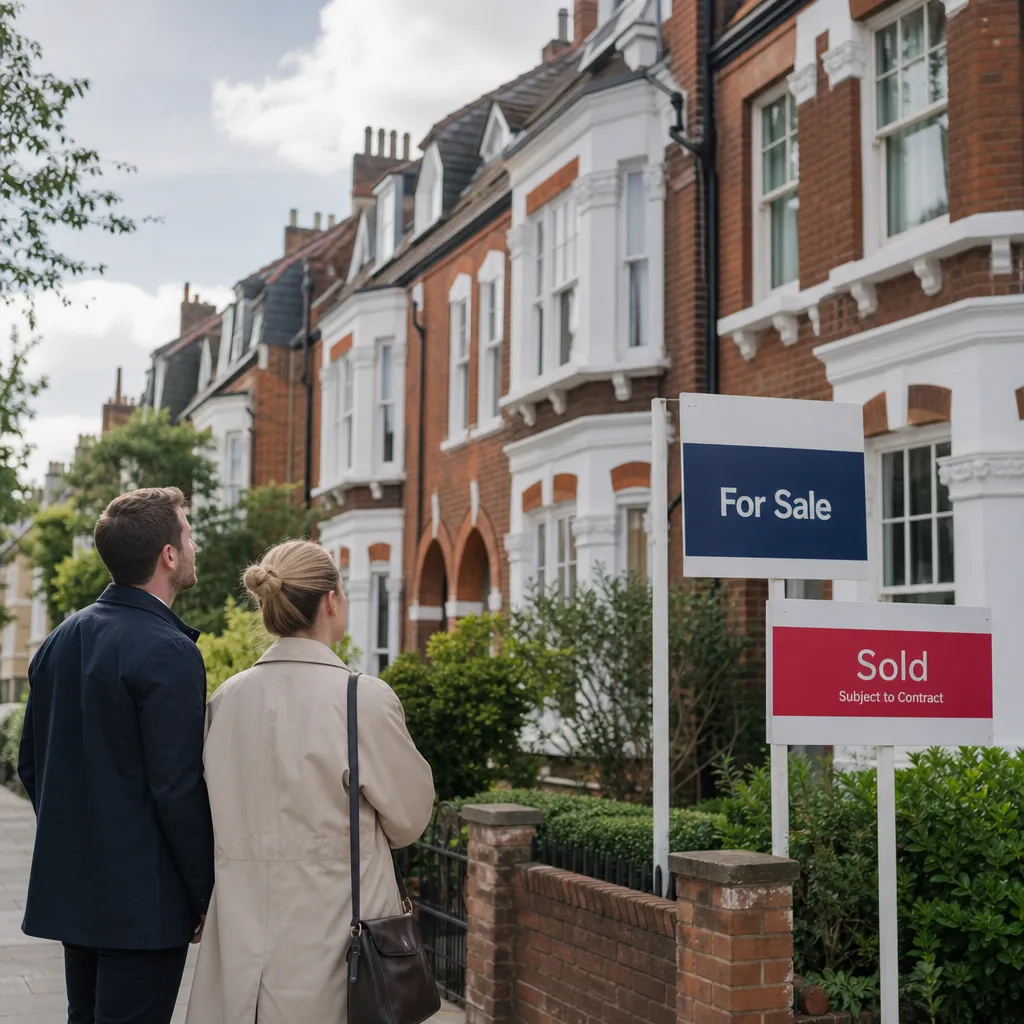
Navigating Simultaneous Purchase and Sale of Property
When buying and selling simultaneously in England and Wales, both sets of contracts are exchanged on the same day — this is called simultaneous exchange. Most sellers manage this through a property chain, which carries a real collapse risk. Early solicitor instruction and proactive chain coordination are the most effective ways to reduce delays and protect your position.
 Buying & Moving
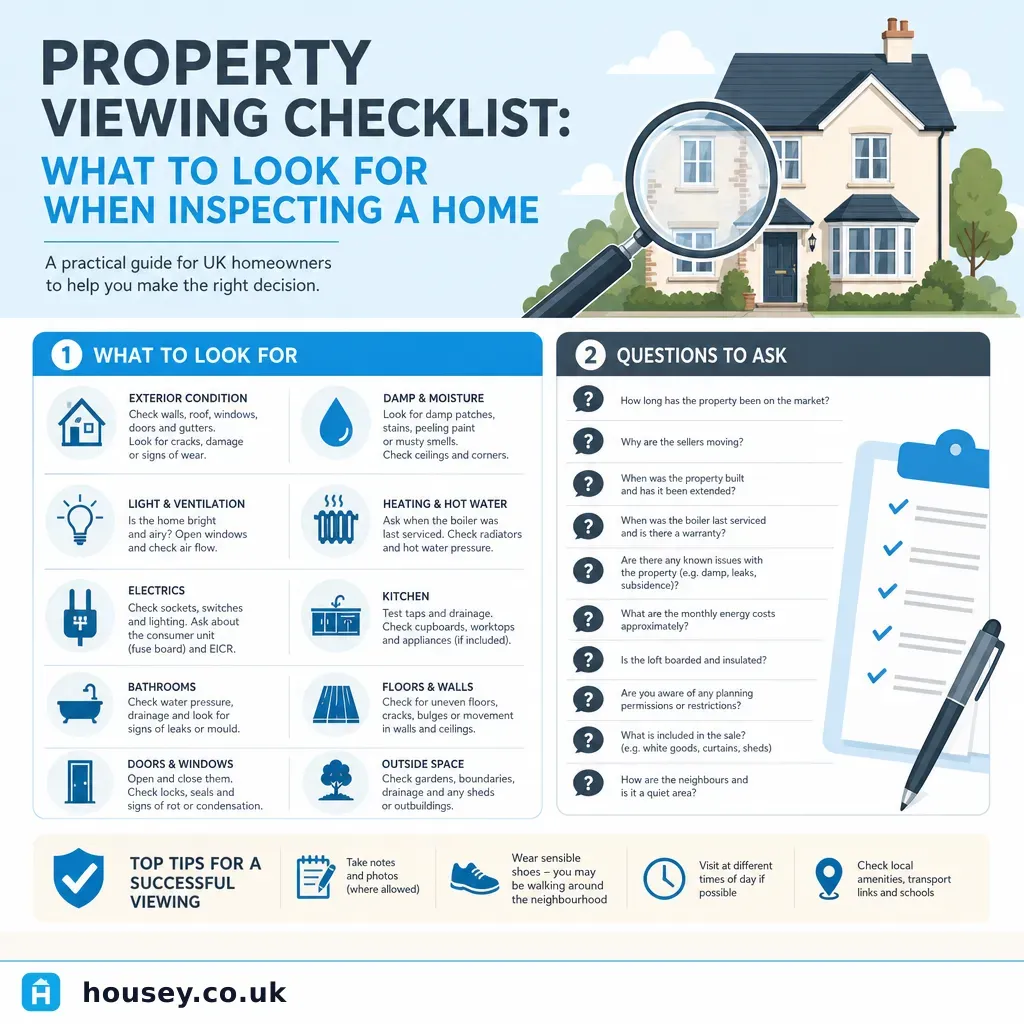
Property Viewing Checklist: What to Look for When Inspecting a Home
A property viewing is your first chance to assess condition before committing to survey and legal costs. Work through exterior structure, roof, windows, and drainage, then check inside for damp, cracks, heating, and electrics. For leasehold properties, ask about lease length, service charges, and planned major works at the viewing stage.
 Buying & Moving
Which Home Improvements Add Real Value to Your Property?
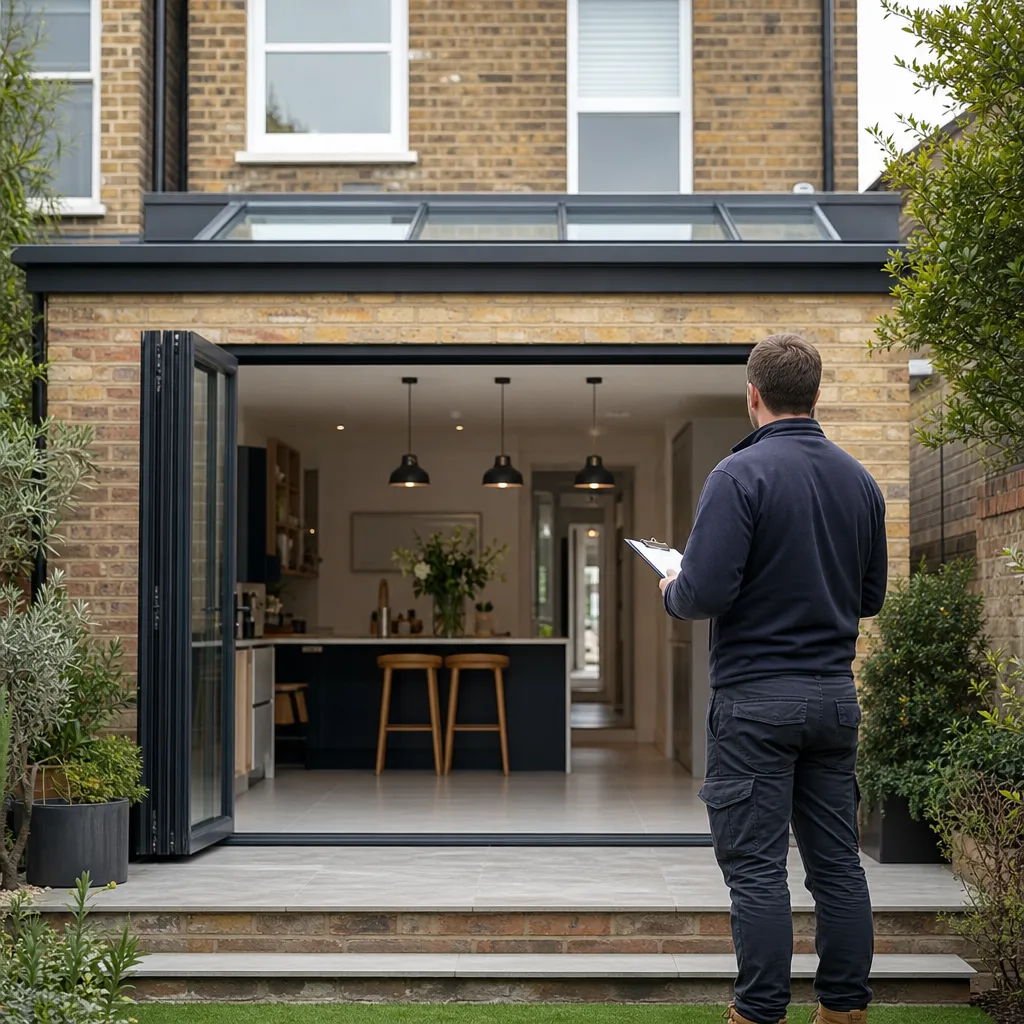
In the UK, loft conversions, single and double-storey extensions, and energy-efficiency upgrades are most reliably linked to added property value. Returns depend on location, execution quality, and the neighbourhood price ceiling. Not all improvements recover their cost at sale — over-improvement relative to comparable properties is a common pitfall.
 Buying & Moving
Professional approaches to photographing properties for sale
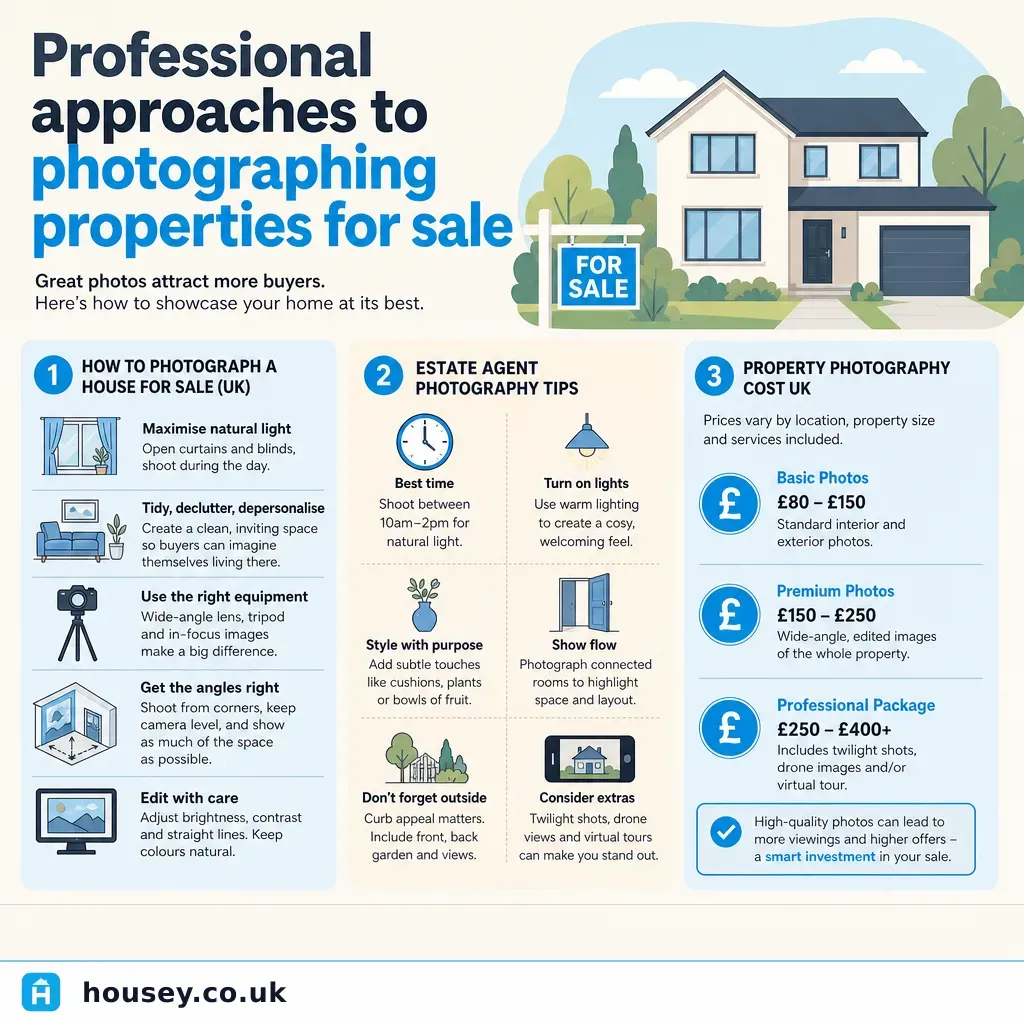
Professional property photography uses wide-angle lenses, HDR exposure blending, and careful staging to present rooms accurately and attractively. Seller preparation — decluttering, cleaning, and ensuring consistent lighting — is often as important as the photographer's technical skill. For most UK properties above £200,000, professional photography is the standard expectation, typically costing £100–£350 for a standard residential package.
 Buying & Moving
How to Plan a House Move: A Practical Guide to Residential Relocations
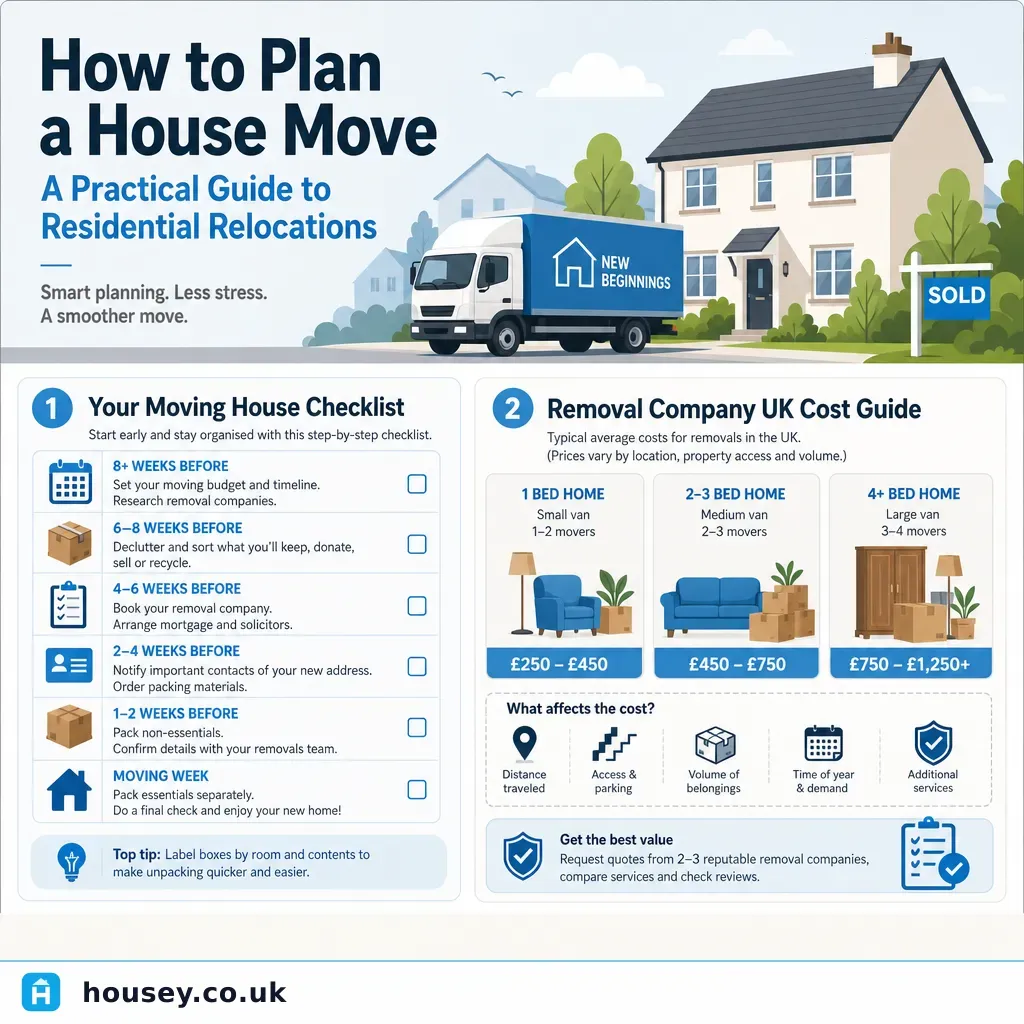
A UK house move goes more smoothly with planning that starts 6–8 weeks before moving day. Book a BAR-registered removal company early, confirm your contents insurance covers goods in transit, notify utilities and the DVLA, set up Royal Mail redirection, and prepare for potential delays on completion day if you are in a conveyancing chain.
 Buying & Moving
How to Choose an Estate Agent for Your Property Sale
Look for agents with recent comparable sales in your area, transparent fee structures, and realistic valuations. Compare at least three agents, ask about their marketing approach and average days to sale, and read contract terms before committing. An agent who prices your home correctly from the start is usually more valuable than one who flatters you with a high initial valuation.
 Buying & Moving
Extending Your Property Lease: Increasing Value and Longevity
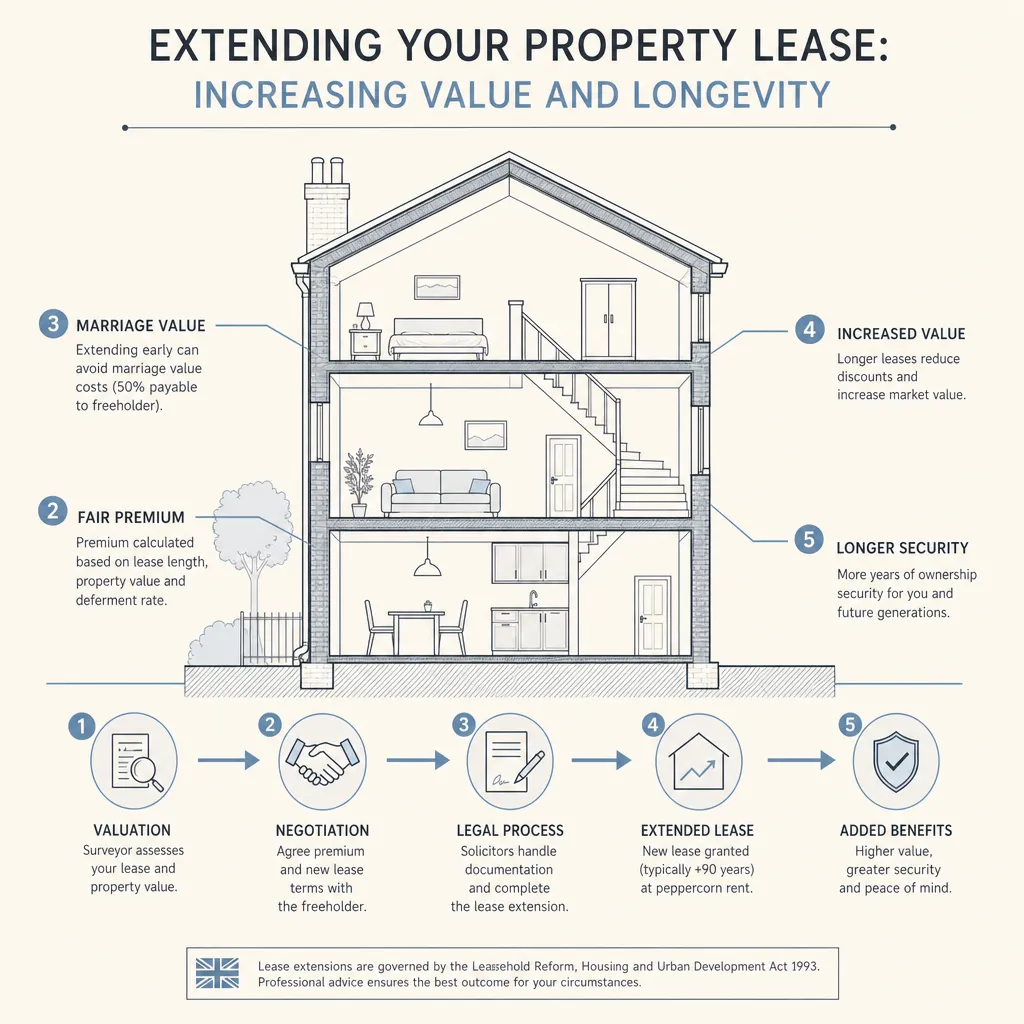
Qualifying leaseholders in England and Wales can extend their lease by 90 years at a peppercorn ground rent under the Leasehold Reform, Housing and Urban Development Act 1993. You must have owned the flat for at least two years. Acting before the lease falls below 80 years avoids the more costly marriage value calculation, which can significantly increase the premium payable to the freeholder.
 Buying & Moving
Property Comparables: Using Market Data to Assess Home Value
Property comparables — known as 'comps' — are recently sold properties similar in size, type, tenure, and condition to the one being valued. Estate agents and RICS-registered valuers use them to estimate market value. Reviewing three to six local comparables from HM Land Registry data gives buyers and sellers structured evidence for negotiating price.
 Buying & Moving
Seller's Conveyancing Checklist: Essential Documents and Preparations
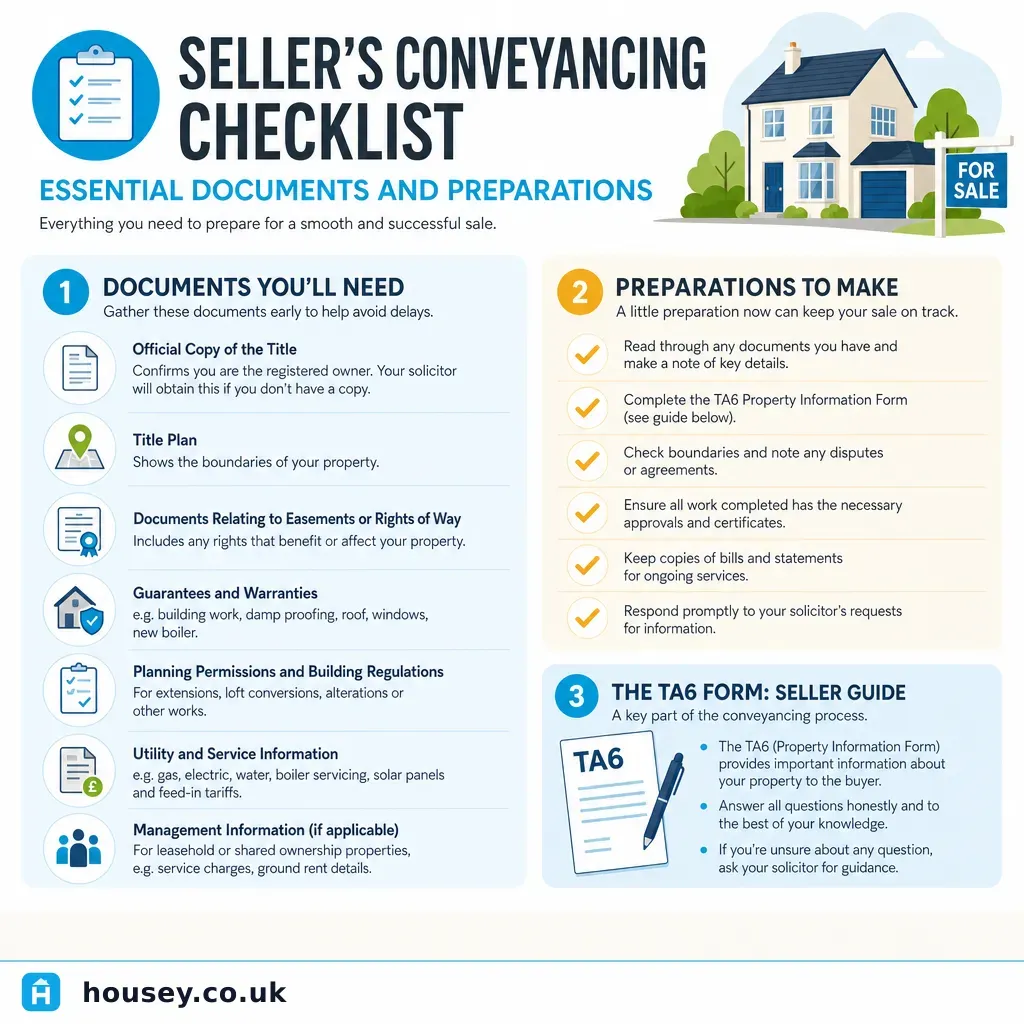
Sellers need to gather title documents, completed Law Society forms (TA6 and TA10), building regulations certificates, planning permissions, and — for leasehold properties — a management information pack before or shortly after accepting an offer. Preparing these documents early, and identifying any missing certificates or title issues before exchange, is one of the most effective ways to reduce delays and prevent a buyer withdrawing.
 Buying & Moving
What Do EPC Ratings Tell You? Understanding Energy Performance Certificates When Buying Property
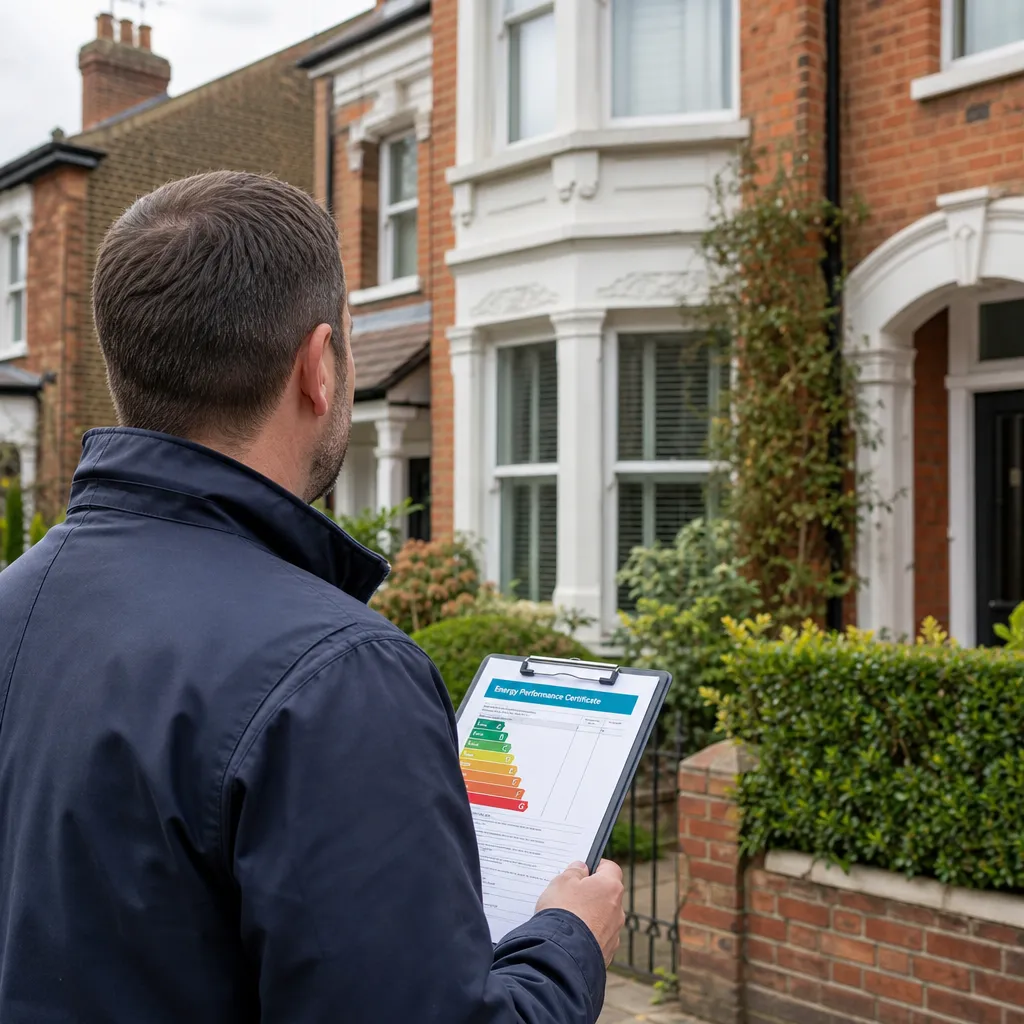
An Energy Performance Certificate (EPC) rates a property from A (most efficient) to G (least efficient) using a score out of 100, based on estimated energy costs, insulation, heating systems, and carbon emissions. It helps buyers understand likely running costs, compare properties, and identify improvement potential before committing to a purchase.