Knowledge Base
Property advice that actually helps
Researched, UK-specific guides for every stage of homeownership — from buying and surveys to retrofit, planning and major works.
 Energy & Retrofit
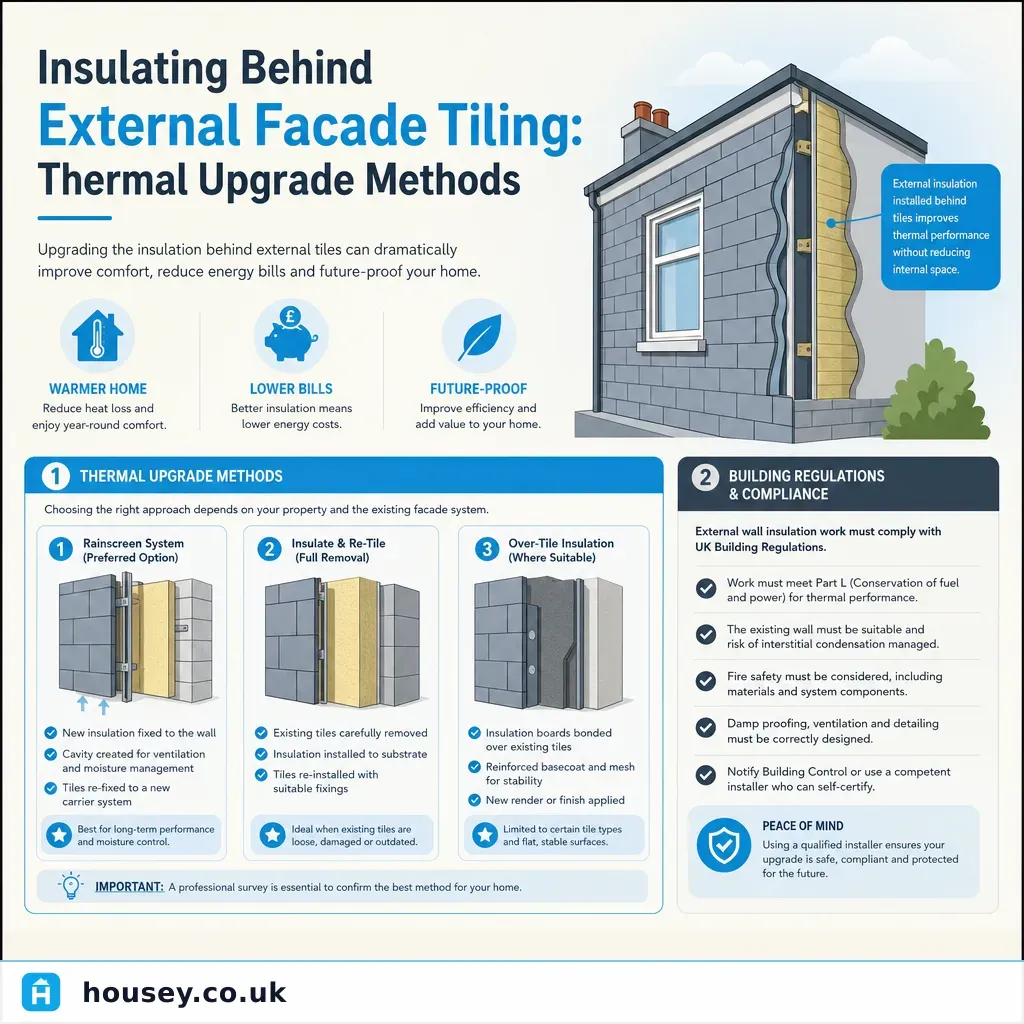
Insulating Behind External Facade Tiling: Thermal Upgrade Methods
Insulating behind external facade tiling is technically complex — the insulation layer must be compatible with tile fixings, manage moisture correctly, and comply with Building Regulations Part L. For most UK properties, the two practical routes are removing and reinstating the tiled facade with insulation behind, or applying insulation internally. Each has significant implications for vapour control and planning permission.
 Energy & Retrofit
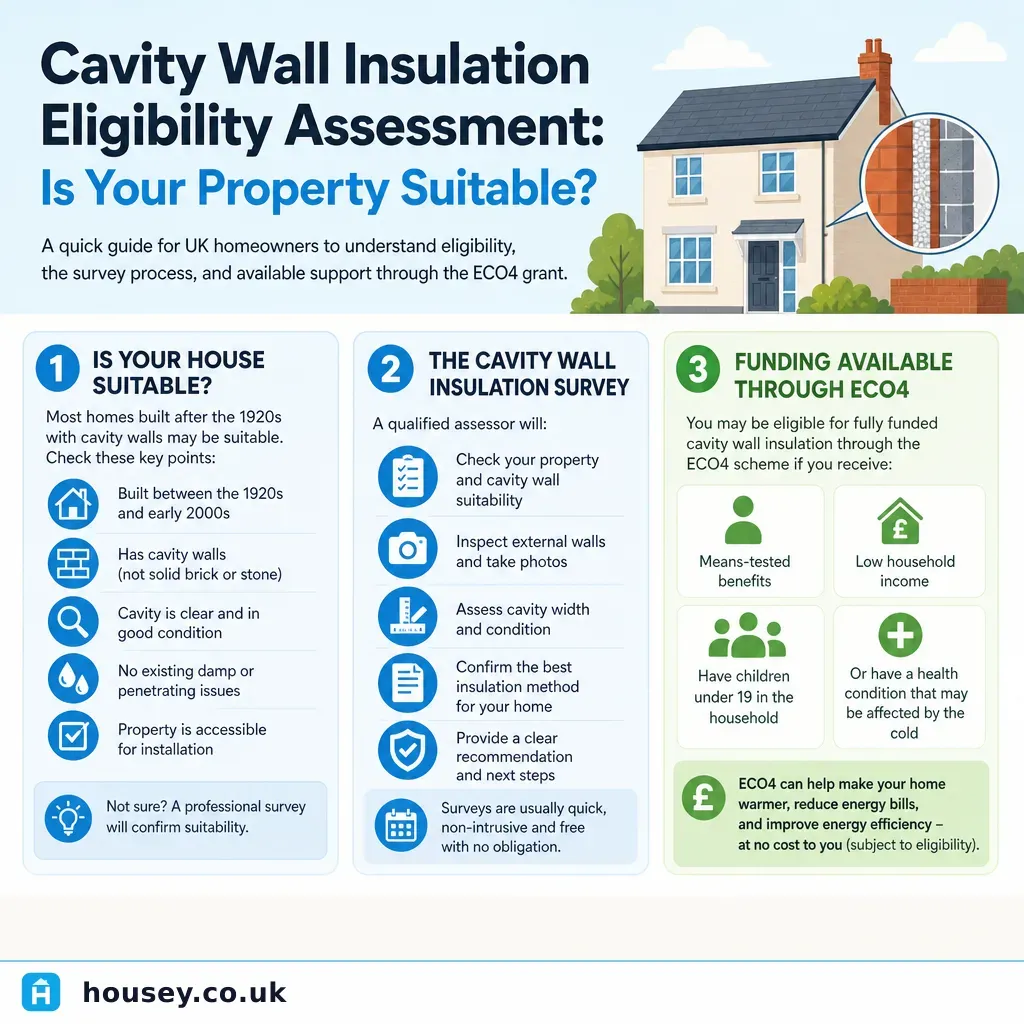
Cavity Wall Insulation Eligibility Assessment: Is Your Property Suitable?
Cavity wall insulation suits most UK homes built from around 1920 onwards with unfilled cavities at least 50mm wide in sheltered or moderately exposed locations. Properties with active damp, narrow cavities, or in high-exposure coastal areas are often unsuitable. A survey by a PAS 2030-certified assessor is the essential first step before booking an installer.
 Energy & Retrofit
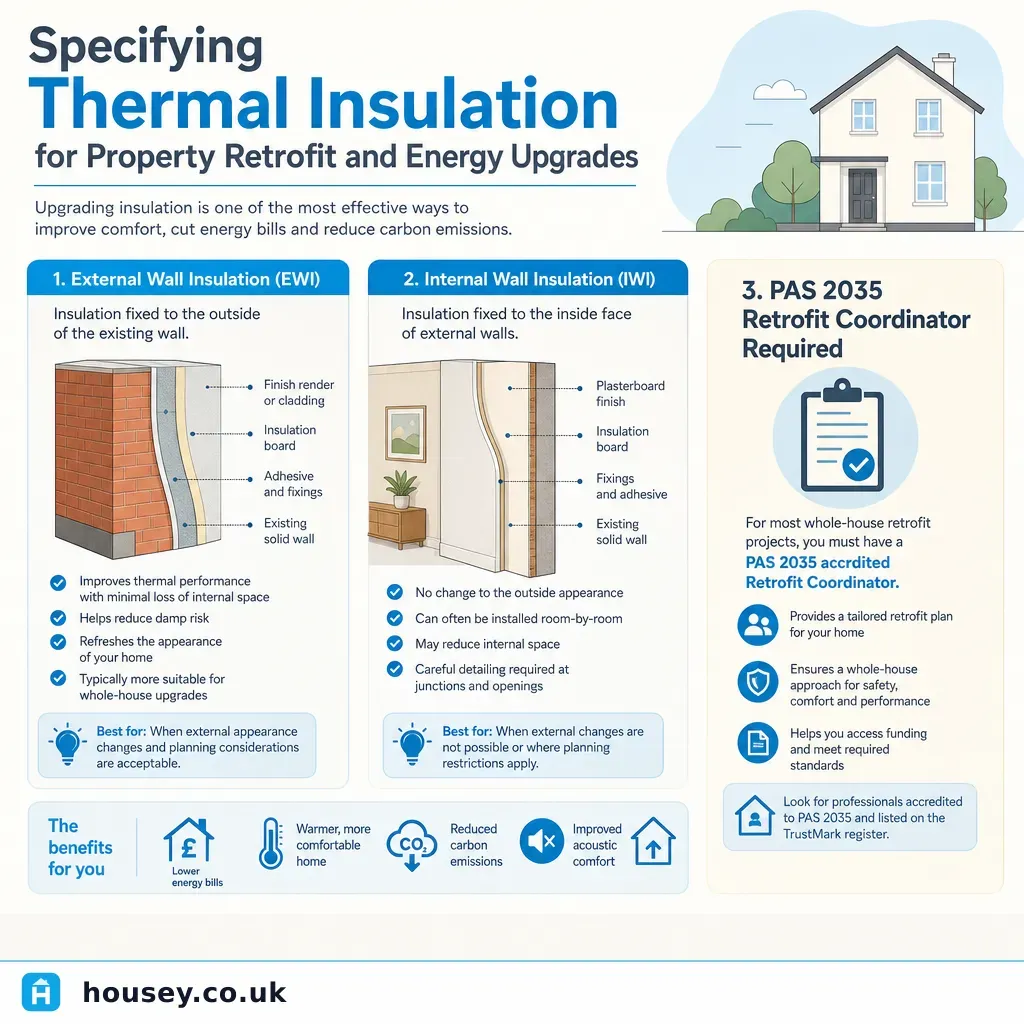
Specifying Thermal Insulation for Property Retrofit and Energy Upgrades
Specifying thermal insulation for UK retrofit requires matching the product to your property's construction, moisture conditions, and heating system. Loft and cavity wall insulation are relatively low risk. Solid wall insulation — internal or external — must be assessed by a qualified Retrofit Assessor under PAS 2035 to avoid interstitial condensation and structural damage.
 Energy & Retrofit
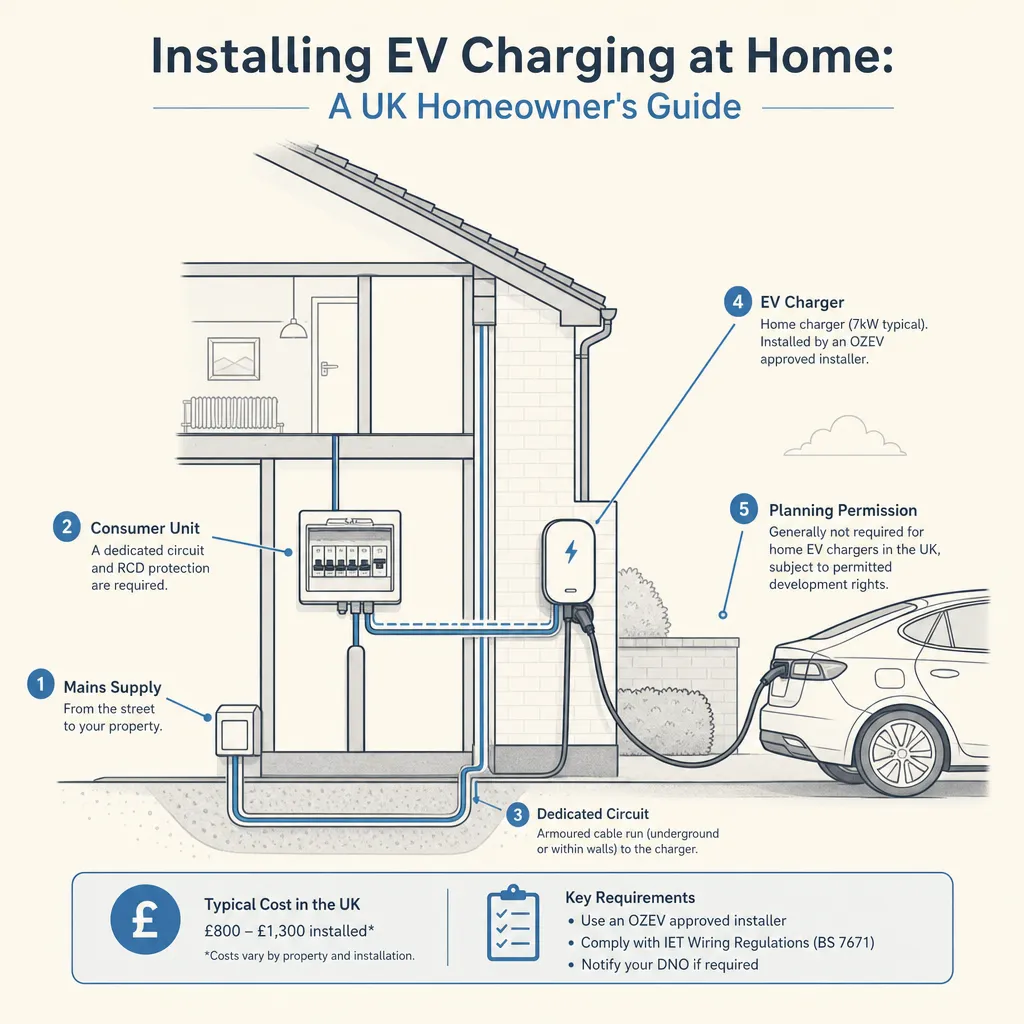
Installing EV Charging at Home: A UK Homeowner's Guide
Most UK homeowners install a 7 kW AC wallbox, which adds around 25–30 miles of range per hour on a dedicated 32A circuit. Installation by an OZEV-approved electrician typically costs £800–£1,200 including equipment and labour. Smart charger functionality has been mandatory for new home installations since 2022. Eligible renters and flat owners can claim up to £350 through the EV Chargepoint Grant.
 Energy & Retrofit
Ground Source Heat Pump Systems: Design and Installation
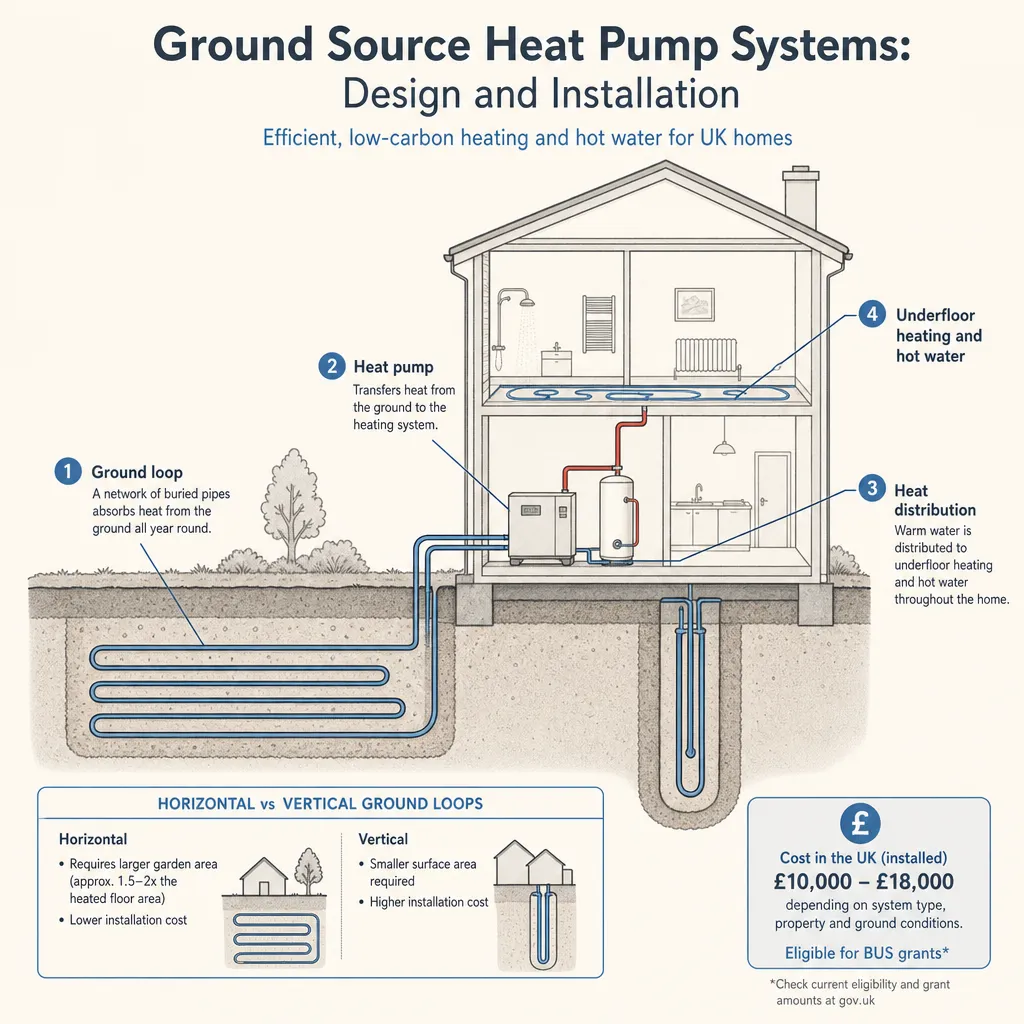
Ground source heat pumps extract heat from the earth through buried loops or boreholes, then upgrade it for space heating and hot water. UK systems typically achieve a Seasonal Coefficient of Performance (SCOP) of 3.5–4.5. Installation requires a heat loss assessment, MCS-certified contractors, and — to access the £7,500 Boiler Upgrade Scheme grant — an eligible property in England or Wales.
 Energy & Retrofit
Smart Glass Windows: How Dynamic Glazing Works and Its Benefits
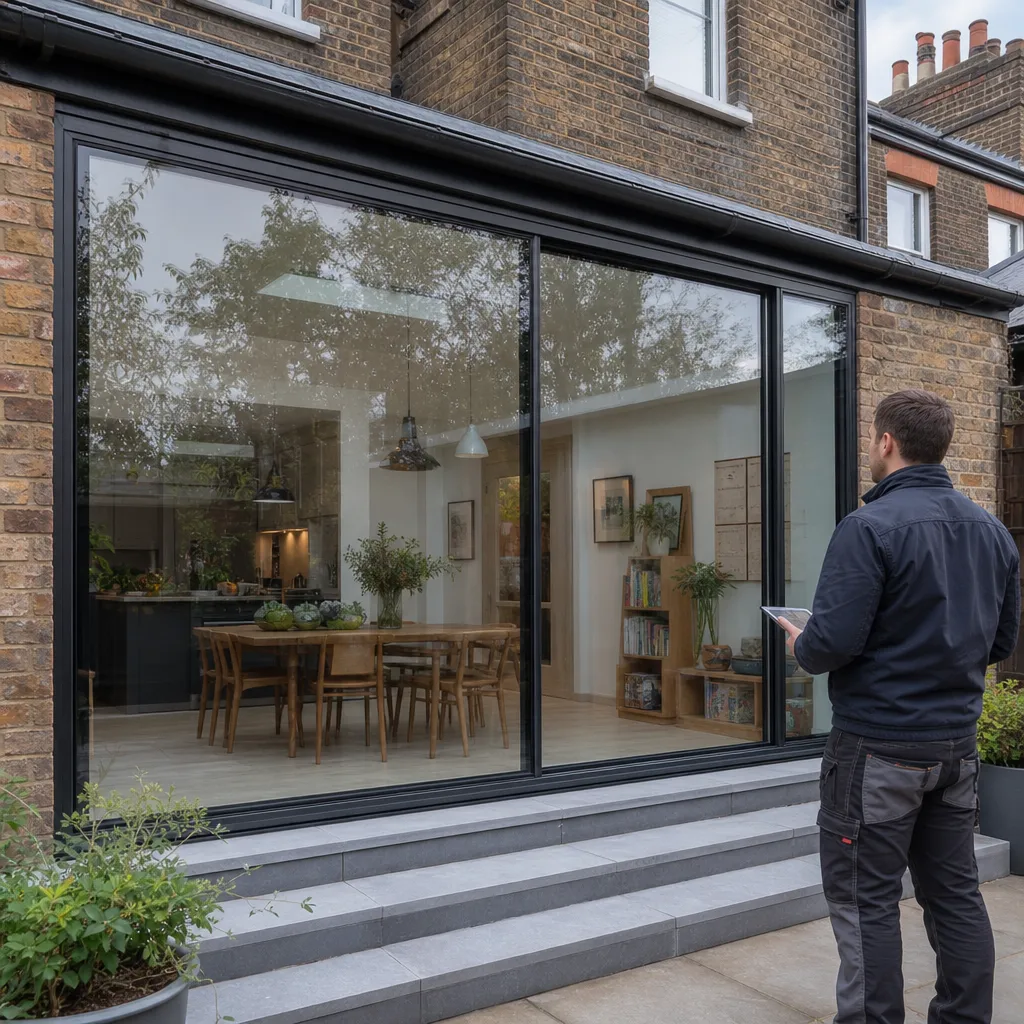
Smart glass changes its optical properties through one of four physical mechanisms: electrochromic glass tints gradually when a small voltage is applied and holds that state without continuous power; PDLC glass aligns liquid crystals to become transparent when mains voltage is applied; SPD glass aligns particles under voltage; and thermochromic glass responds passively to heat. Each technology suits different applications in UK homes.
 Energy & Retrofit
Mini Split Air Conditioning: Installation Costs and Performance
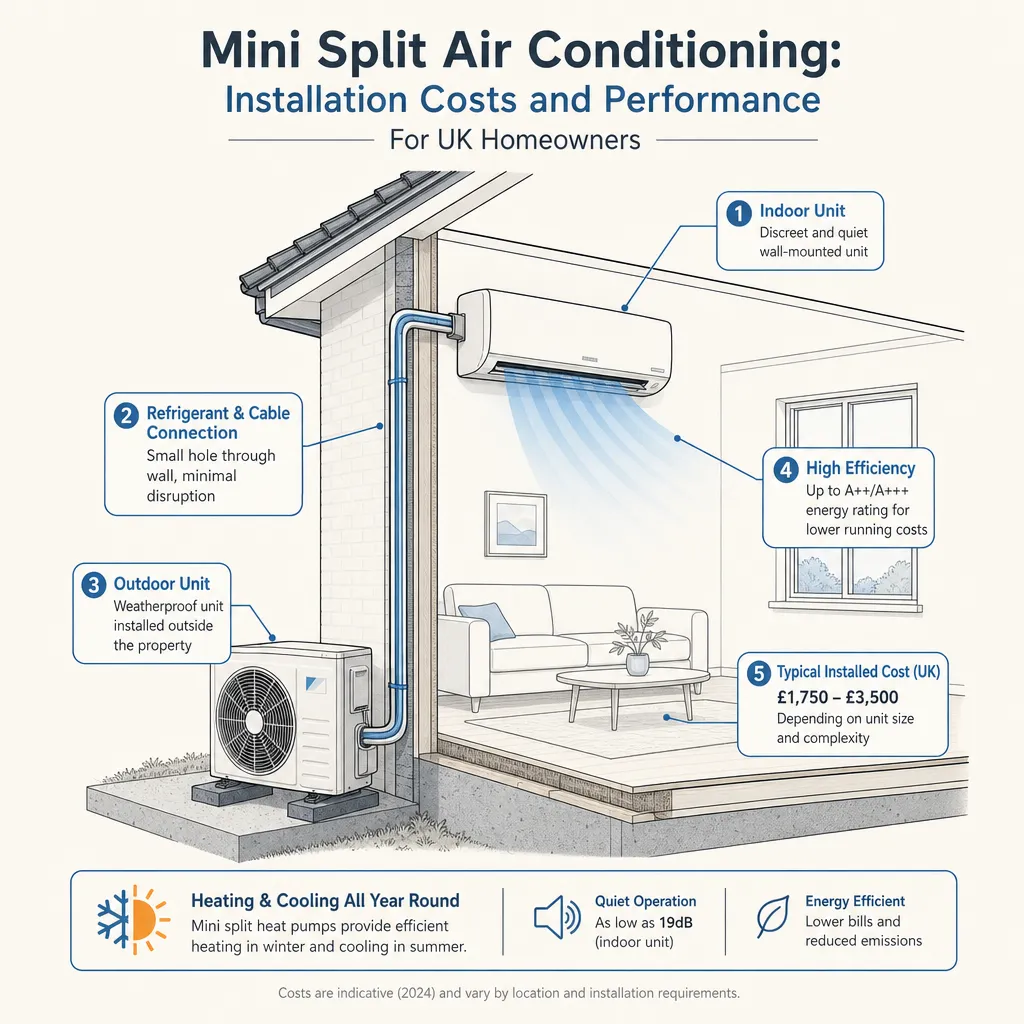
A mini-split (ductless) air conditioning unit costs roughly £1,500–£4,000 installed for a single room in the UK. Most modern units also provide heating via heat pump mode. F-Gas regulations require a certified engineer to handle refrigerant — this is a legal requirement. Outdoor unit installation on most houses falls under permitted development rights, but restrictions apply to flats, listed buildings, and conservation areas.
 Energy & Retrofit
Understanding Heat Pumps: Technology and Suitability for UK Homes
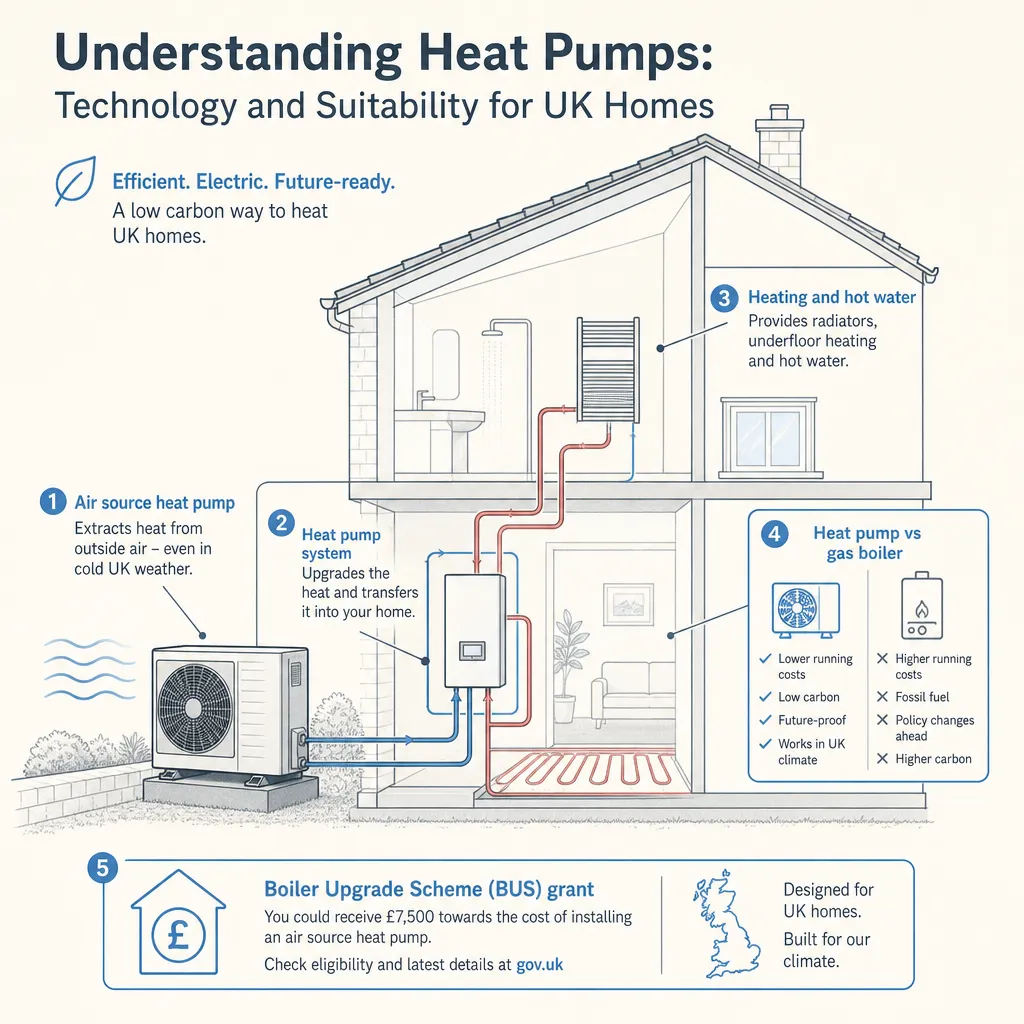
Heat pumps extract heat from the air or ground and transfer it indoors, typically achieving efficiencies of 250–400% compared to a conventional boiler's near 100%. Most UK homes benefit from a heat loss assessment and fabric improvements before installation. The Boiler Upgrade Scheme currently offers a £7,500 grant for eligible air and ground source heat pump installations.
 Energy & Retrofit
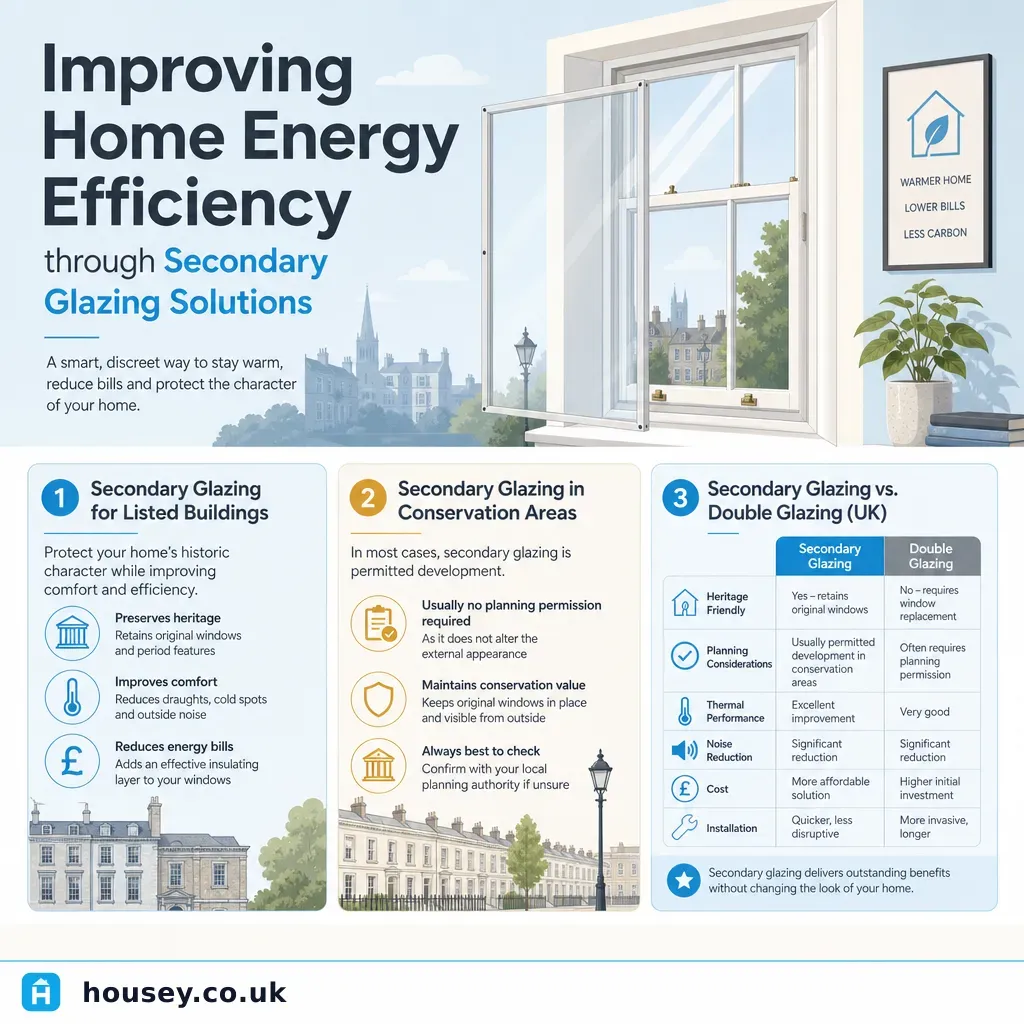
Improving Home Energy Efficiency through Secondary Glazing Solutions
Secondary glazing fits an additional pane inside your existing window reveal, reducing heat loss and noise without replacing the original frame. It suits listed buildings, conservation areas, and solid-wall homes. Well-installed systems can reduce window U-values from around 5.0 W/m²K to below 2.0 W/m²K — broadly comparable to standard double glazing.
 Energy & Retrofit
Optimising Heating Systems for Energy Efficiency
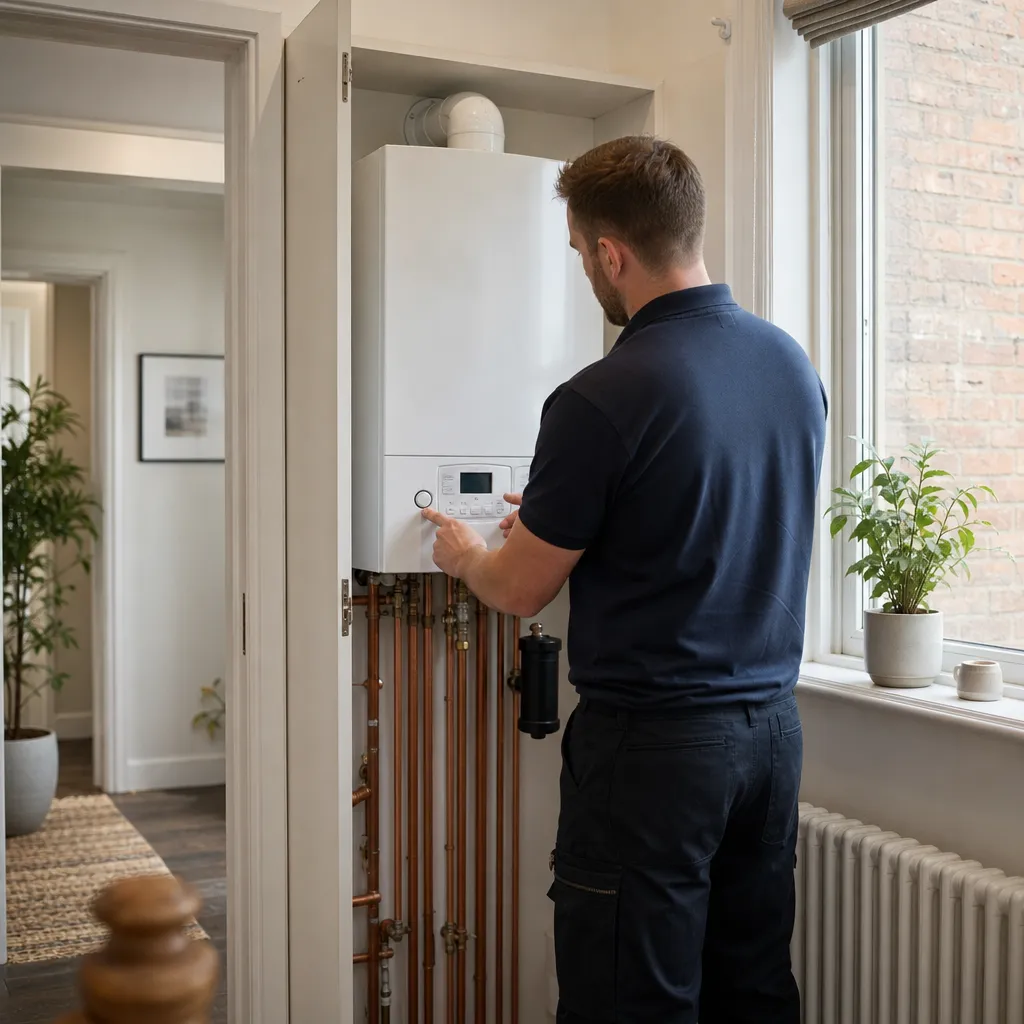
Optimising a UK heating system usually involves improving controls such as smart thermostats and thermostatic radiator valves, ensuring the boiler or heat pump is correctly sized, and upgrading radiators or pipework where needed. For gas boilers, annual servicing by a Gas Safe registered engineer is a legal requirement for rental properties. Heat pump installation requires a room-by-room heat loss calculation to BS EN 12831 before sizing.
 Energy & Retrofit
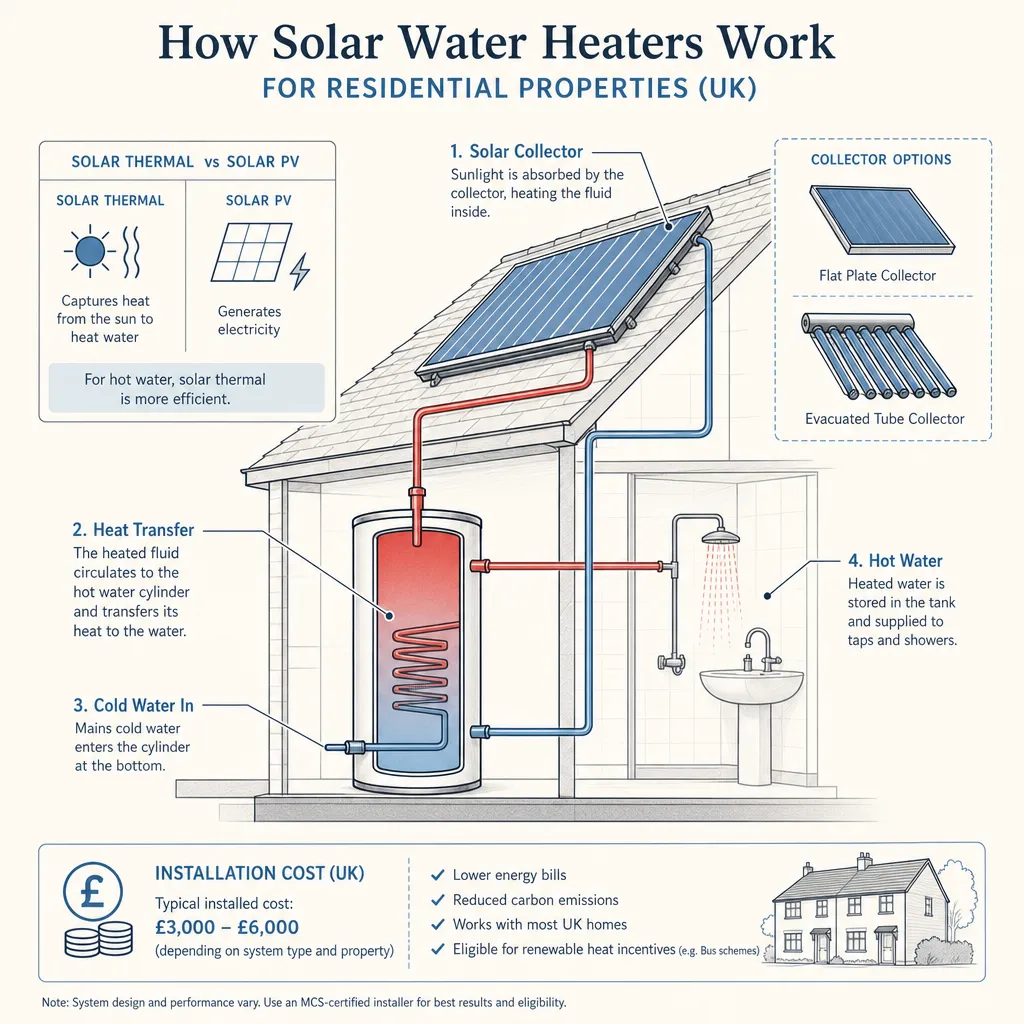
How Solar Water Heaters Work for Residential Properties
Solar water heaters use roof-mounted collectors to capture heat from sunlight and transfer it to a hot water cylinder via a fluid circuit. They can supply 40–60% of a typical UK household's annual hot water demand. Two main collector types are available — flat plate and evacuated tube — each suited to different roof conditions and UK climates.
 Energy & Retrofit
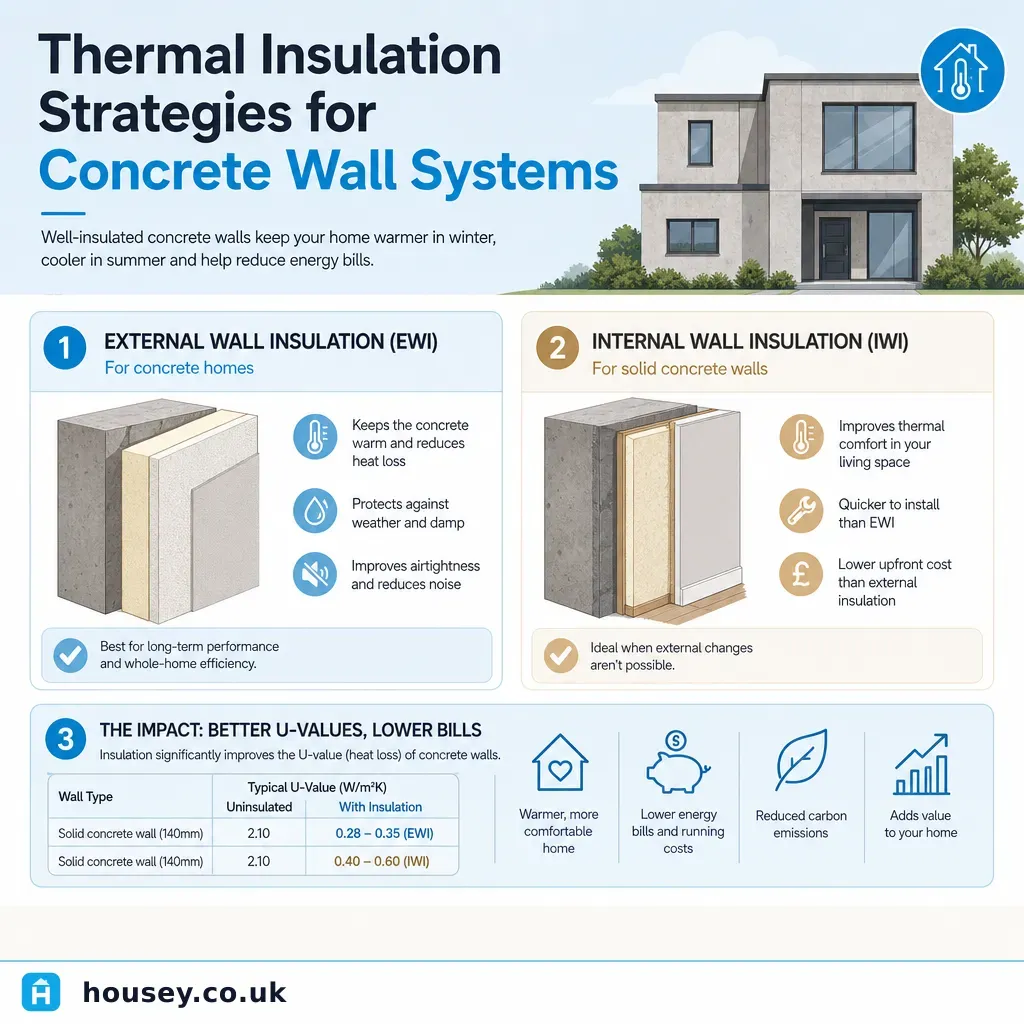
Thermal Insulation Strategies for Concrete Wall Systems
Concrete walls can be insulated using three main approaches: external wall insulation (EWI), internal wall insulation (IWI), or — where a cavity exists — cavity fill. EWI is generally preferred for solid concrete construction as it avoids condensation risk on the inner wall face, preserves floor area, and treats structural cold bridges. Each option carries different costs, planning implications, and moisture-management requirements.