Knowledge Base
Property advice that actually helps
Researched, UK-specific guides for every stage of homeownership — from buying and surveys to retrofit, planning and major works.
 Improvement & Build
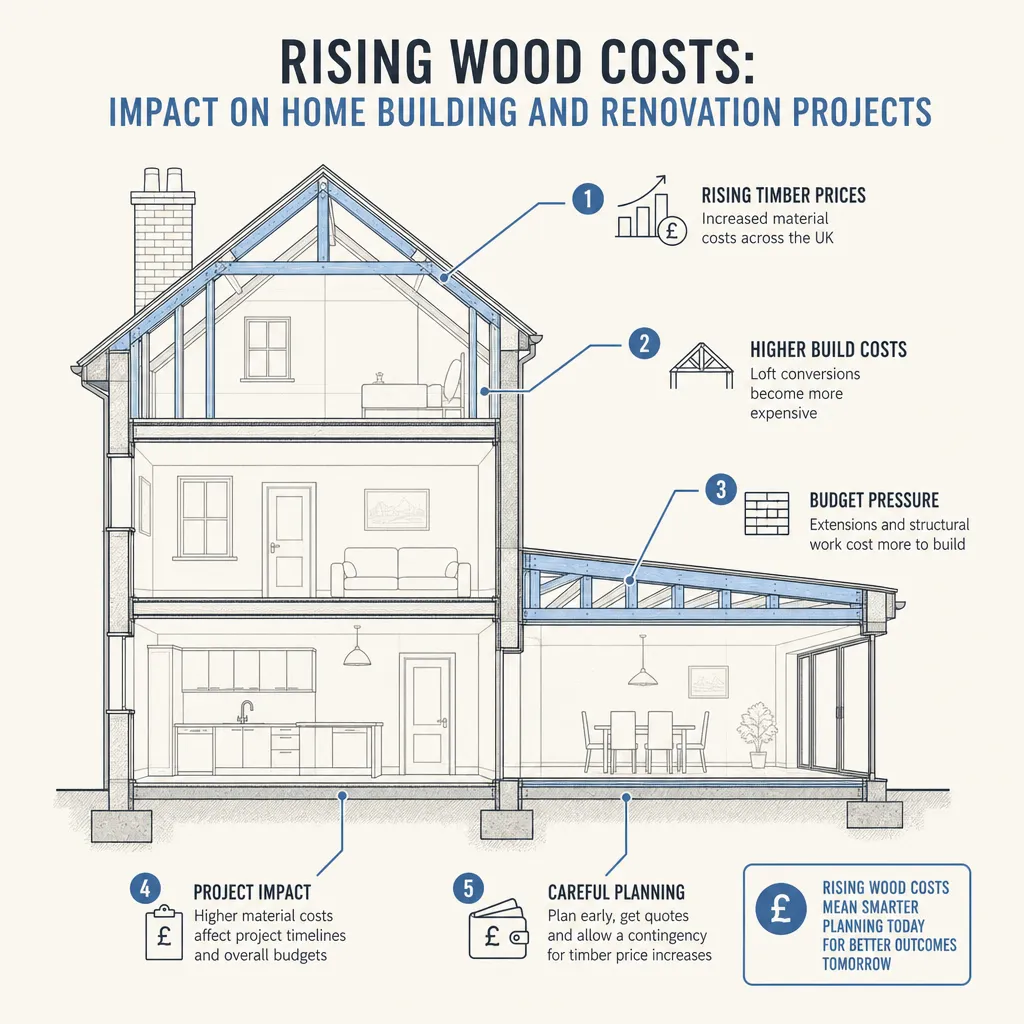
Rising Wood Costs: Impact on Home Building and Renovation Projects
Rising timber prices affect UK home renovation budgets most on timber-frame extensions, loft conversions, and self-builds, where structural wood can account for 15–25% of material costs. To protect your budget, ask contractors for itemised material schedules, understand whether your contract is fixed-price or cost-plus, and build in a contingency of at least 10–15% — more during periods of supply-chain volatility.
 Improvement & Build
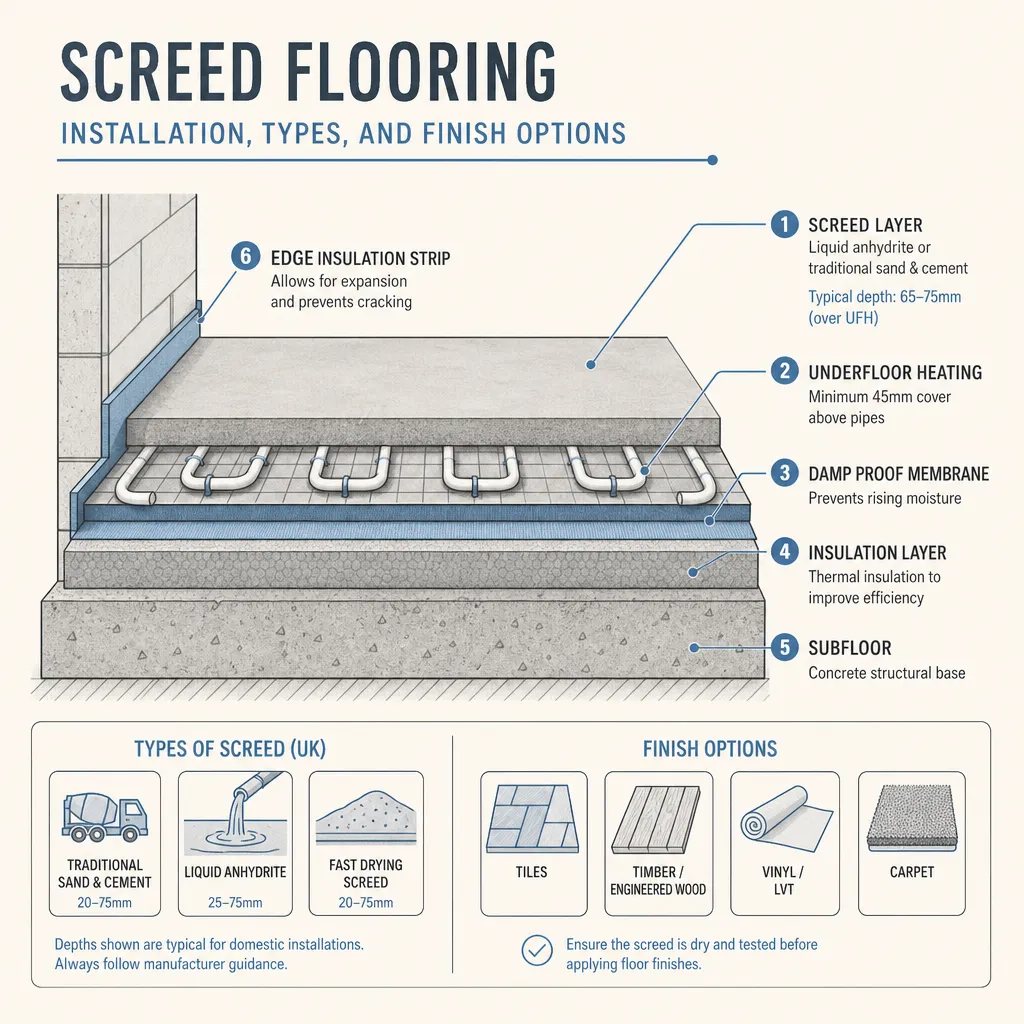
Screed Flooring: Installation, Types, and Finish Options
Screed is a cement-based layer applied over a structural concrete slab to create a smooth, level surface for floor finishes. UK projects use either sand-and-cement or liquid anhydrite screed. The right type depends on whether underfloor heating is installed, the depth available, and the intended finish — most domestic screeds are 30–75 mm deep.
 Improvement & Build
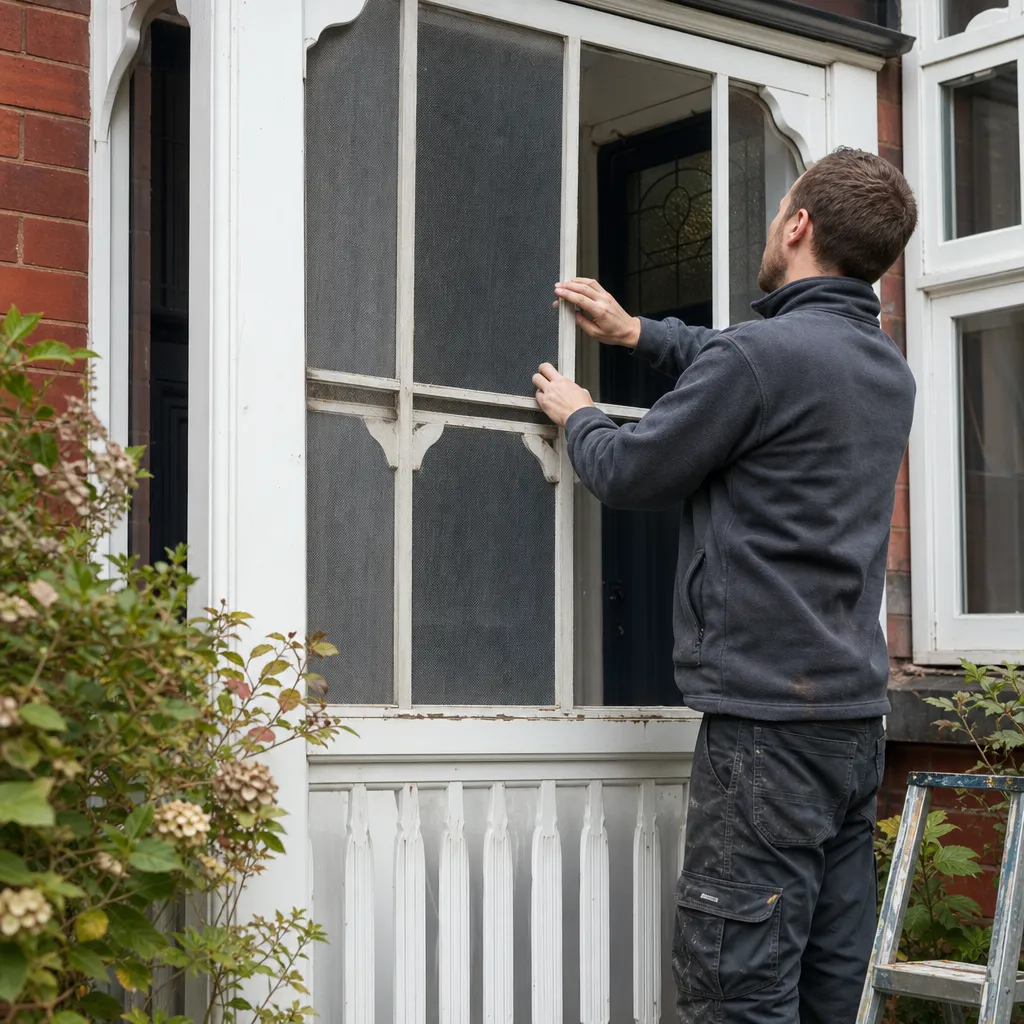
Repairing Damaged Porch Screens: When to Call a Specialist
Most porch screen repairs fall into two categories: surface work — cracked paint, minor mesh tears, loose beading — that a confident homeowner can handle, and structural or glass replacements that require a specialist. Replacing any glazing in an external frame always requires FENSA certification or building control sign-off under UK Building Regulations.
 Improvement & Build
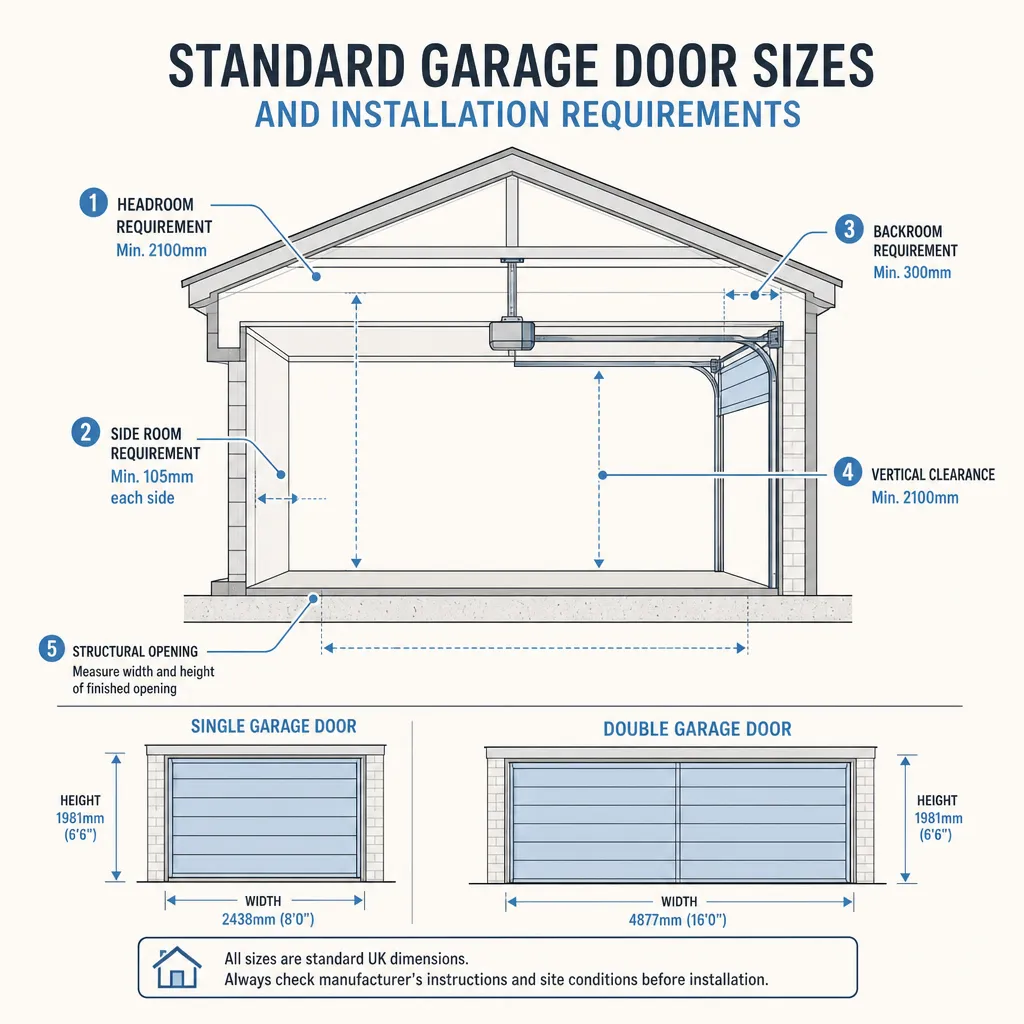
Standard Garage Door Sizes and Installation Requirements
Standard UK single garage doors fit a structural opening of 2134mm (7 ft) wide by 1981mm (6 ft 6 in) high; double doors typically span 4267mm (14 ft) wide. The right door type depends on available headroom, side clearance, and whether automation is needed. Always measure the masonry opening — not the old door frame — before placing any order.
 Improvement & Build
Leaded Window Repair and Restoration Costs
Leaded window repair in the UK typically costs £150–£600 for minor re-soldering or resealing, rising to £800–£2,500+ for full panel removal and restoration. Costs depend on window size, the extent of lead came damage, glass condition, and whether the property is listed or in a conservation area.
 Improvement & Build
Fence Painting and Exterior Wood Treatment Costs
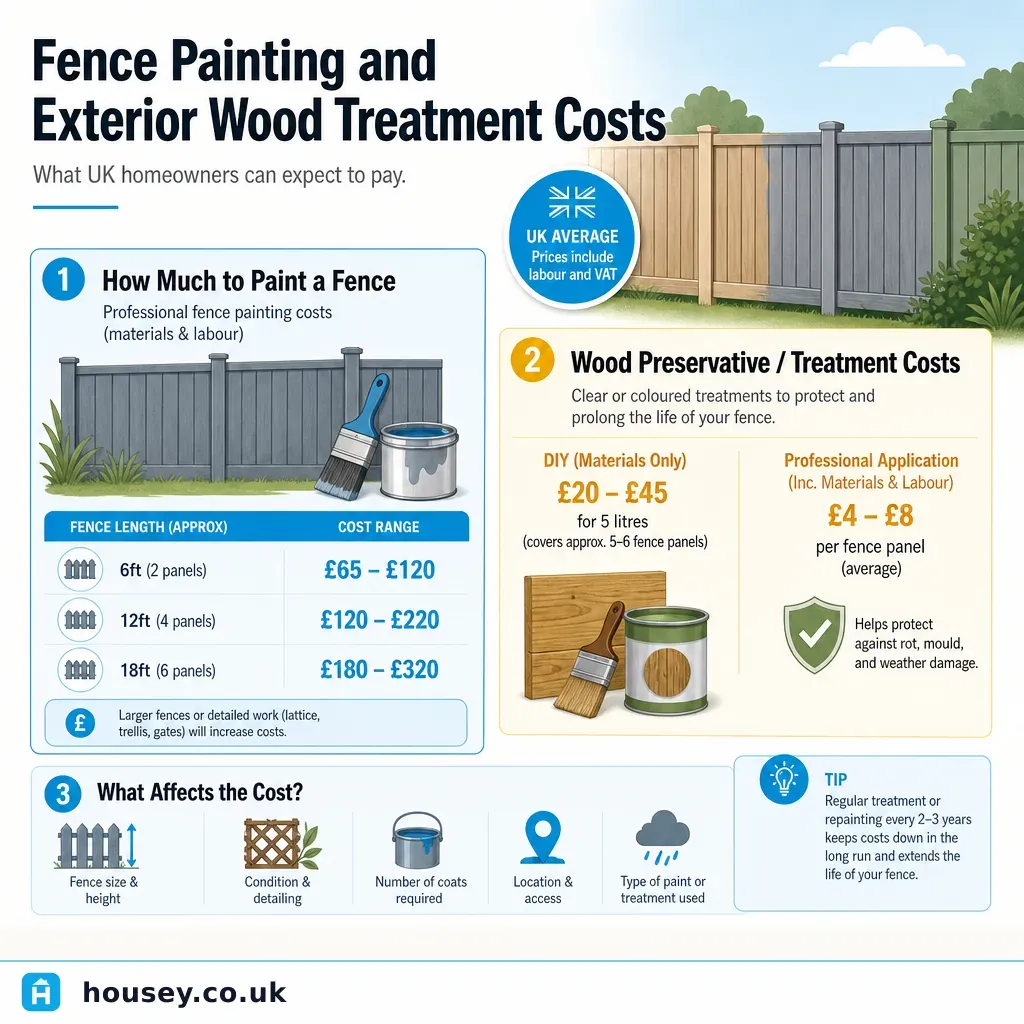
Professional fence painting or wood treatment in the UK typically costs £150–£400 for an average 30-panel garden fence, or roughly £5–£15 per panel. The exact price depends on fence length, height, condition, and treatment type. DIY materials for the same job cost £70–£170, though preparation time and access make professional treatment better value on larger gardens.
 Improvement & Build
Metal Roofing: Types, Durability, and Installation Costs
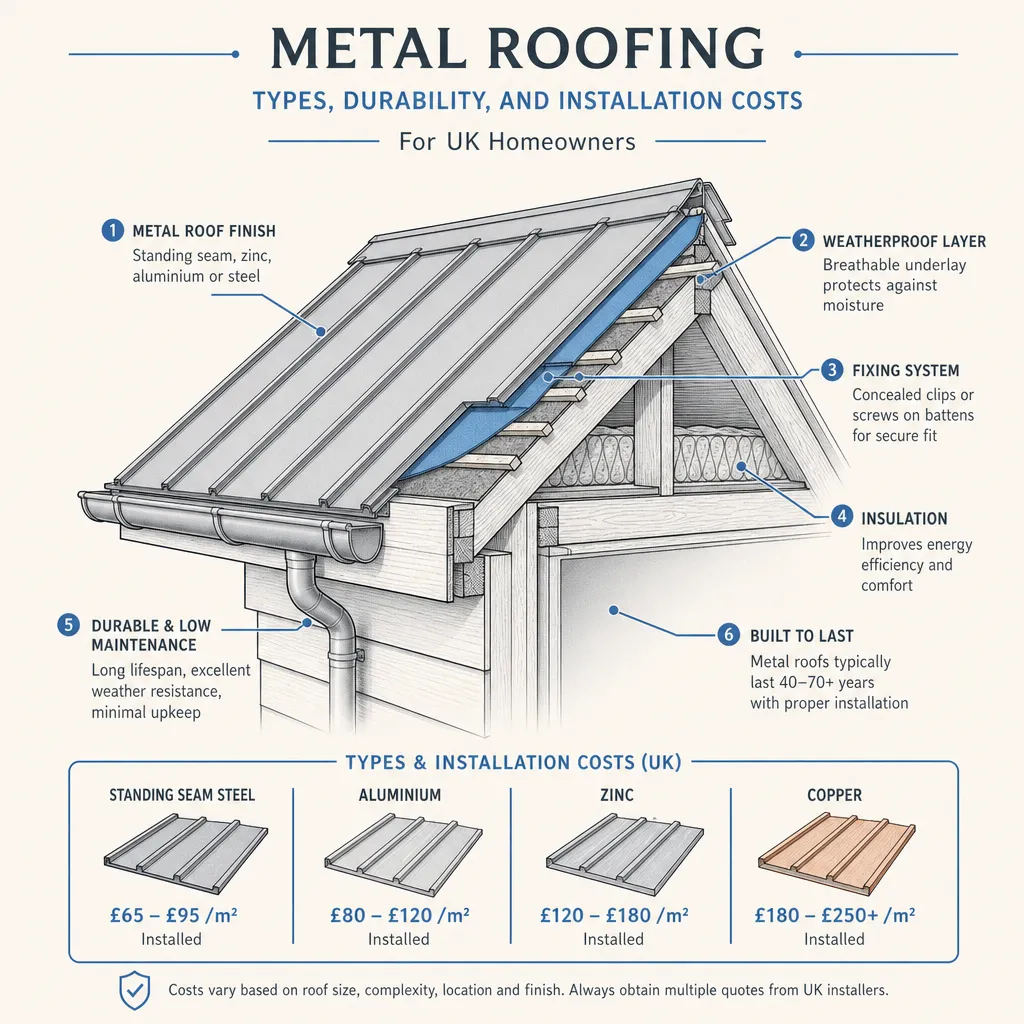
Metal roofing in the UK includes standing seam, corrugated sheet, and metal tile systems in steel, aluminium, zinc, or copper. Lifespan ranges from around 30 years for coated steel to over 100 years for zinc or copper. Installed costs typically run £50–£220 per square metre depending on material, system type, roof pitch, and complexity. Most residential installations require Building Regulations compliance.
 Improvement & Build
Labour and material costs for floor tiling projects
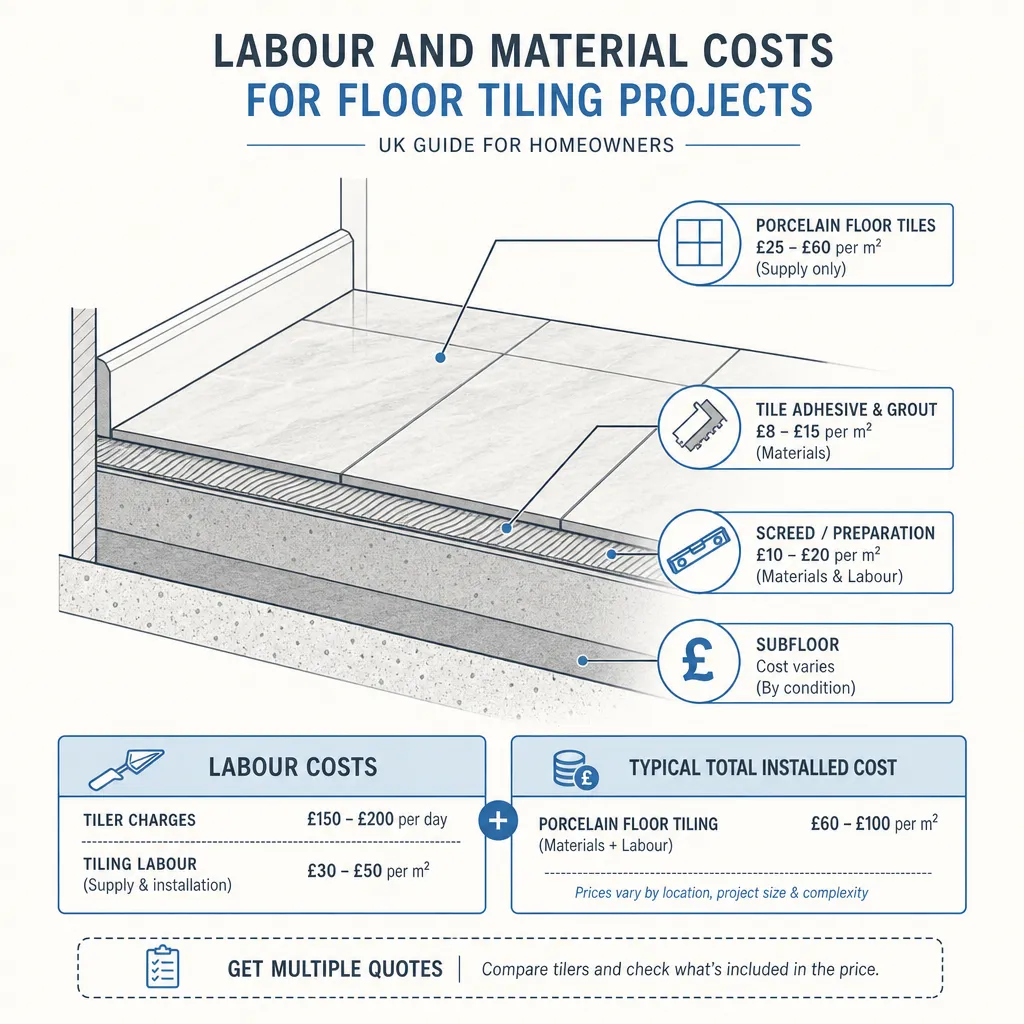
Floor tiling in the UK typically costs £30–£60 per m² in labour, plus materials ranging from £10–£40/m² for ceramic to £50–£150+/m² for natural stone. Surface preparation is usually priced separately and adds £5–£25 per m². Always request itemised quotes separating labour, materials, and preparation.
 Improvement & Build
Storm Door Closer Mechanism: Installation and Adjustment Guide
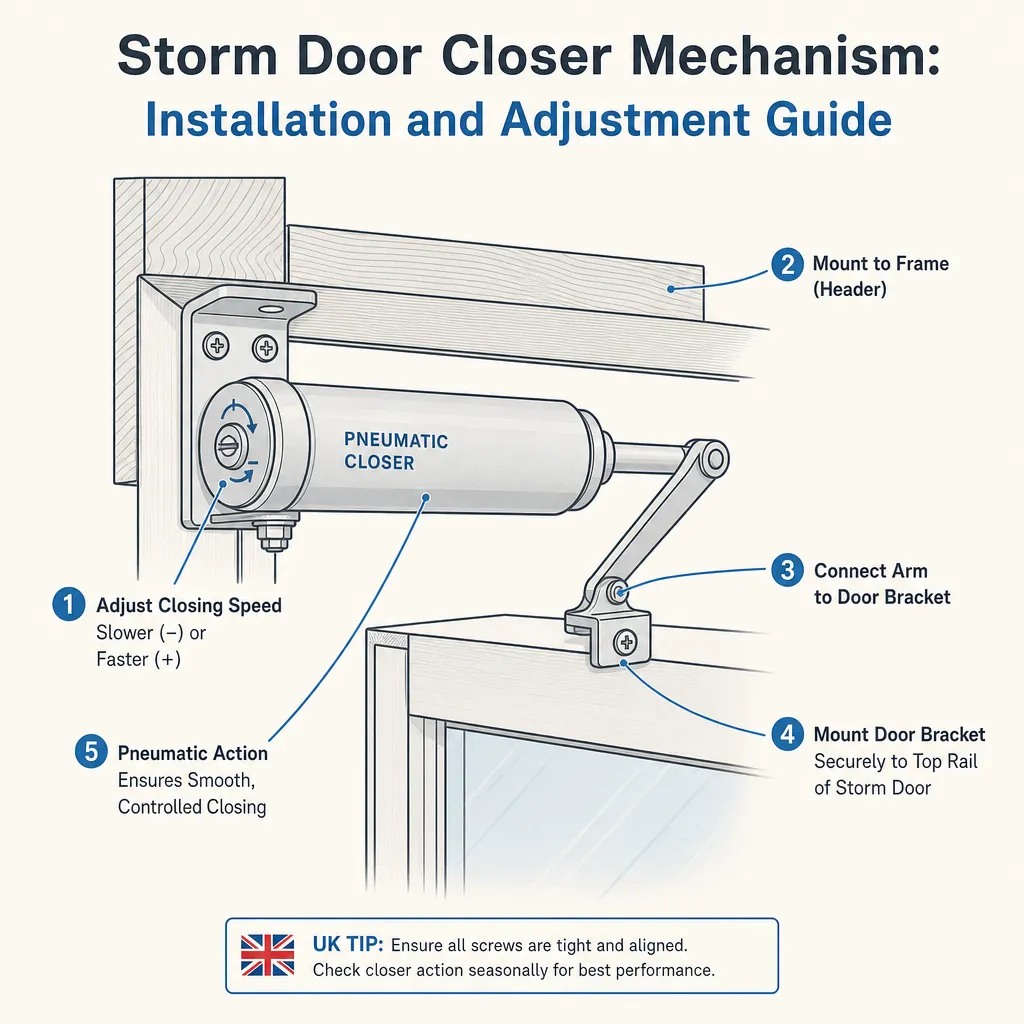
Storm door closers are adjusted via a small screw at the end of the cylinder — clockwise slows the door, anticlockwise speeds it up. Aim for a full close in 3–7 seconds. Seasonal adjustment is normal for pneumatic types. If the door slams or fails to latch, check both the speed screw and the pin bracket position on the closer arm.
 Improvement & Build
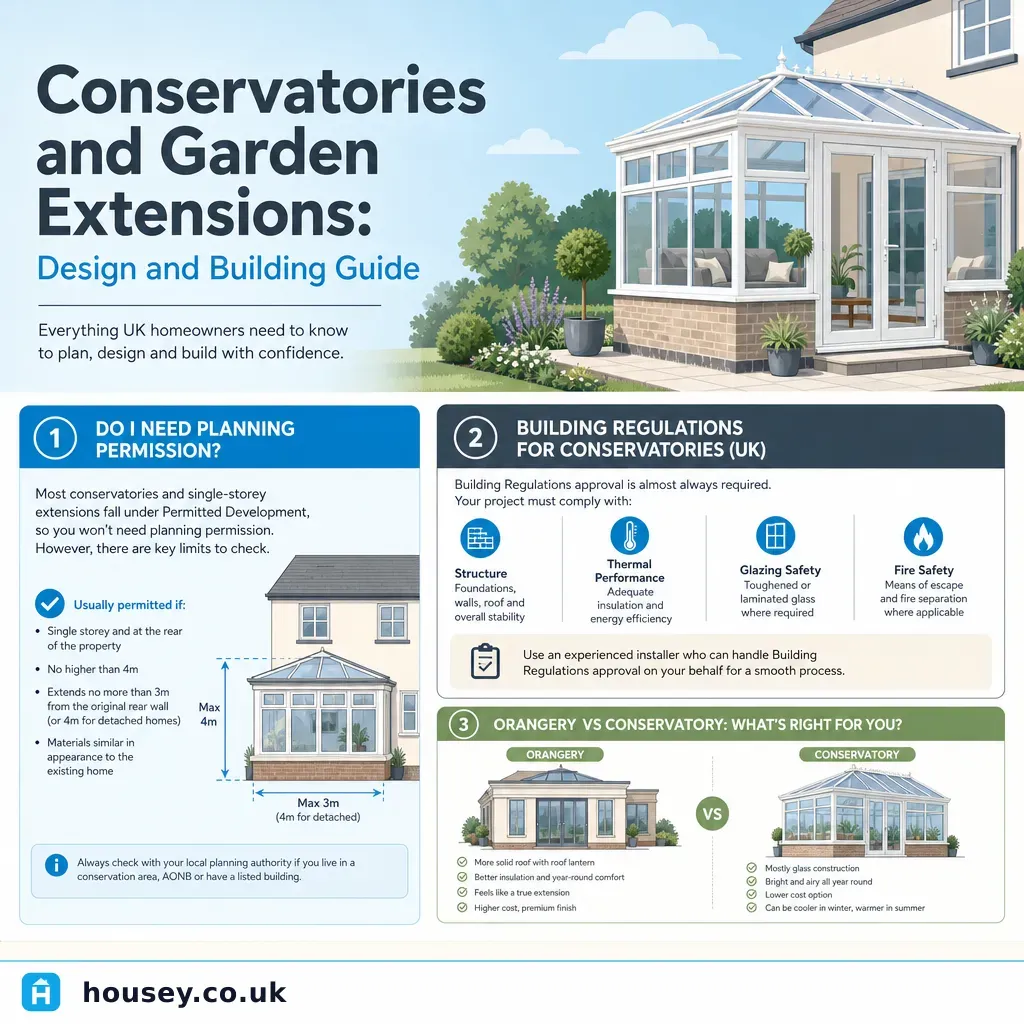
Conservatories and Garden Extensions: Design and Building Guide
Most conservatories qualify as permitted development in England if they are single-storey, within 50% of original curtilage, and meet dimensional limits. Since April 2023, any conservatory open to a heated room must meet Part L thermal standards. Full building regulations approval is needed for orangeries and garden rooms with solid roofs.
 Improvement & Build
UK Garden Planting Calendar and Seasonal Timing
In the UK, most vegetables are sown under cover from February to April and transplanted outdoors after the last frost — mid-May in most of England, later in Scotland and upland areas. Autumn (October–November) is the best time to plant hardy shrubs and bare-root trees. Spring bulbs go in September to November; summer-flowering bulbs in March to May.
 Improvement & Build
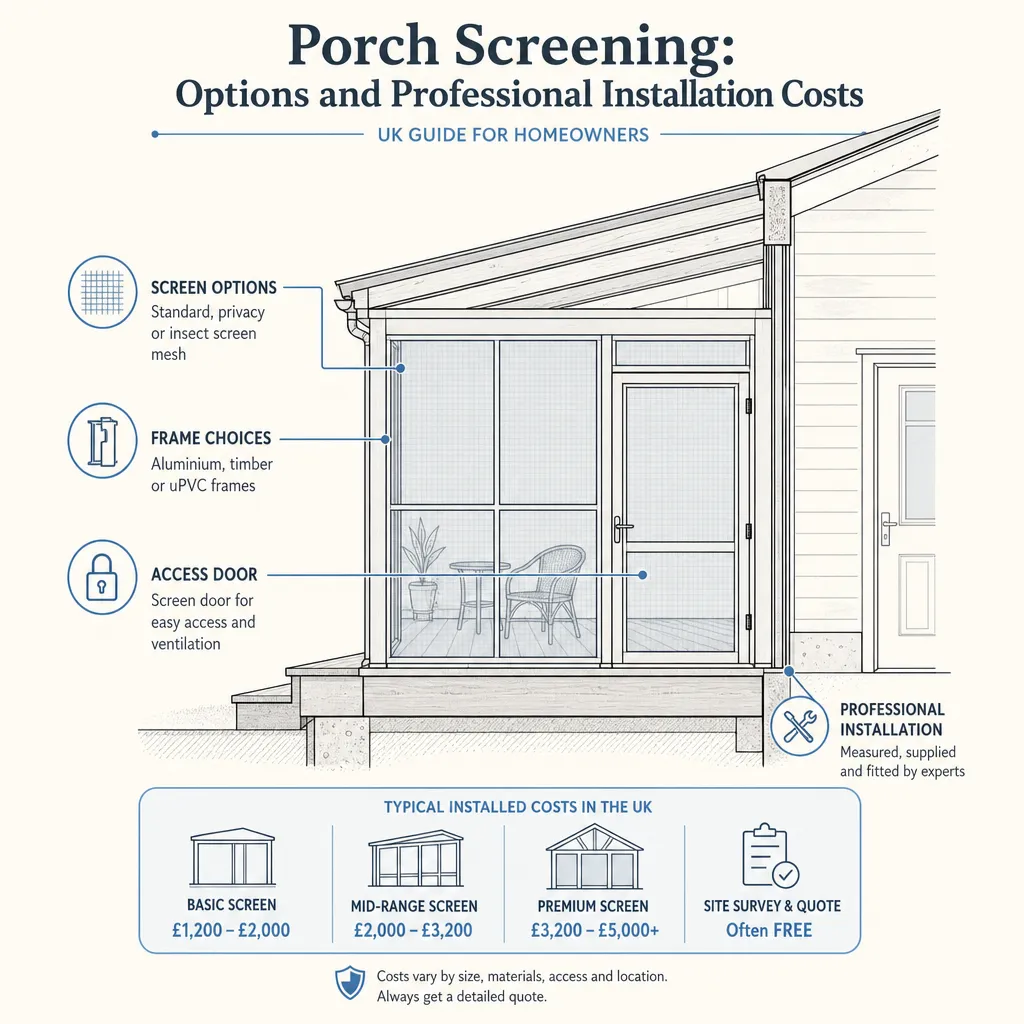
Porch Screening: Options and Professional Installation Costs
Porch screening ranges from simple insect mesh on a timber frame to bespoke aluminium-framed glazed enclosures. The right system depends on your budget, desired use, and whether you want year-round shelter. In England, a porch covering no more than 3 m² may qualify as permitted development, but larger or fully enclosed structures usually require planning permission from your local authority.