Knowledge Base
Property advice that actually helps
Researched, UK-specific guides for every stage of homeownership — from buying and surveys to retrofit, planning and major works.
 Improvement & Build
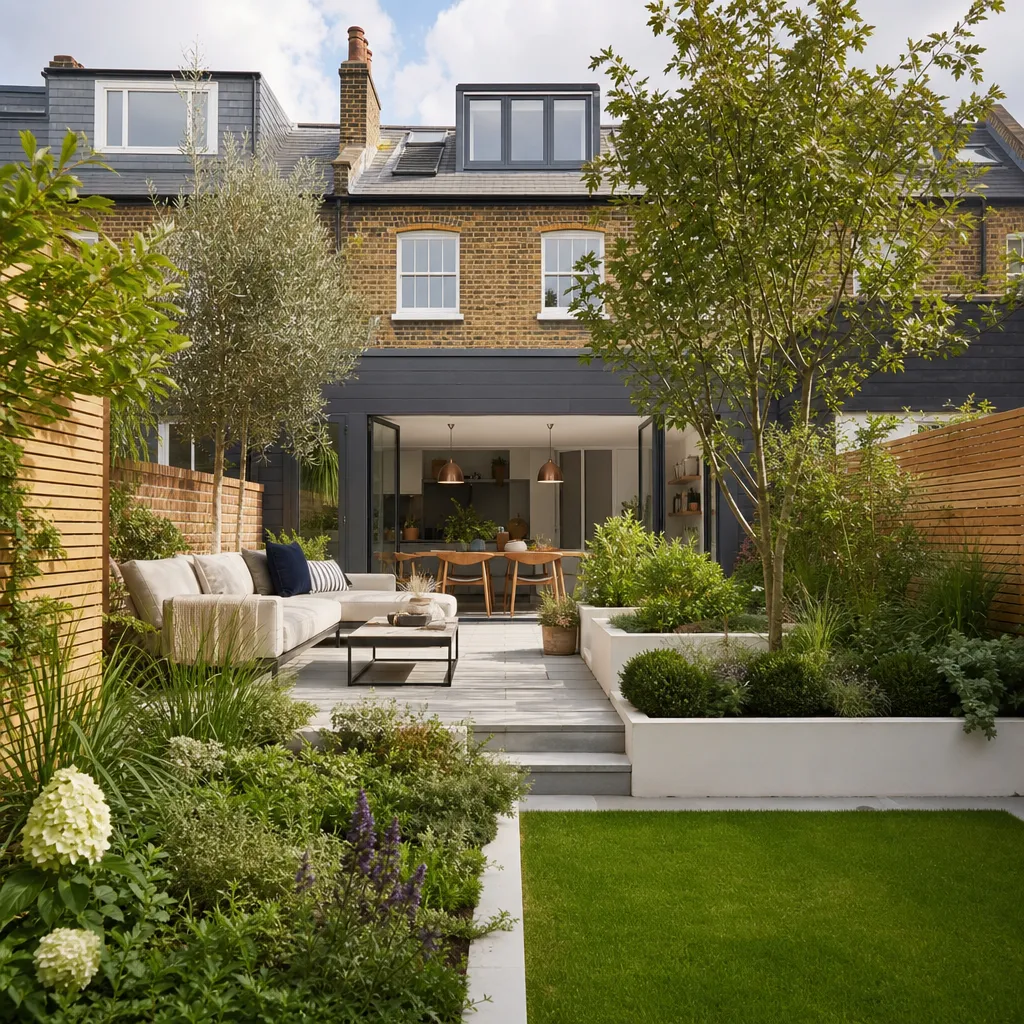
Seasonal Garden Transformations and Outdoor Design Ideas
A successful garden transformation in the UK works with the seasons rather than against them — establishing structure and hard landscaping in autumn or winter, planting in spring, and enjoying the results through summer. Good outdoor design combines long-season planting, defined zones for different uses, and materials suited to the British climate. Planning ahead and phasing works helps manage cost and disruption.
 Improvement & Build
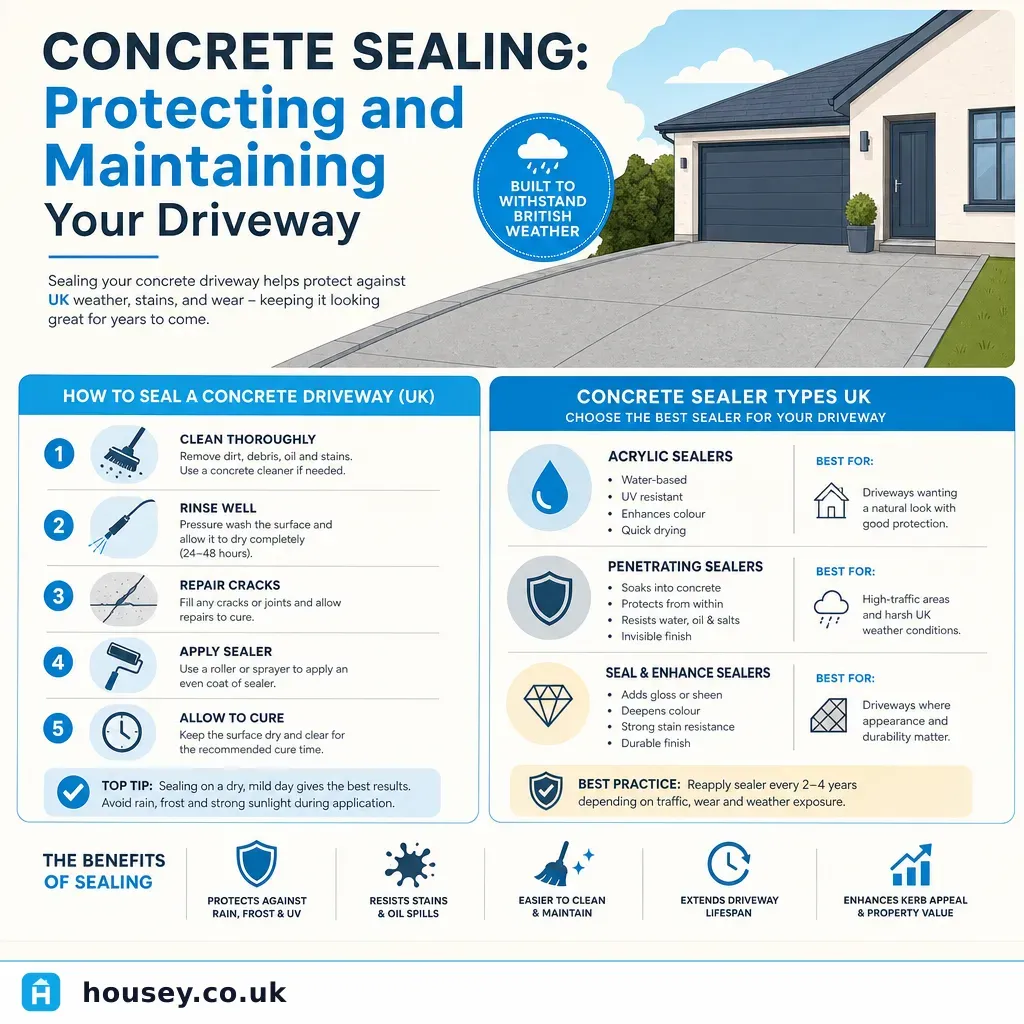
Concrete Sealing: Protecting and Maintaining Your Driveway
Sealing a concrete driveway protects against water ingress, freeze-thaw damage, oil stains, and surface wear. Most UK driveways benefit from resealing every 3–5 years. Products fall into two categories: penetrating sealers that work below the surface, and film-forming sealers that coat it. Preparation matters as much as product choice — concrete must be clean, dry, and defect-free before any sealer is applied.
 Improvement & Build
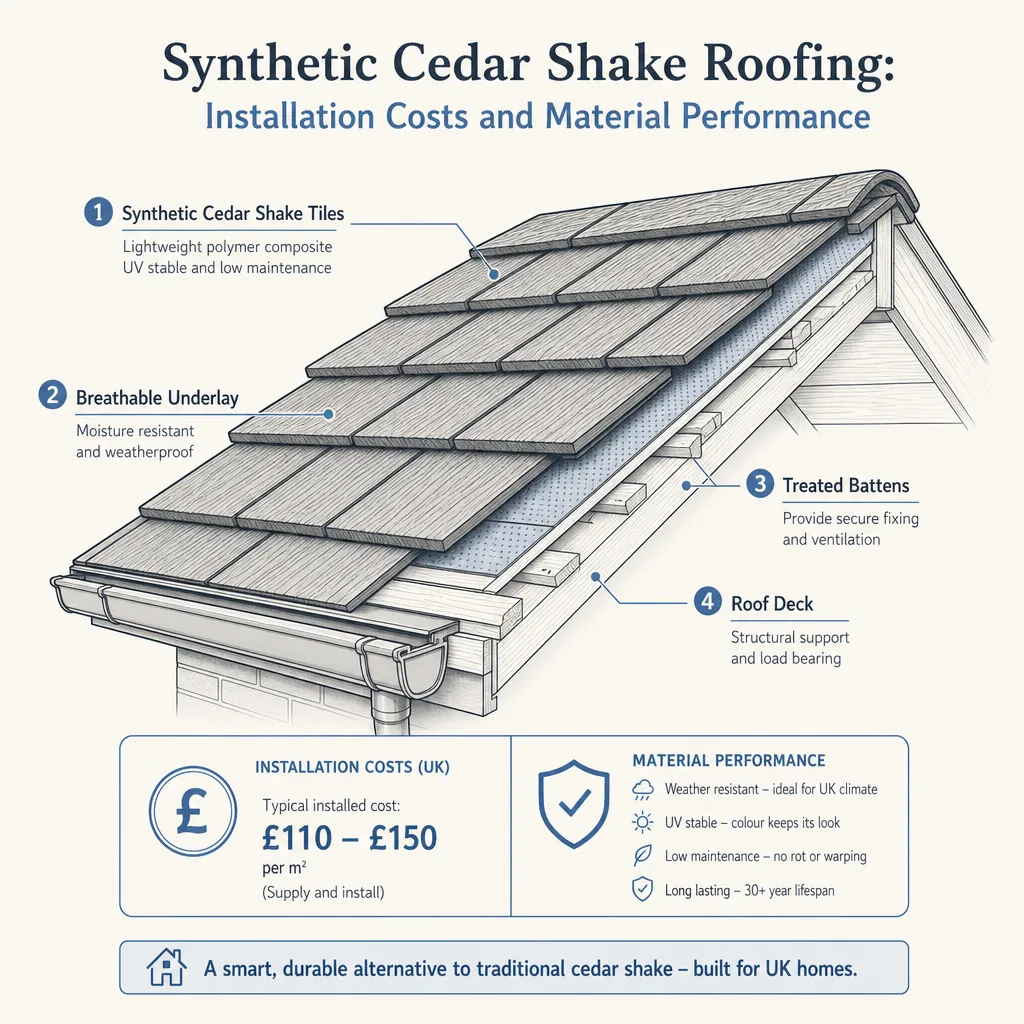
Synthetic Cedar Shake Roofing: Installation Costs and Material Performance
Synthetic cedar shake roofing uses polymer composite, rubber, or fibre-cement tiles to replicate the look of natural cedar wood shingles. In the UK, installed costs tend to sit above standard concrete tile but are broadly comparable to natural slate. Typical manufacturer warranties run to 30–50 years. Installation must comply with BS 5534:2014 and Building Regulations Parts A and C.
 Improvement & Build
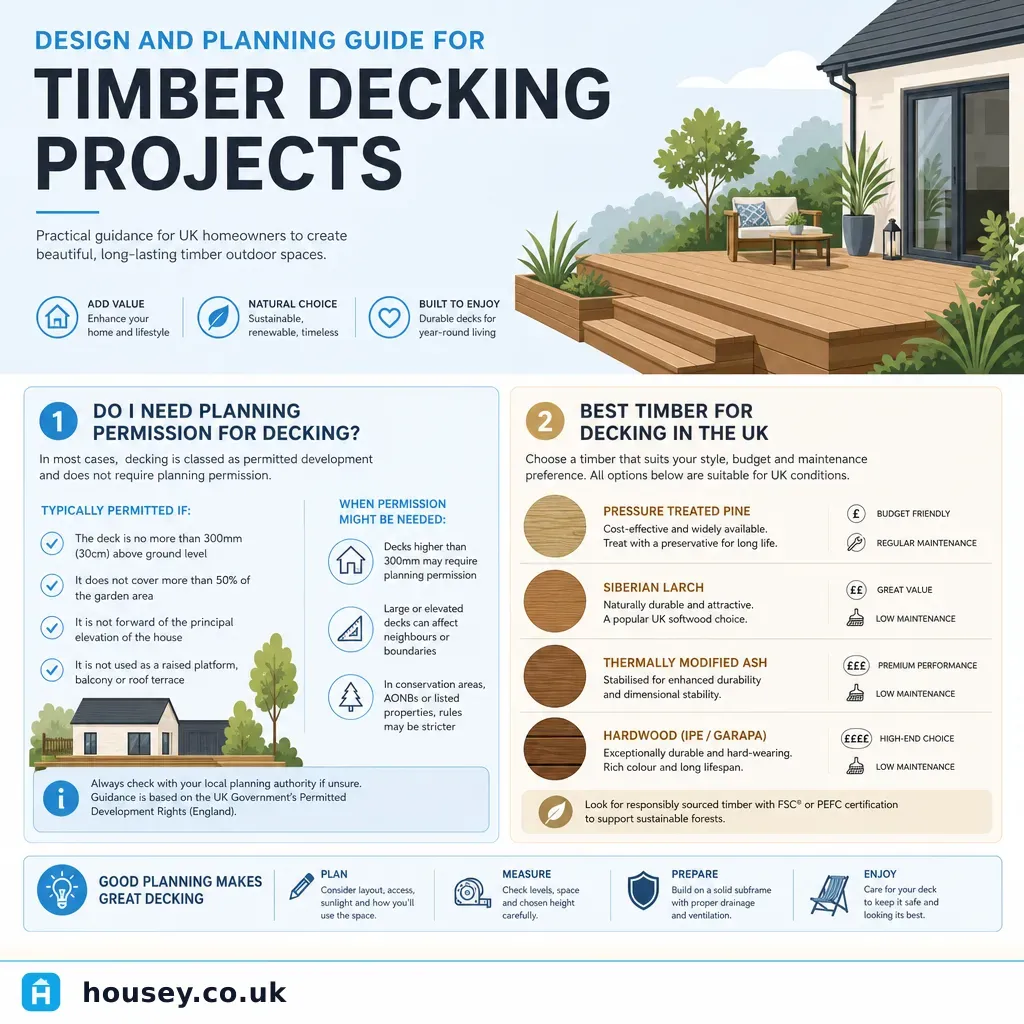
Design and Planning Guide for Timber Decking Projects
Planning a timber deck in the UK involves checking permitted development rules — in England, a deck under 300mm high that covers no more than 50% of the garden (combined with other outbuildings) is usually permitted development. Key decisions are timber species and treatment class, subframe specification, and whether building regulations apply to your particular project.
 Improvement & Build
Painting Interior Doors: Preparation and Technique
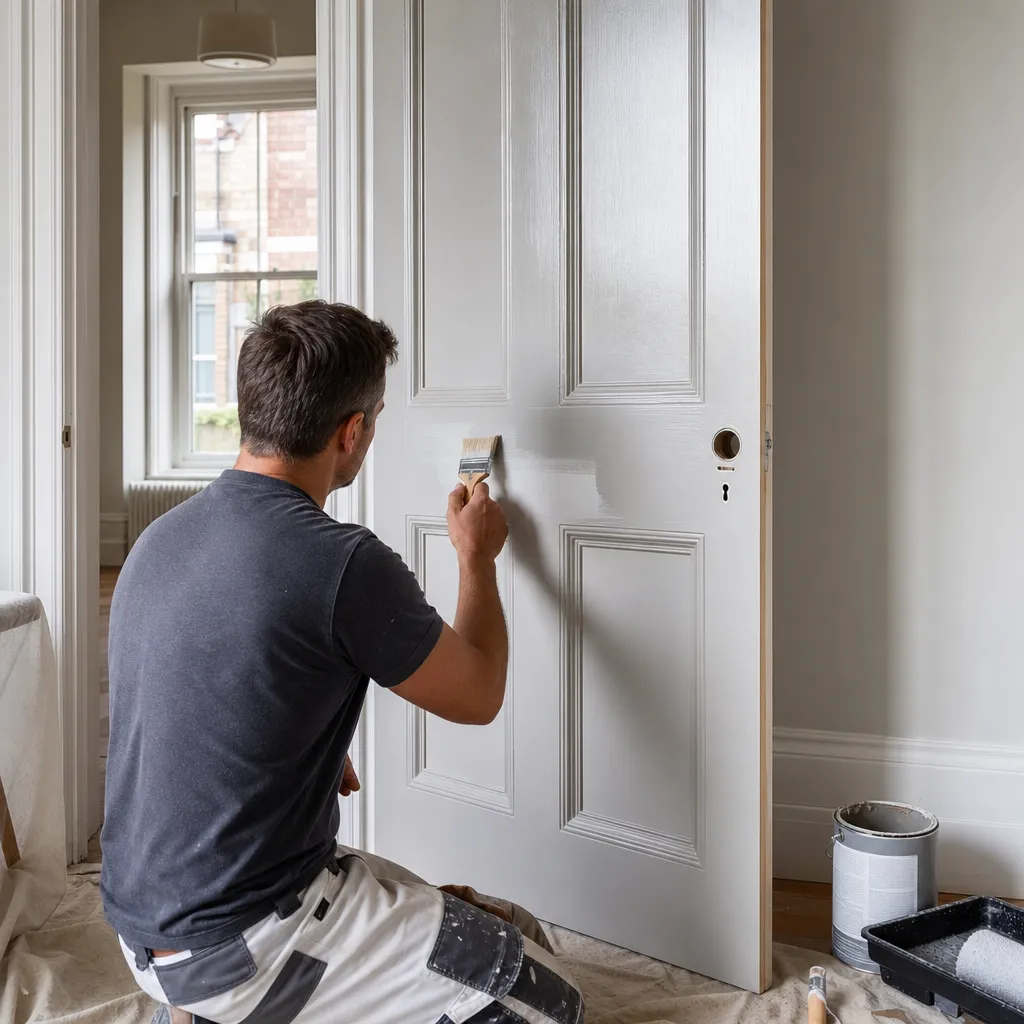
Painting interior doors well depends on preparation rather than paint choice. Sand existing gloss surfaces to at least 120-grit, fill any dents, and apply a suitable primer before two thin topcoats. Oil-based paints give a harder finish; water-based alkyds are a lower-VOC alternative with faster recoat times. Removing the door from its hinges produces the best result.
 Improvement & Build
Door Options and Installation: Enhancing Security, Style, and Energy Performance
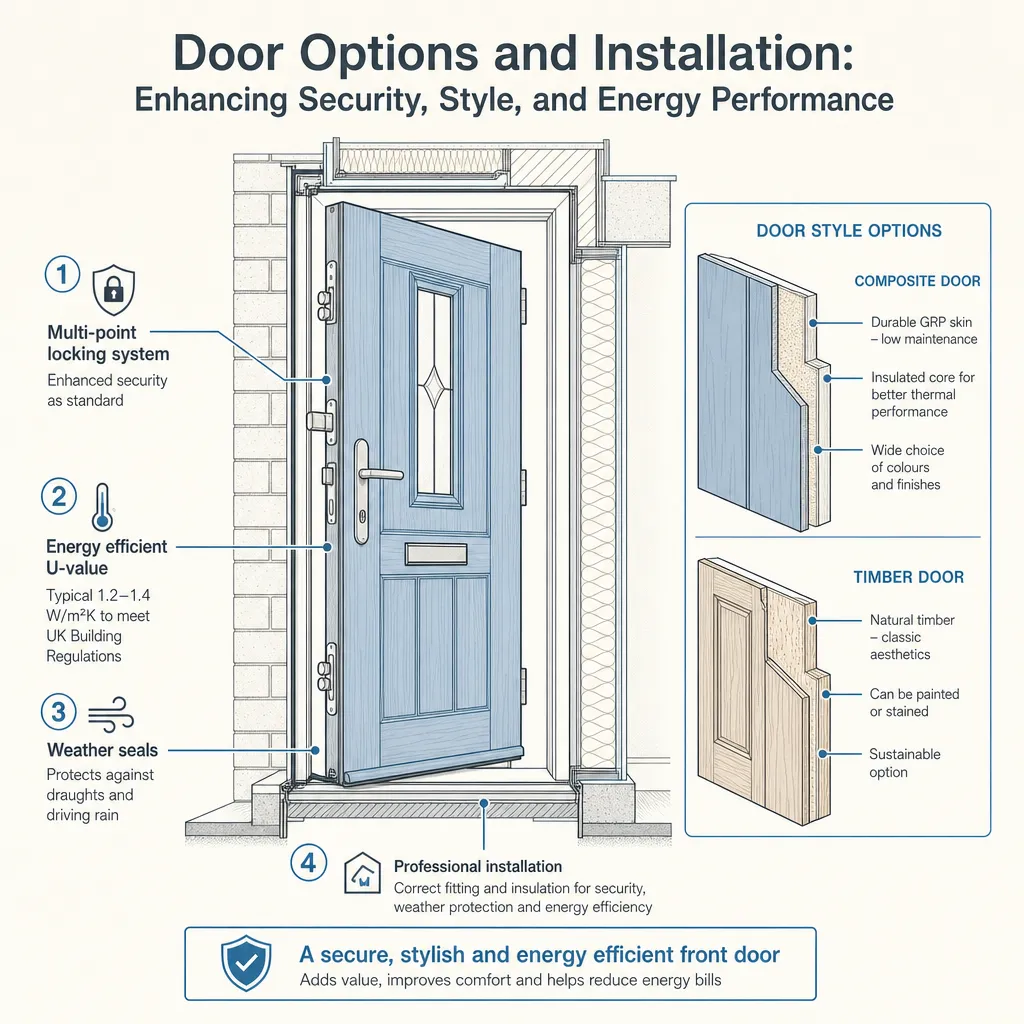
Choosing a new external door involves balancing security ratings, thermal performance, and style. Composite doors suit most UK homes, offering PAS 24 security and U-values around 0.8–1.2 W/m²K with low maintenance. Timber suits period and listed properties. All external replacements must meet Building Regulations Part L and ideally be fitted by a FENSA or CERTASS registered installer.
 Improvement & Build
Designing an outdoor kitchen for entertaining and garden living
An outdoor kitchen in a UK garden needs a stable, level base — typically a concrete slab or quality paving — with weather-rated materials such as stainless steel grade 316 or frost-rated porcelain. Gas connections require a Gas Safe registered engineer. A permanent roofed structure may need planning permission. Budget roughly £5,000–£30,000 depending on specification and coverage.
 Improvement & Build
Garage Conversion Timeline: What to Expect
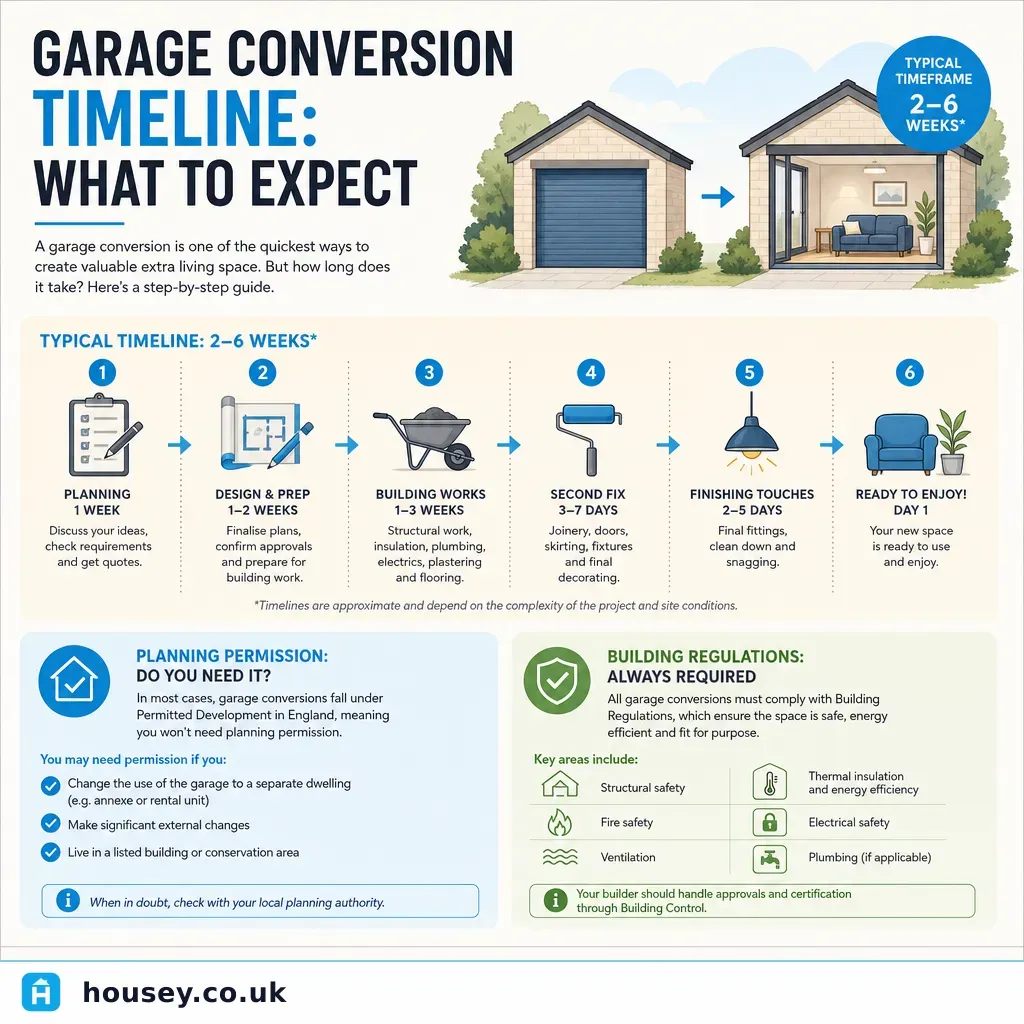
A straightforward attached garage conversion in England usually takes 4–8 weeks of construction, plus pre-start time for building control approval (5 working days for Full Plans). Planning permission is rarely needed for like-for-like conversions, but building regulations approval covering insulation, fire safety, and electrics is almost always required.
 Improvement & Build
Building an Outdoor Kitchen: Design, Materials, and Investment
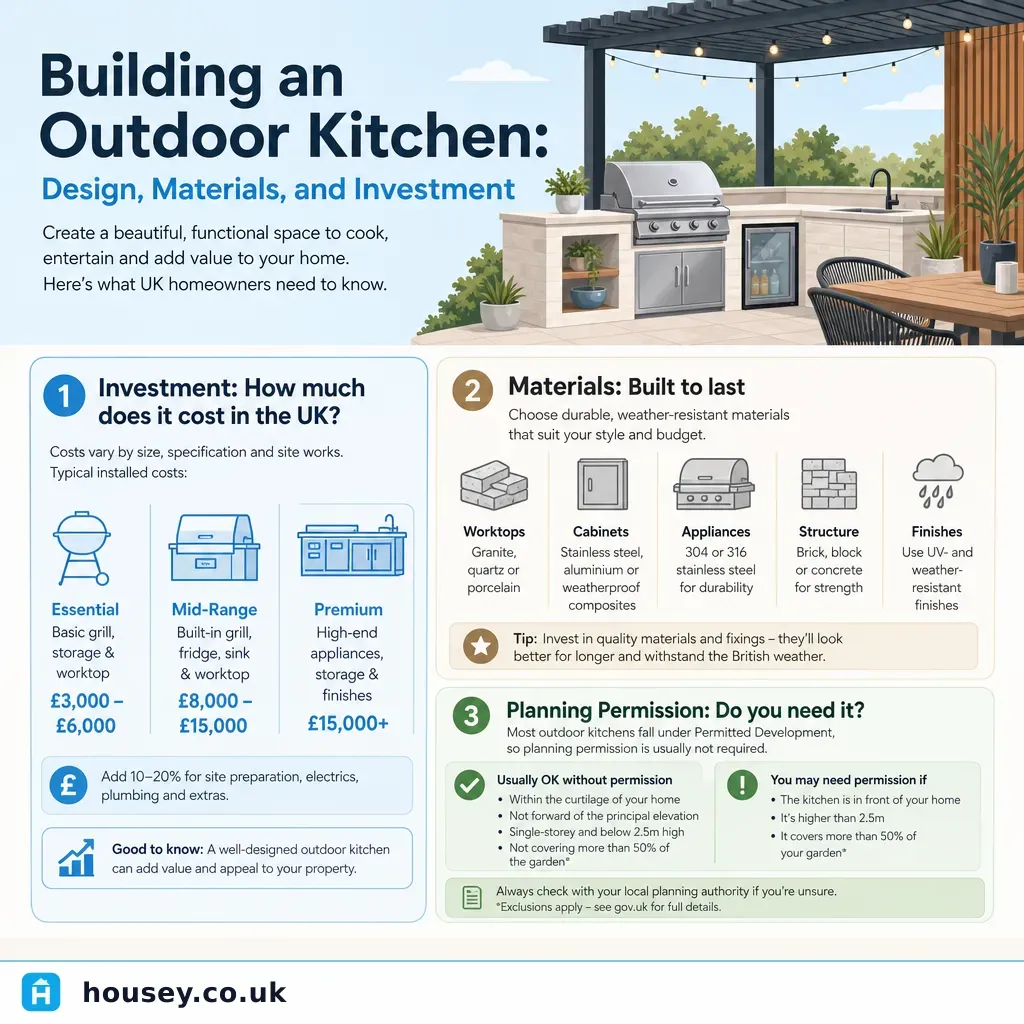
Building an outdoor kitchen in the UK costs roughly £3,000–£25,000 depending on size and materials. Most projects fall within permitted development rights. Gas connections must be installed by a Gas Safe registered engineer and outdoor electrics must comply with Part P. Marine-grade stainless steel and frost-resistant porcelain are the most durable material choices.
 Improvement & Build
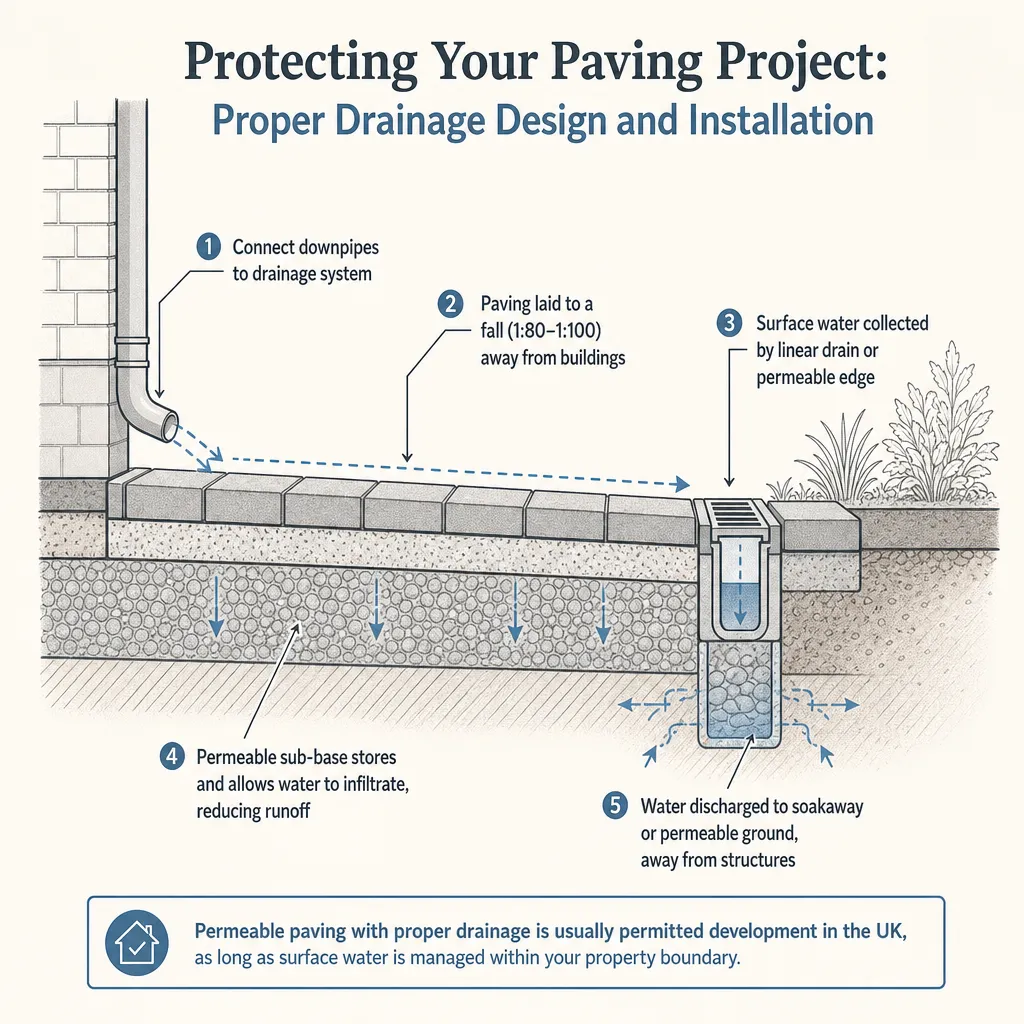
Protecting Your Paving Project: Proper Drainage Design and Installation
Good paving drainage starts with a minimum fall of 1:60 to 1:80 away from buildings, a correctly specified sub-base, and a clear outlet for surface water. In England, driveways over 5 m² must use permeable surfacing or drain to a soakaway rather than the highway. Planning drainage before excavation avoids costly retrofitting later.
 Improvement & Build
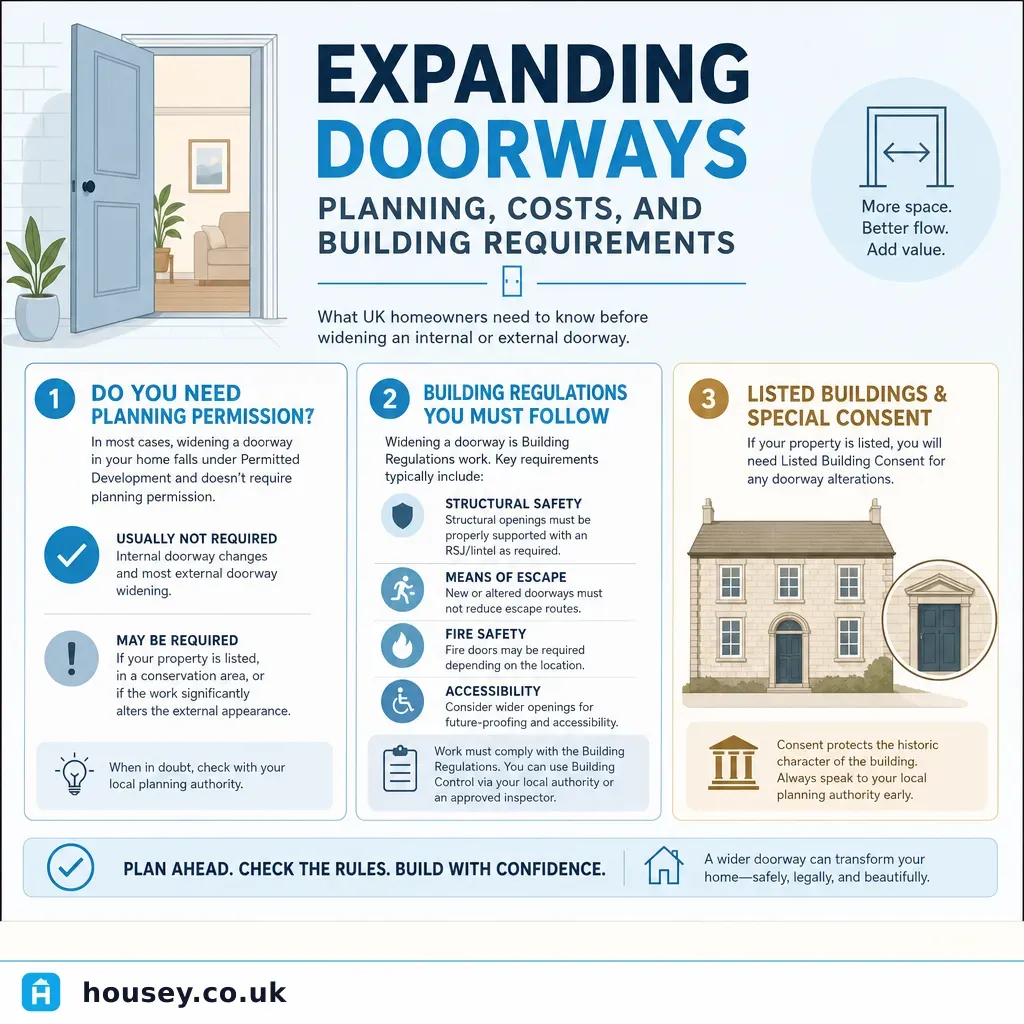
Expanding Doorways: Planning, Costs, and Building Requirements
Expanding a doorway in a load-bearing wall requires Building Regulations Part A approval and a structural engineer's lintel design. Planning permission is rarely needed for internal doorway work, but listed building consent is required if the property is listed. Budget for structural engineer fees, building control application costs, and builder quotes before instructing anyone.
 Improvement & Build
Home Improvement Projects That Add Value to Your Property
Loft conversions, rear extensions, and kitchen refurbishments typically offer the strongest return on investment for UK homeowners. Loft conversions can add around 15–20% to property value; single-storey rear extensions 5–12%. The best choice depends on what your property lacks compared with local comparables, your planning constraints, and the price ceiling for your street.