Knowledge Base
Property advice that actually helps
Researched, UK-specific guides for every stage of homeownership — from buying and surveys to retrofit, planning and major works.
 Improvement & Build
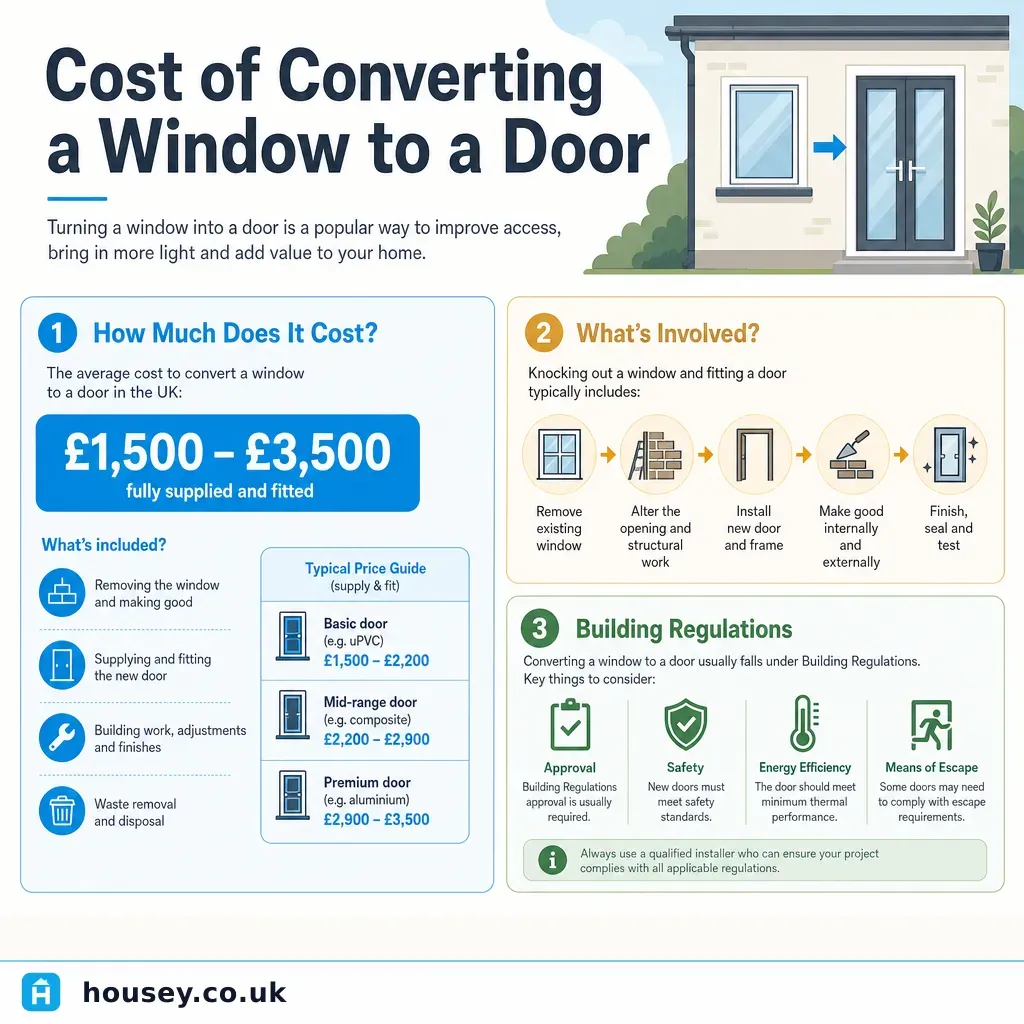
Cost of converting a window to a door
Converting a window to a door in the UK typically costs £1,500–£5,000 or more, depending on wall construction (cavity, solid, or timber frame), the type of door fitted, and whether a new or enlarged lintel is required. The work requires building regulations approval and, in some cases, a structural engineer's sign-off before starting.
 Improvement & Build
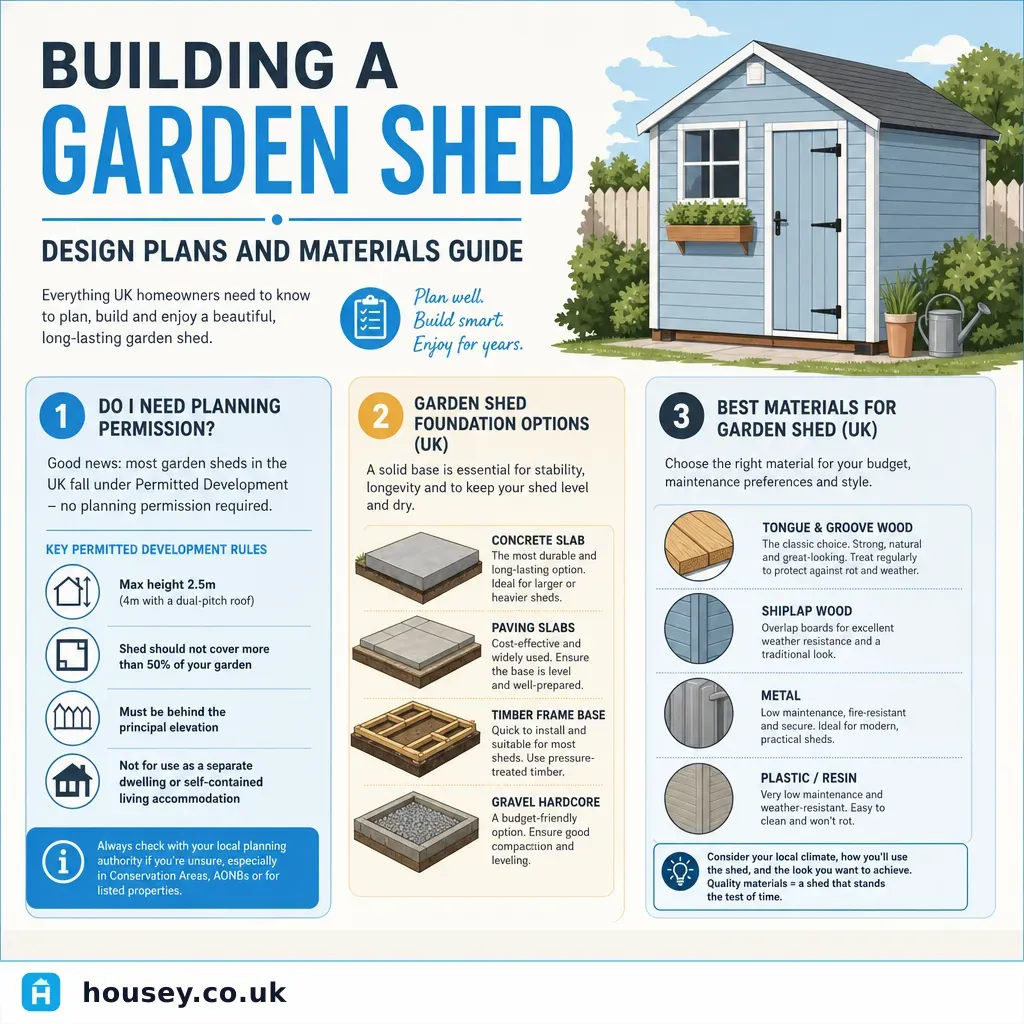
Building a Garden Shed: Design Plans and Materials Guide
Most garden sheds in England are Permitted Development, provided they sit behind the principal elevation, have eaves no higher than 2.5 m, and do not cover more than 50% of the garden curtilage. Pressure-treated softwood on a concrete base is the standard UK build approach. Rules differ in Scotland, Wales, and Northern Ireland — always confirm with your local planning authority before starting.
 Improvement & Build
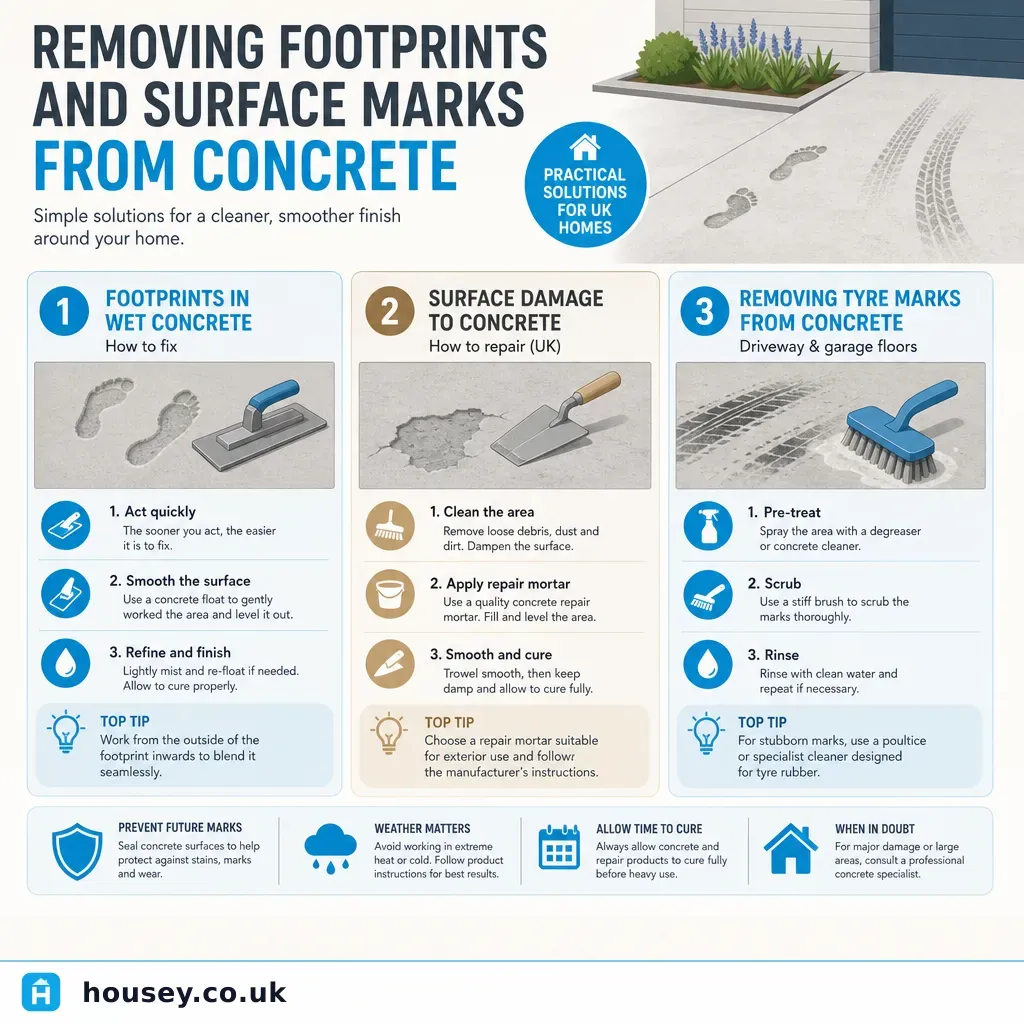
Removing Footprints and Surface Marks from Concrete
Footprints and marks in fresh concrete under 4–6 hours old can often be re-floated or trowelled smooth by a skilled finisher before initial set occurs. Once cured, diamond grinding or shot blasting can reduce isolated marks, while a thin overlay is the most practical fix for widespread surface damage on driveways and paths.
 Improvement & Build
Technology and Automation in Modern Family Homes
Smart home technology lets UK families automate lighting, heating, security, and entertainment from a single app or voice command. The most practical starting points are smart thermostats, smart lighting, and video doorbells. Systems using the Matter protocol work across most major brands, reducing the risk of lock-in as your setup grows.
 Improvement & Build
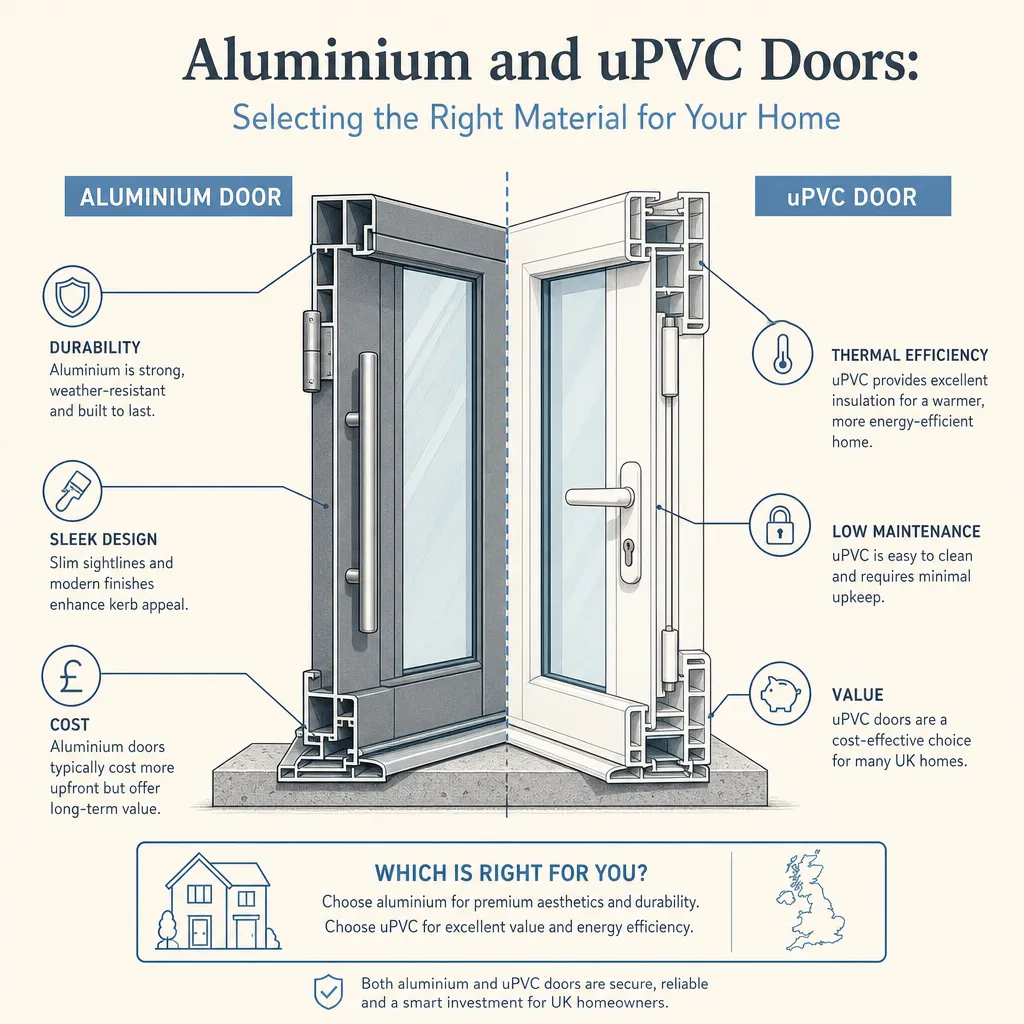
Aluminium and uPVC Doors: Selecting the Right Material for Your Home
uPVC doors are lower-cost and low-maintenance, making them a practical choice for most UK homes. Aluminium doors are more durable, offer slimmer profiles and greater design flexibility, and typically last twice as long. Both must meet Building Regulations Part L thermal performance standards, and both should be fitted by FENSA- or CERTASS-registered installers who can self-certify compliance.
 Improvement & Build
Fibre Cement Board Cladding: Installation Costs and Benefits
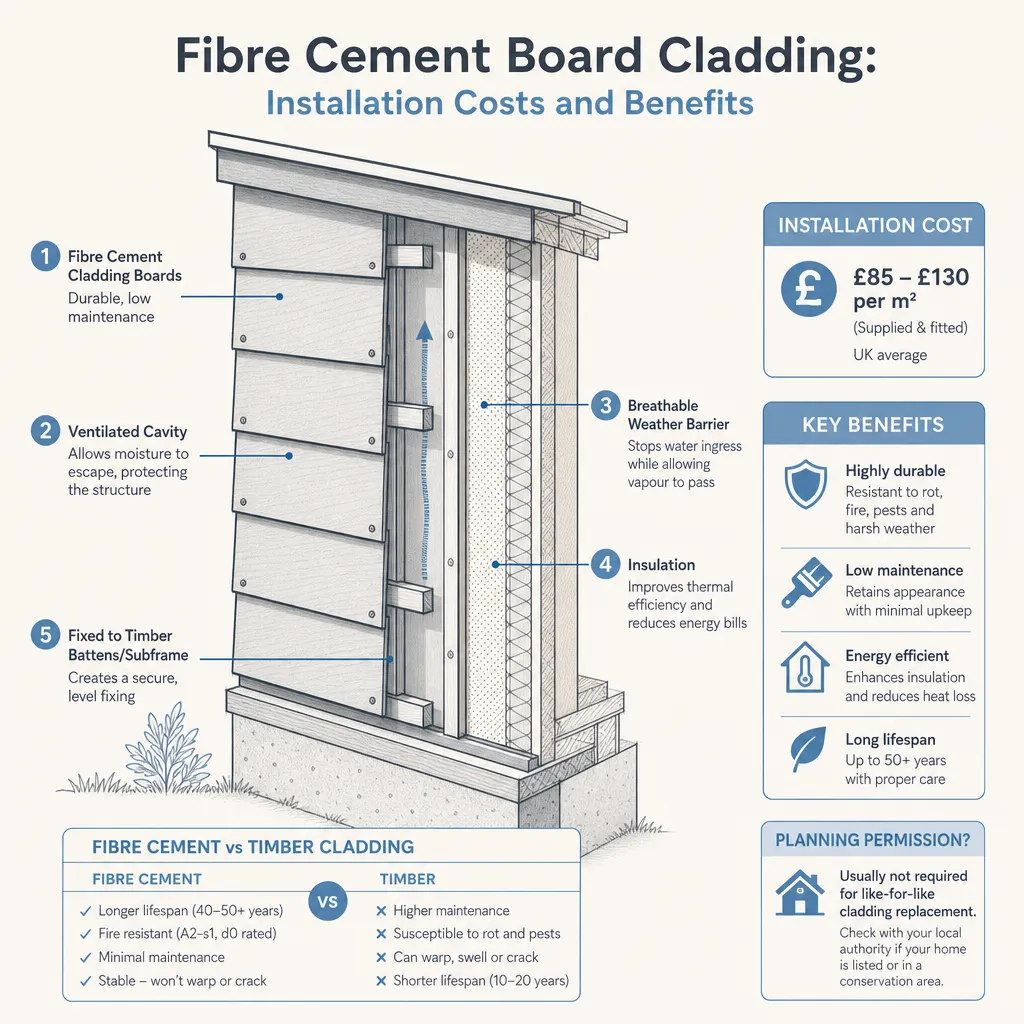
Fibre cement board cladding typically costs £80–£180 per m² installed in the UK, including boards, battens, breather membrane, and labour. It is durable, non-combustible, and low-maintenance compared to timber, making it a popular choice for extensions and refurbishments across a range of property types.
 Improvement & Build
Essential Steps for Driveway Installation
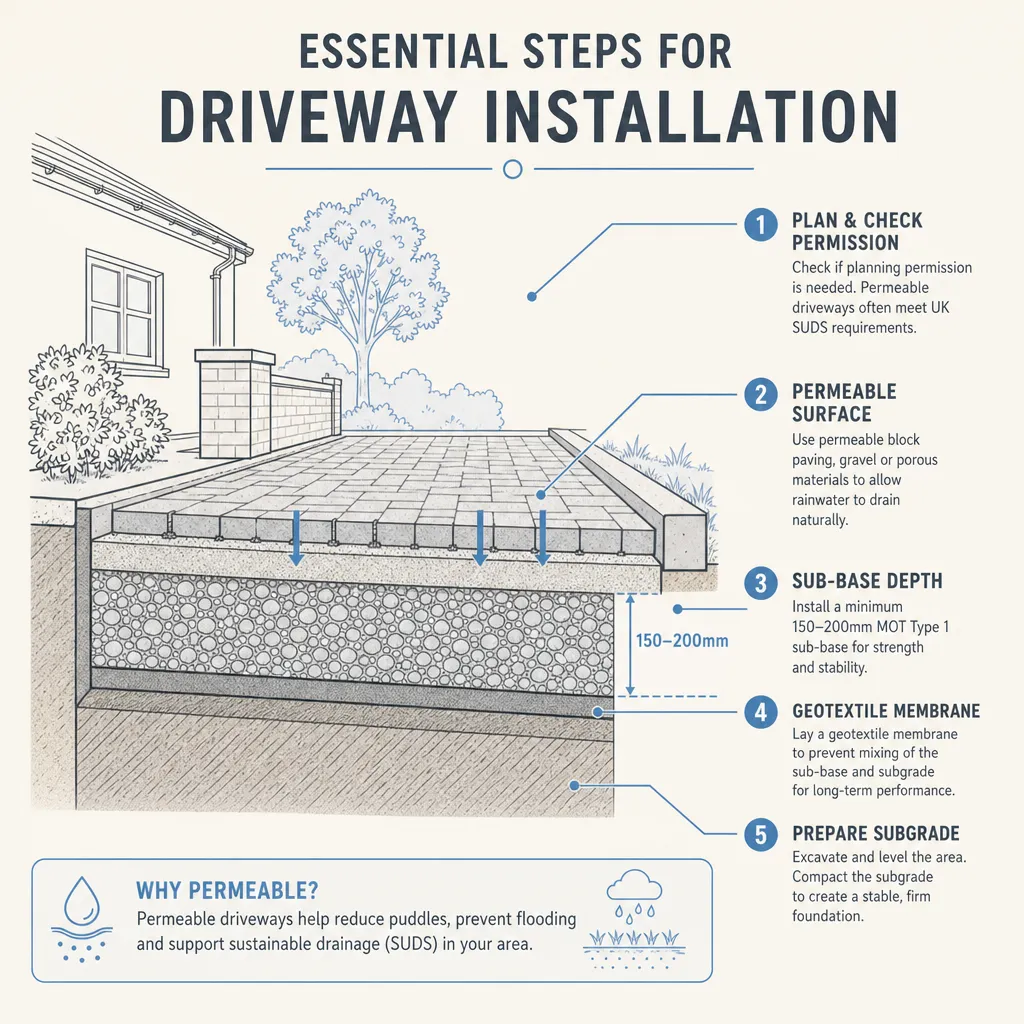
Installing a driveway in England requires planning permission only when using an impermeable surface (standard tarmac, concrete, or block paving) on a front garden area over 5 m². Permeable surfaces such as gravel and permeable block paving do not require permission. In either case, surface water must drain within the property, and a dropped kerb requires separate highway authority approval.
 Improvement & Build
Pervious Concrete Surfaces: Modern Sustainable Driveway Solutions
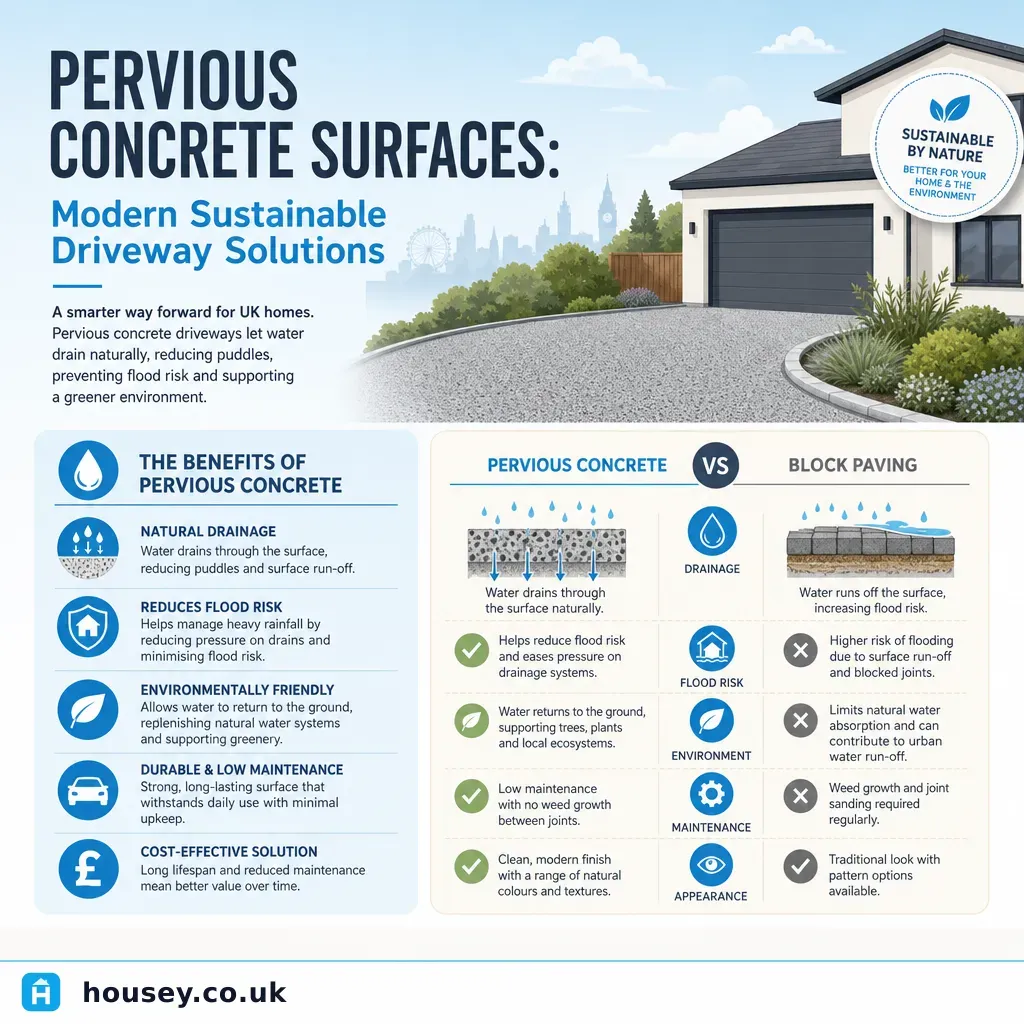
Pervious concrete (also called porous or no-fines concrete) is a specialist concrete mix with large voids that allow rainwater to pass through the surface and into the sub-base below. It can qualify as a permeable surface under UK planning rules, potentially exempting driveways over 5 m² from requiring planning permission.
 Improvement & Build
Tar and Gravel Roofing Systems: Material Properties and Application Methods
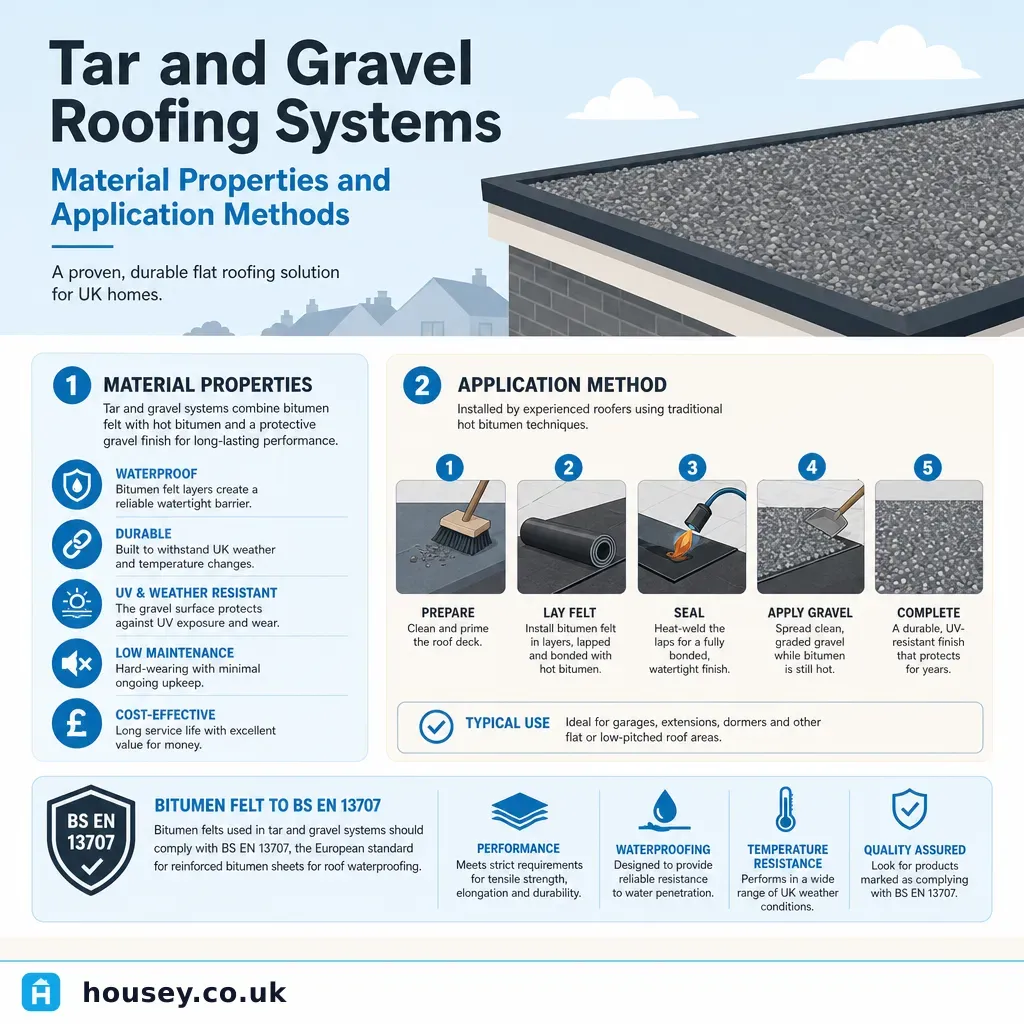
A tar and gravel roof is a built-up system of bitumen-bonded felt layers finished with stone chippings. Modern UK specifications use polyester-reinforced felt to BS EN 13707 Type 5, applied by torch-on or cold-applied method. The chippings protect the bitumen from UV degradation and provide fire resistance. Application quality and felt specification matter more than application method in determining long-term performance.
 Improvement & Build
UK Window Manufacturing: How Production Capacity Affects Your Replacement Windows
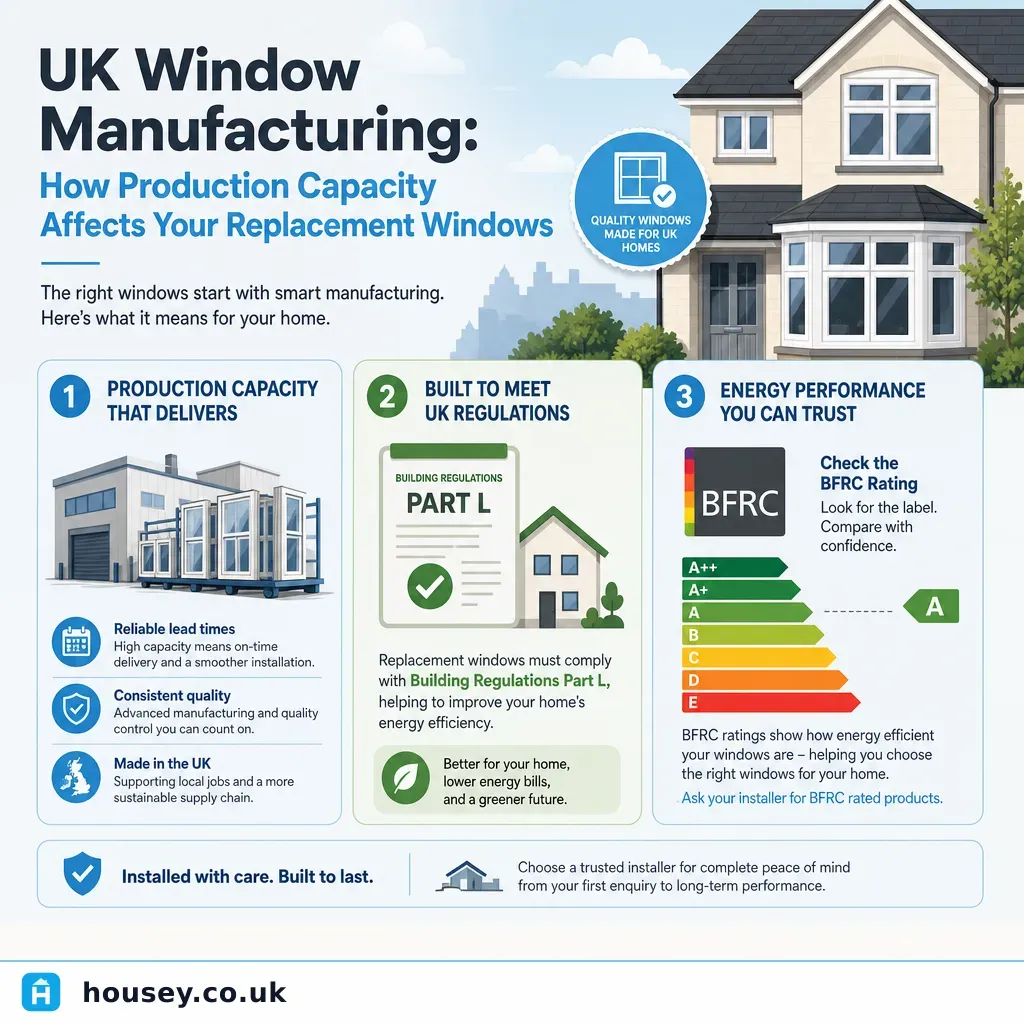
UK replacement windows must meet Building Regulations Part L with a whole-window U-value of 1.4 W/m²K or better. FENSA-registered installers self-certify compliance without a separate building control application. Standard PVCu windows typically take two to four weeks; bespoke or heritage units often run eight to sixteen weeks. Always confirm U-values and FENSA certification in writing before ordering.
 Improvement & Build
Patio Door Types and Styles for Home Extensions
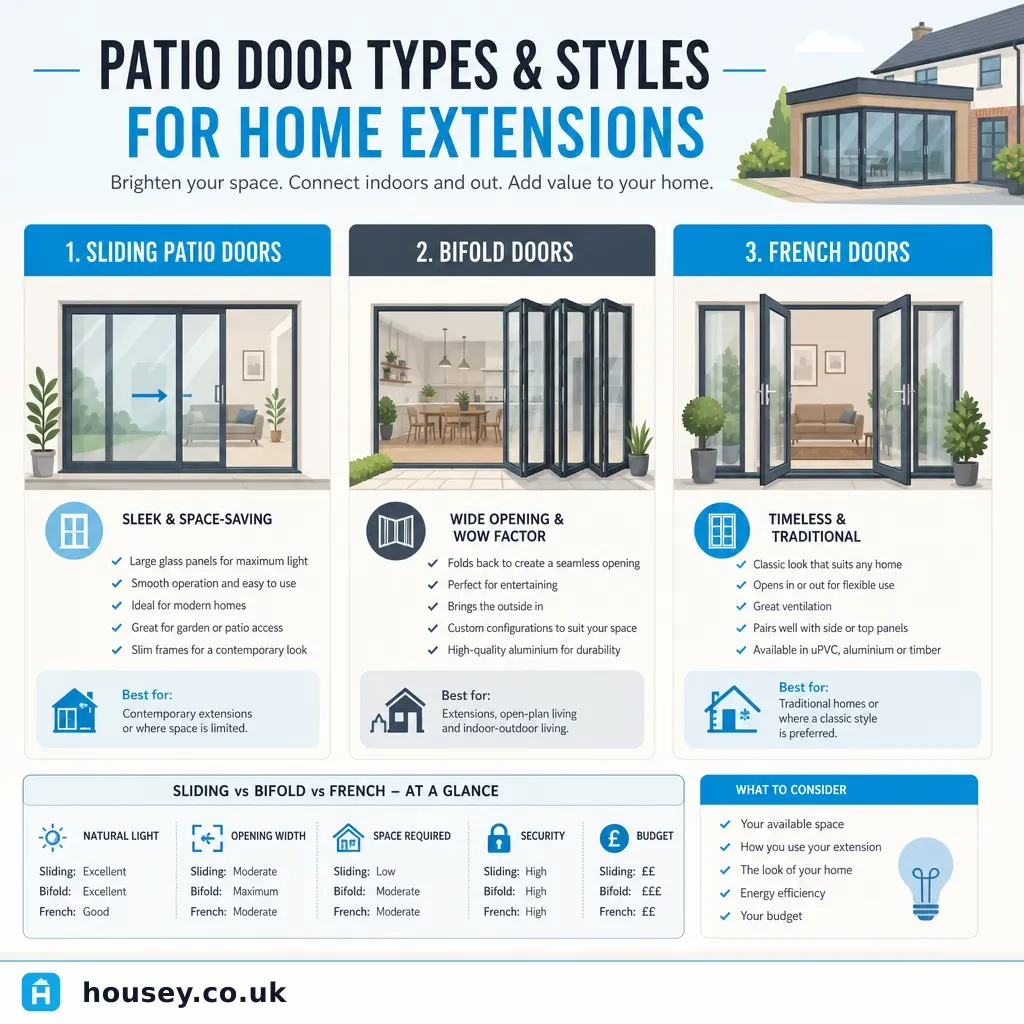
For most UK home extensions, sliding doors suit openings up to 3.6 m wide; bifolds work best for wider openings where full-width garden access is the priority. French doors remain the most cost-effective and planning-friendly choice for period properties. All external doors must comply with Building Regulations Parts L, N, and Q covering thermal performance, safety glazing, and security.
 Improvement & Build
Loft Conversion Styles: Dormer, Mansard, and Other Design Options
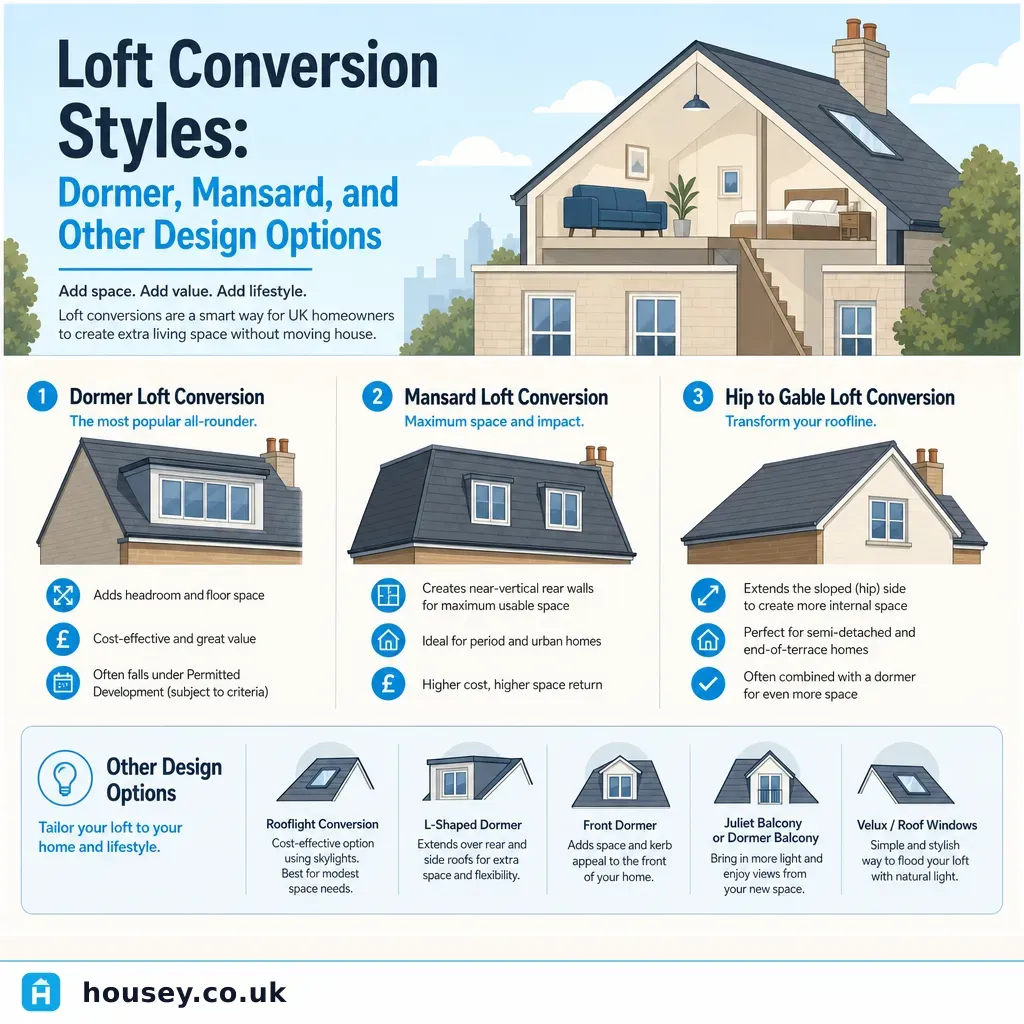
The main loft conversion types in the UK are rooflight, dormer, hip-to-gable, and mansard. Rooflights are simplest and often permitted development; dormers add the most headroom and floor area; hip-to-gable suits detached or semi-detached homes; mansard conversions offer maximum space but usually require planning permission. Choice depends on your roof shape, budget, and local planning constraints.