Knowledge Base
Property advice that actually helps
Researched, UK-specific guides for every stage of homeownership — from buying and surveys to retrofit, planning and major works.
 Planning & Pre-Build
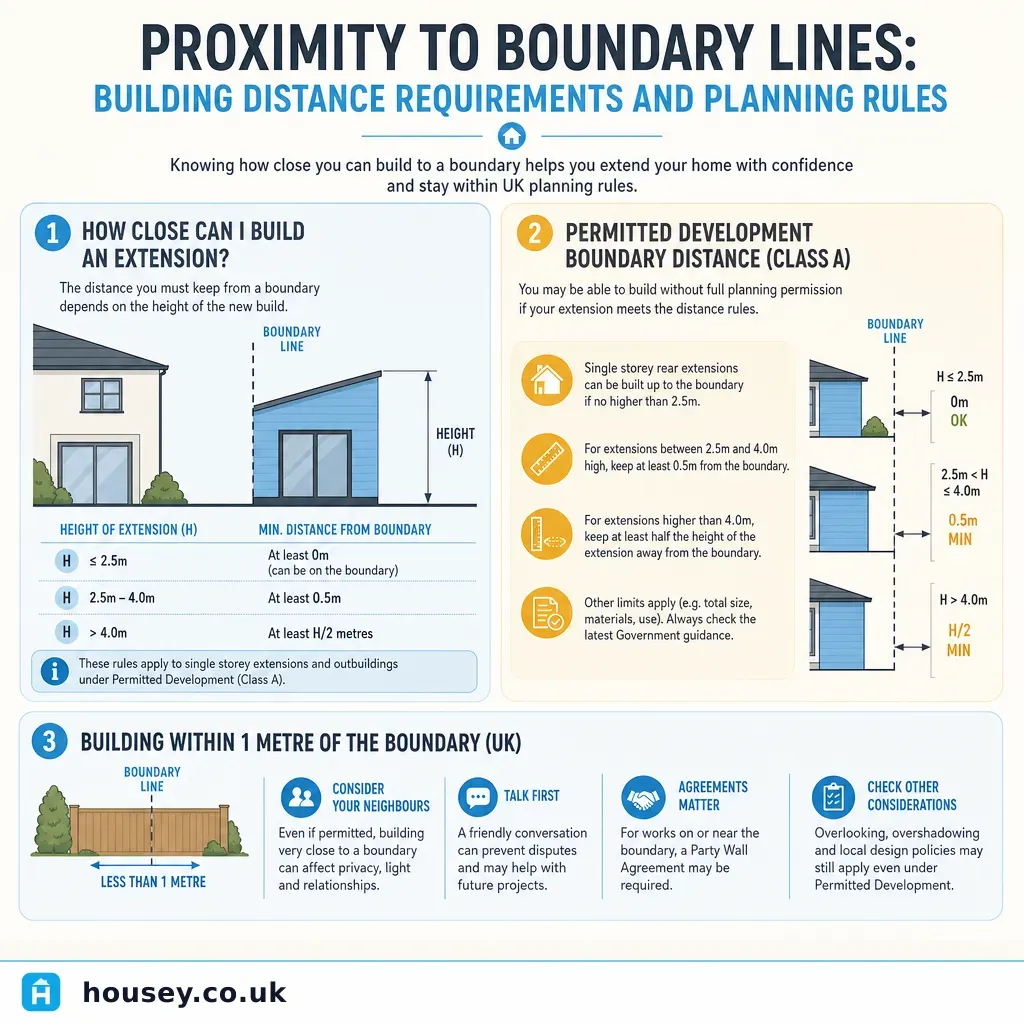
Proximity to Boundary Lines: Building Distance Requirements and Planning Rules
How close you can build to a boundary depends on the structure type, height, and whether permitted development applies. Under Class A, a two-storey side extension cannot sit within 2 m of a boundary. Building Regulations Part B restricts openings within 1 m, and the Party Wall etc. Act 1996 may also apply to excavations or shared walls.
 Planning & Pre-Build
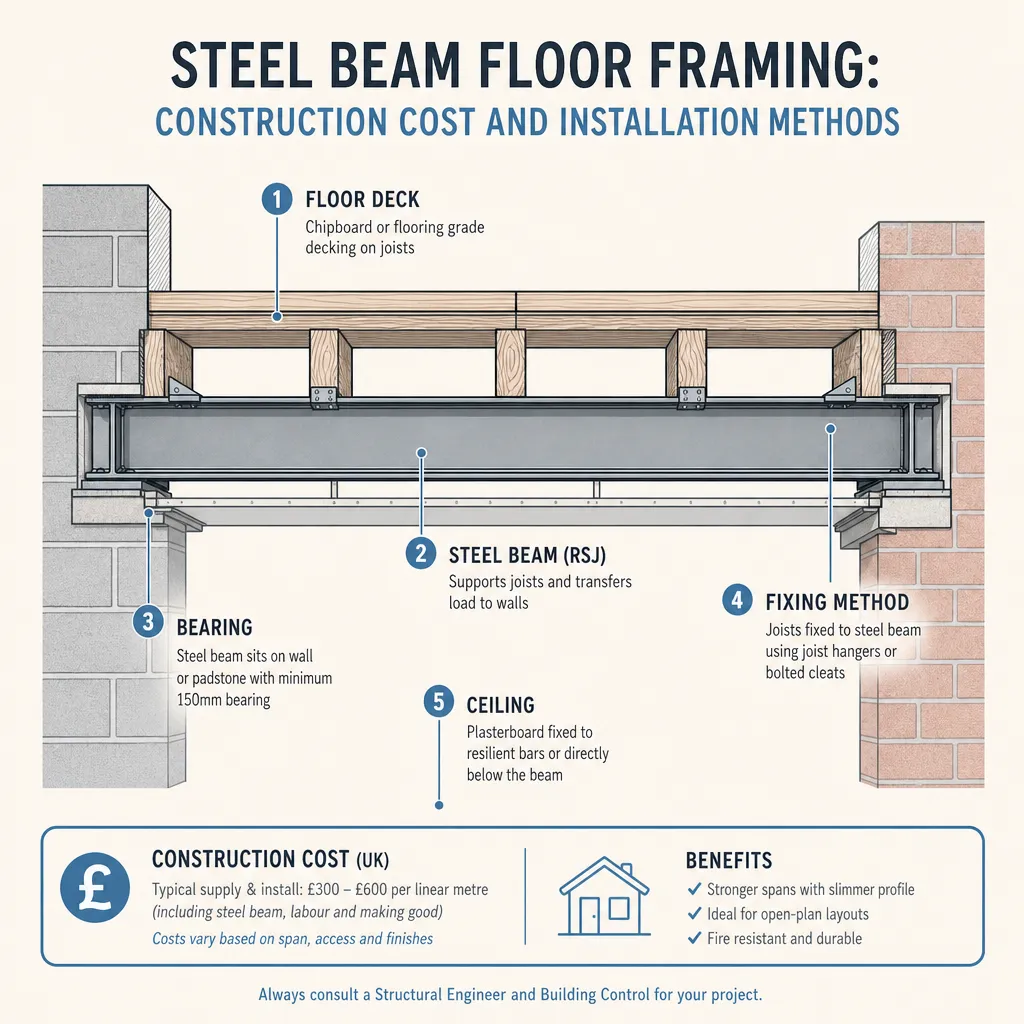
Steel Beam Floor Framing: Construction Cost and Installation Methods
Steel beam floor framing is used in UK homes when spans are too wide for timber joists, or when a load-bearing wall is removed. A chartered structural engineer must design the beam specification; Building Regulations Part A approval is always required. Total installation costs for a single residential beam typically range from £2,000–£4,000, depending on span, section size, and site conditions.
 Planning & Pre-Build
Craftsman Style Homes: Architectural Features and Design Elements
Craftsman style homes are defined by natural materials, low-pitched gabled roofs with wide eaves, covered porches, exposed timber details, and grouped casement windows. In the UK, the style is closely linked to the Arts and Crafts movement of the 1880s–1930s. Planning permission is needed for new builds in this style; extensions may qualify as permitted development, subject to local restrictions and any heritage designations.
 Planning & Pre-Build
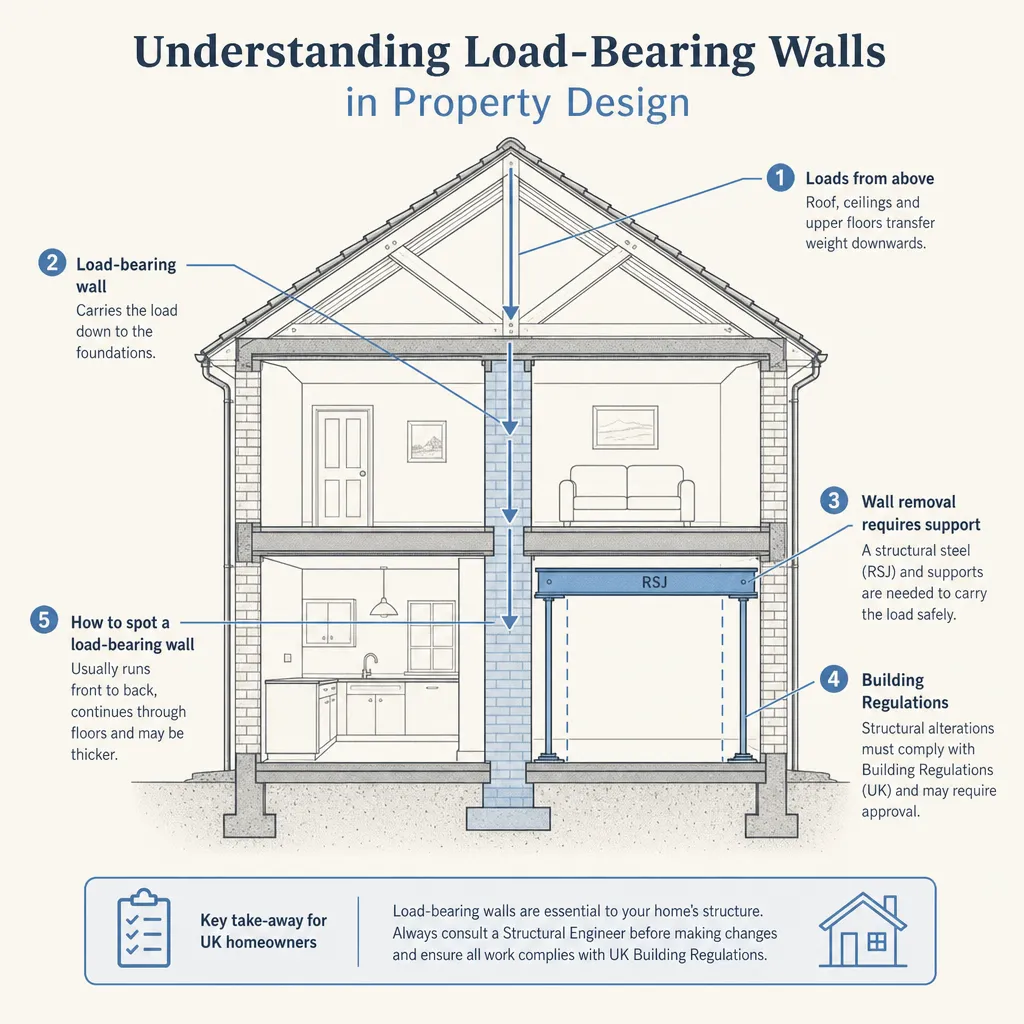
Understanding Load-Bearing Walls in Property Design
A load-bearing wall carries the weight of floors, roofs, or other walls above it down to the foundations. Removing or altering one without a structural engineer's assessment and Building Regulations Part A approval is unsafe and unlawful in the UK. Visual checks alone cannot reliably identify a structural wall.
 Planning & Pre-Build
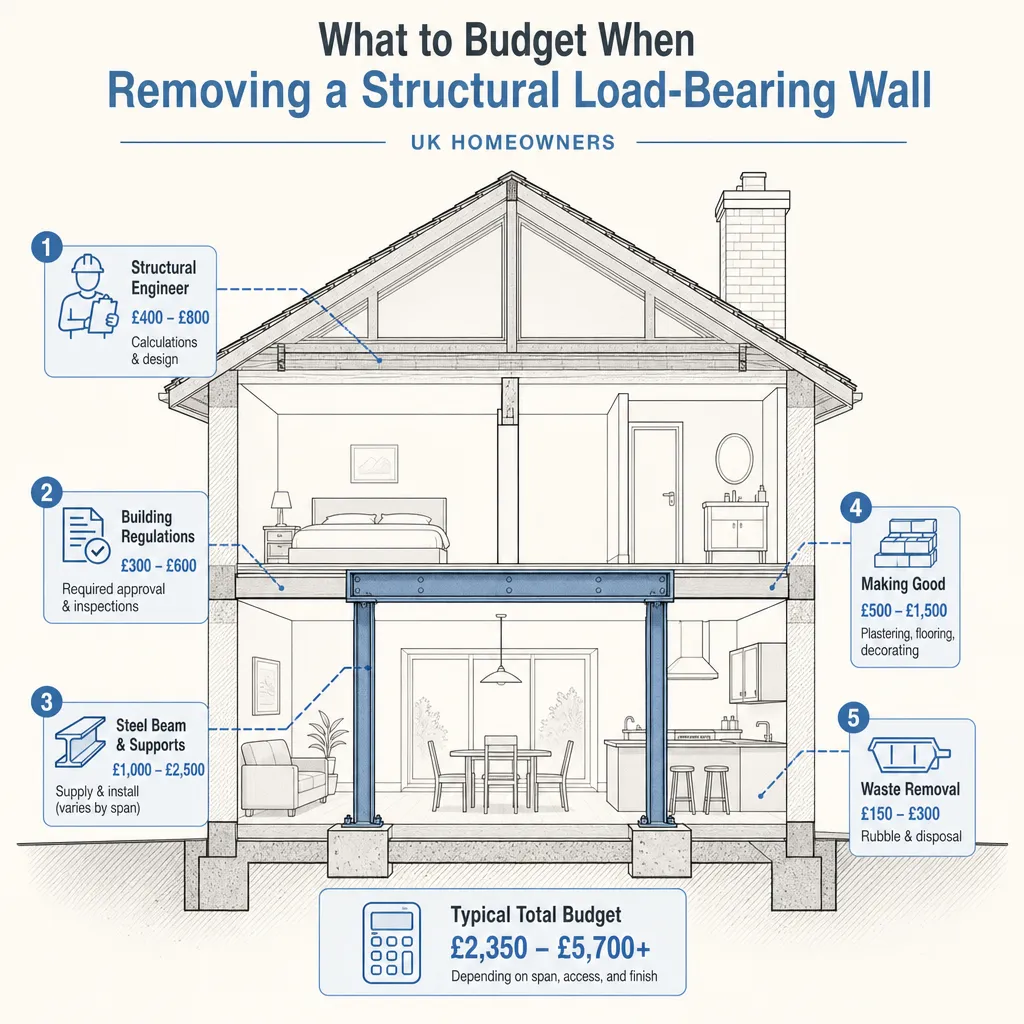
What to Budget When Removing a Structural Load-Bearing Wall
Removing a load-bearing wall in a typical UK home costs £2,500–£8,000 or more in total, covering a structural engineer's calculations, Building Regulations approval, the steel beam, builder's labour, and replastering. Every project requires a structural engineer's specification and building control sign-off before work begins. Costs vary considerably by beam span, location, and what finishing work is included.
 Planning & Pre-Build
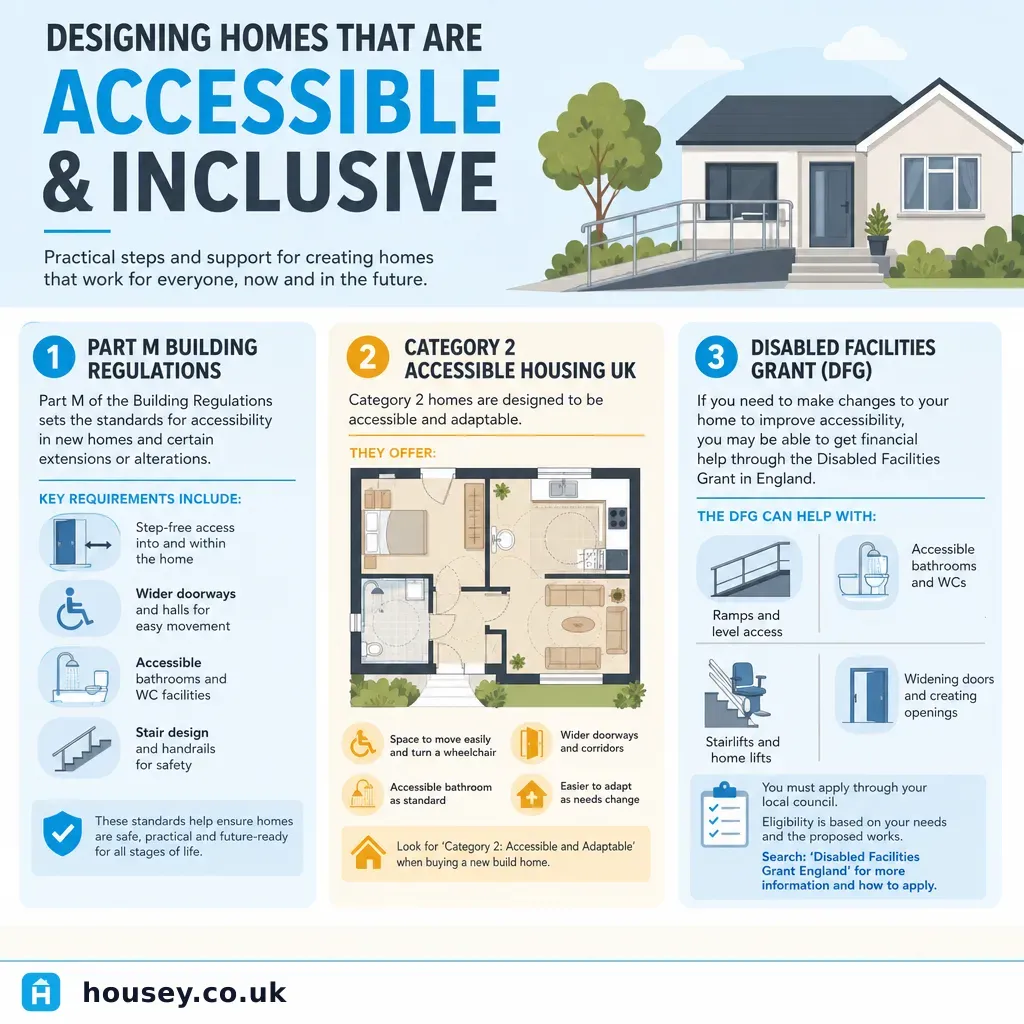
Designing Homes That Are Accessible and Inclusive
Accessible home design in the UK is guided by Building Regulations Approved Document M, which sets three standards for new dwellings: Category 1 (Visitable), Category 2 (Accessible and Adaptable), and Category 3 (Wheelchair User Dwelling). For adapting an existing home, a Disabled Facilities Grant of up to £30,000 may help fund eligible works. Engaging an architect or occupational therapist early reduces cost and avoids retrospective changes.
 Planning & Pre-Build
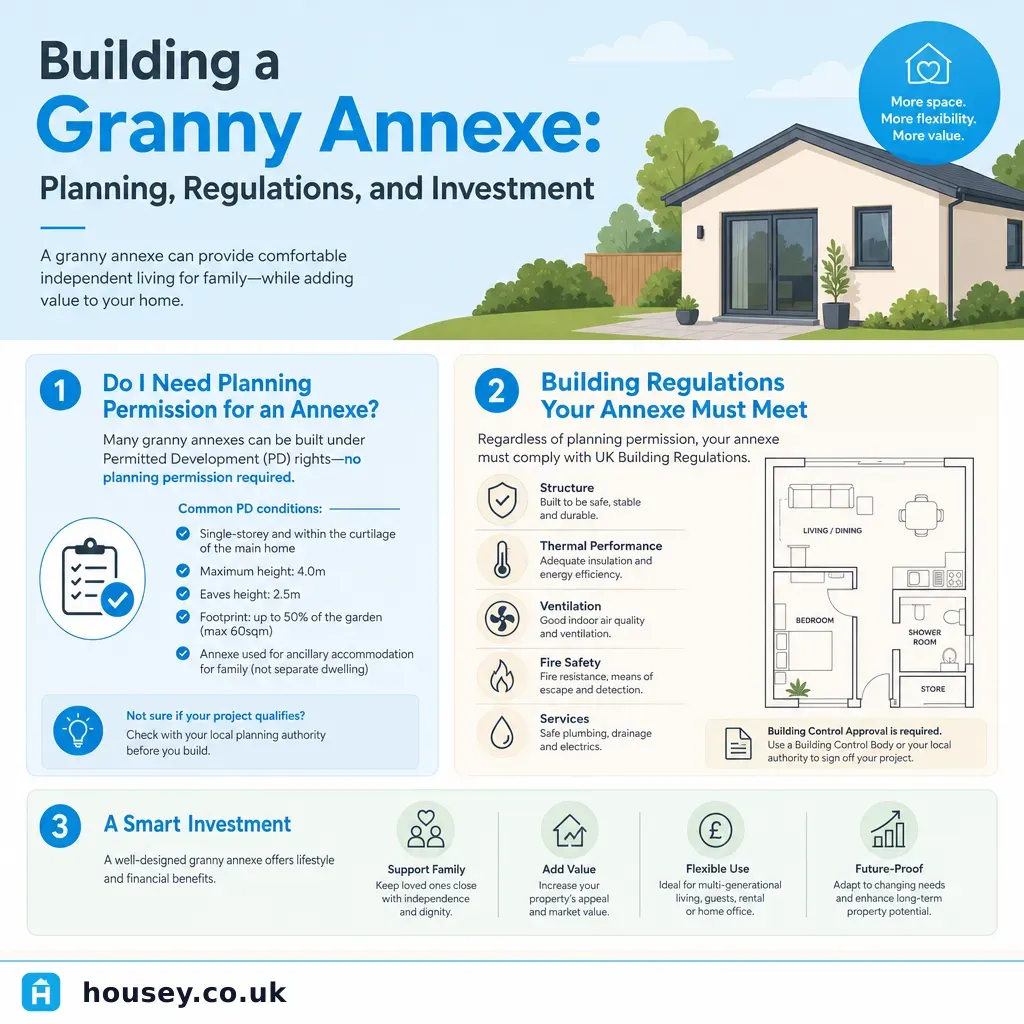
Building a Granny Annexe: Planning, Regulations, and Investment
A granny annexe in the UK may or may not need planning permission depending on whether it is classed as incidental to the main house or as a separate dwelling. Self-contained annexes with a kitchen, bathroom, and independent entrance typically require full planning permission. Building Regulations always apply, and a completion certificate must be obtained before the annexe is occupied.
 Planning & Pre-Build
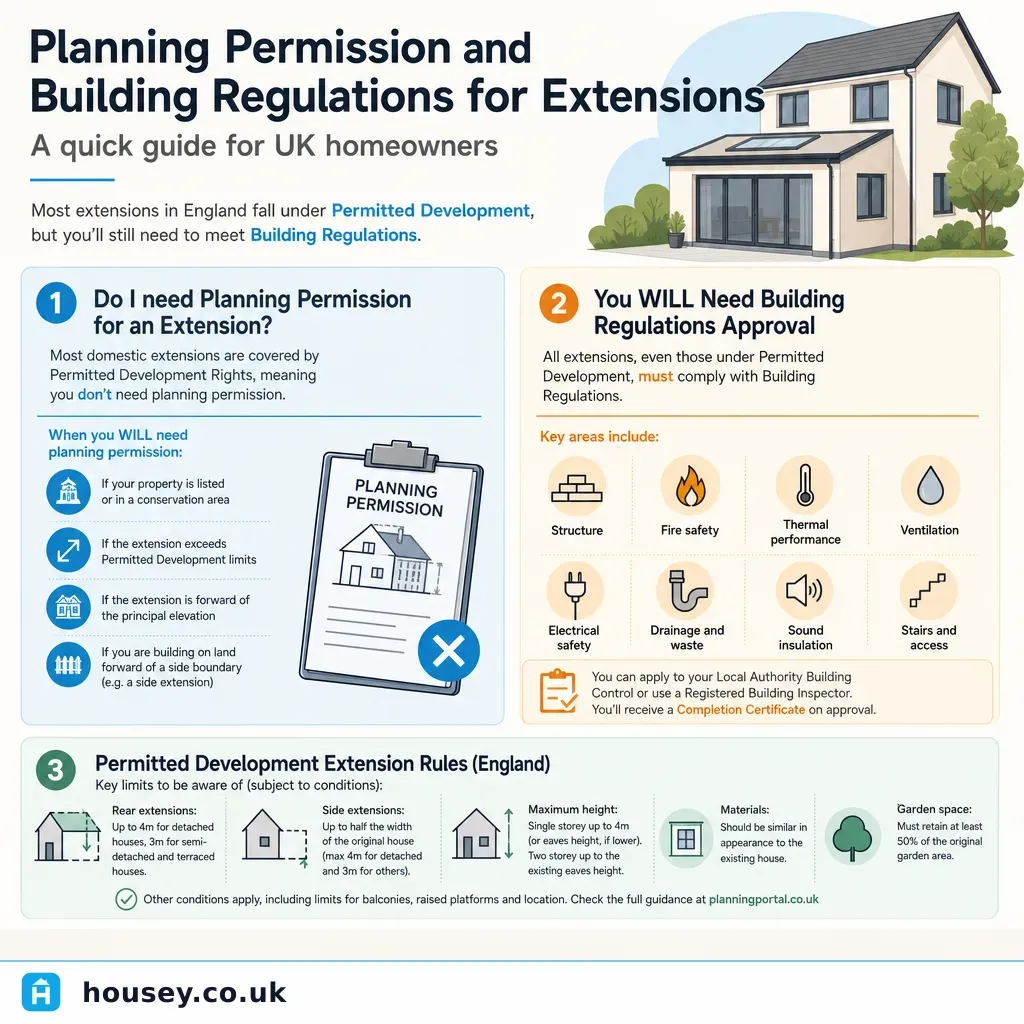
Planning Permission and Building Regulations for Extensions
UK home extensions usually require both planning permission and Building Regulations approval, though most smaller rear extensions qualify as Permitted Development under the GPDO 2015 and need no planning application. Building Regulations approval always applies regardless. Rules vary by property, location, and size — verify with your local planning authority before starting work.
 Planning & Pre-Build
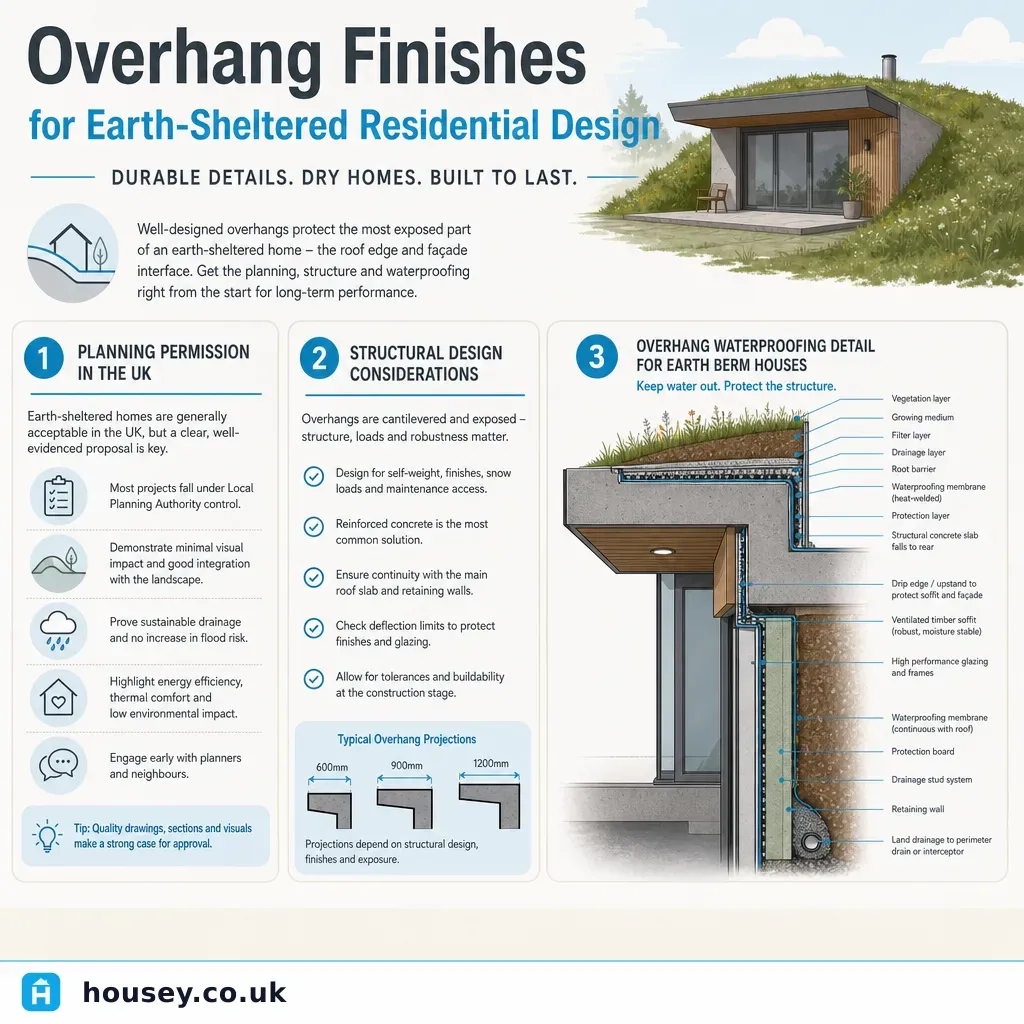
Overhang Finishes for Earth-Sheltered Residential Design
Overhang design in earth-sheltered homes combines structural, waterproofing, thermal, and planning requirements that must be integrated from the earliest design stage. The roof-to-overhang junction is the highest-risk waterproofing detail; the membrane must turn down the exposed face with a minimum 150 mm upstand. Thermal bridging at the slab edge must be addressed with continuous external insulation and, where needed, proprietary thermal breaks at structural penetrations.
 Planning & Pre-Build
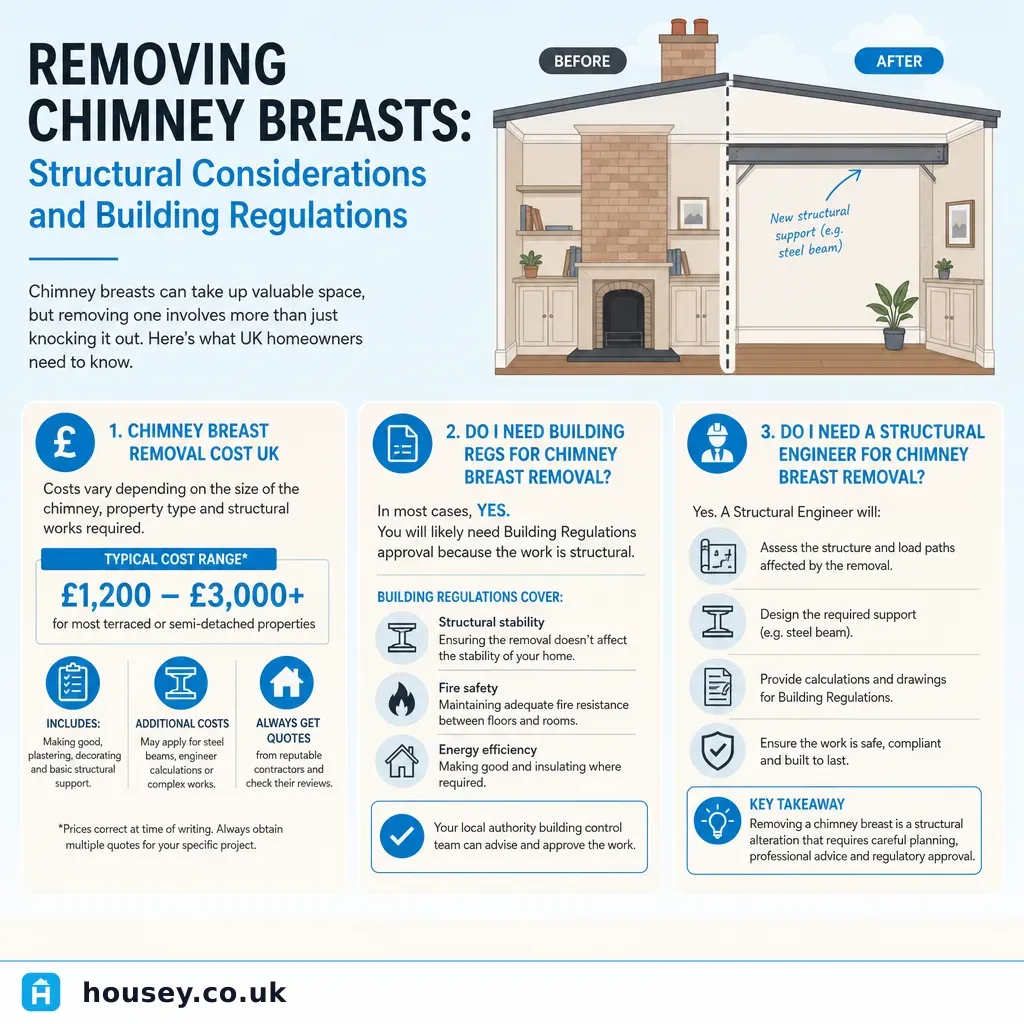
Removing Chimney Breasts: Structural Considerations and Building Regulations
Removing a chimney breast in England and Wales almost always requires building regulations approval because it is structural work. A structural engineer must design the steel beam needed to carry the chimney load above. Building control must inspect the work at key stages. On terraced or semi-detached homes, the Party Wall etc. Act 1996 may also apply and notices must be served.
 Planning & Pre-Build
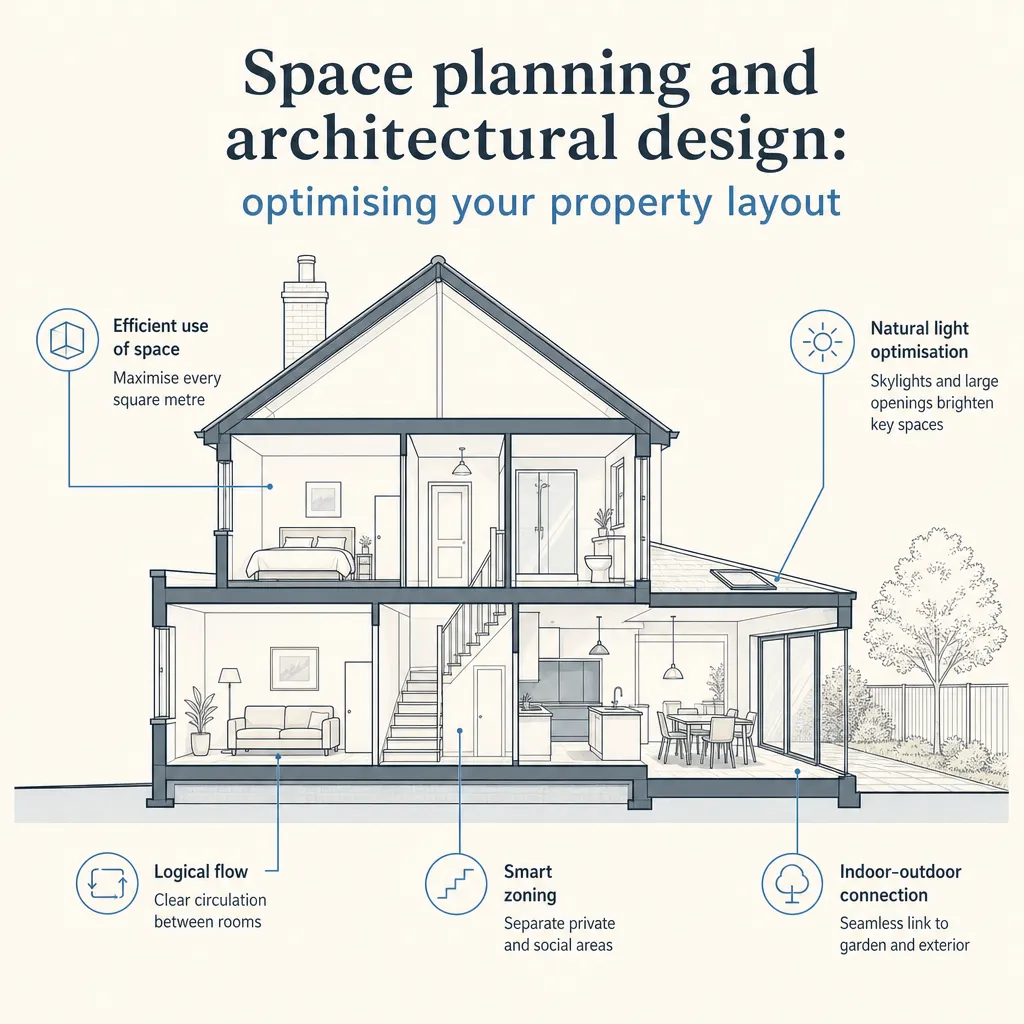
Space planning and architectural design: optimising your property layout
Space planning defines how rooms, circulation routes, and services are arranged within a property to make the best use of available area. For UK homeowners, it forms part of architectural design before planning applications or building works begin. Getting the layout right at briefing stage — before structural constraints are locked in — avoids costly redesign and produces homes that function better over time.
 Planning & Pre-Build
Designing a Sustainable Home from the Ground Up
Designing a sustainable home requires decisions made early — at sketch design stage, not after planning. The most effective approach combines a high-performance building fabric, passive solar design, a low-carbon heating system, and materials with low embodied carbon. In England, new homes must meet the 2021 Part L requirements, with the Future Homes Standard expected to raise the bar further from 2025.