Knowledge Base
Property advice that actually helps
Researched, UK-specific guides for every stage of homeownership — from buying and surveys to retrofit, planning and major works.
 Planning & Pre-Build
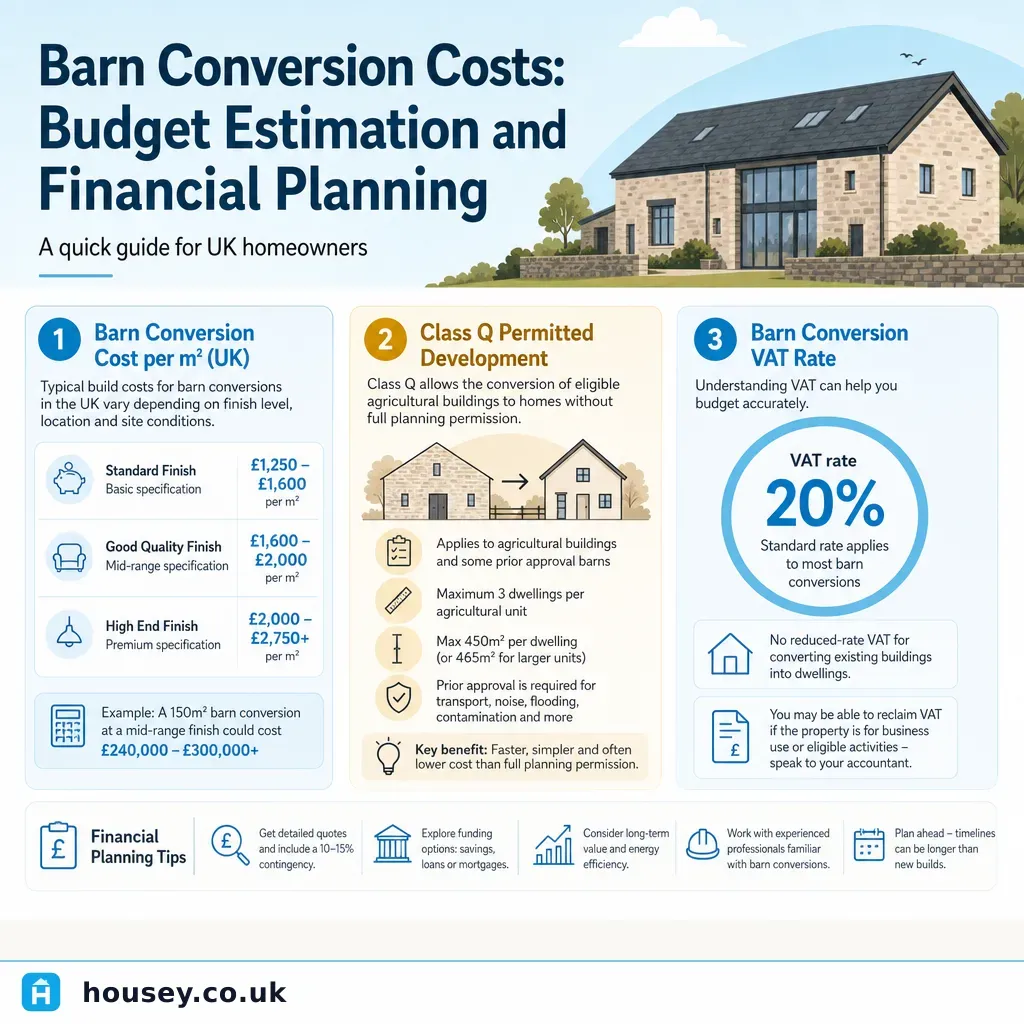
Barn Conversion Costs: Budget Estimation and Financial Planning
Barn conversions in the UK typically cost £1,500–£3,000 or more per square metre depending on structural condition, specification, and location. A 200 m² barn conversion might cost £350,000–£550,000 in construction alone before fees and contingency. Structural repairs, services connections, and insulation are the largest cost variables — always commission a structural survey before finalising any budget.
 Planning & Pre-Build
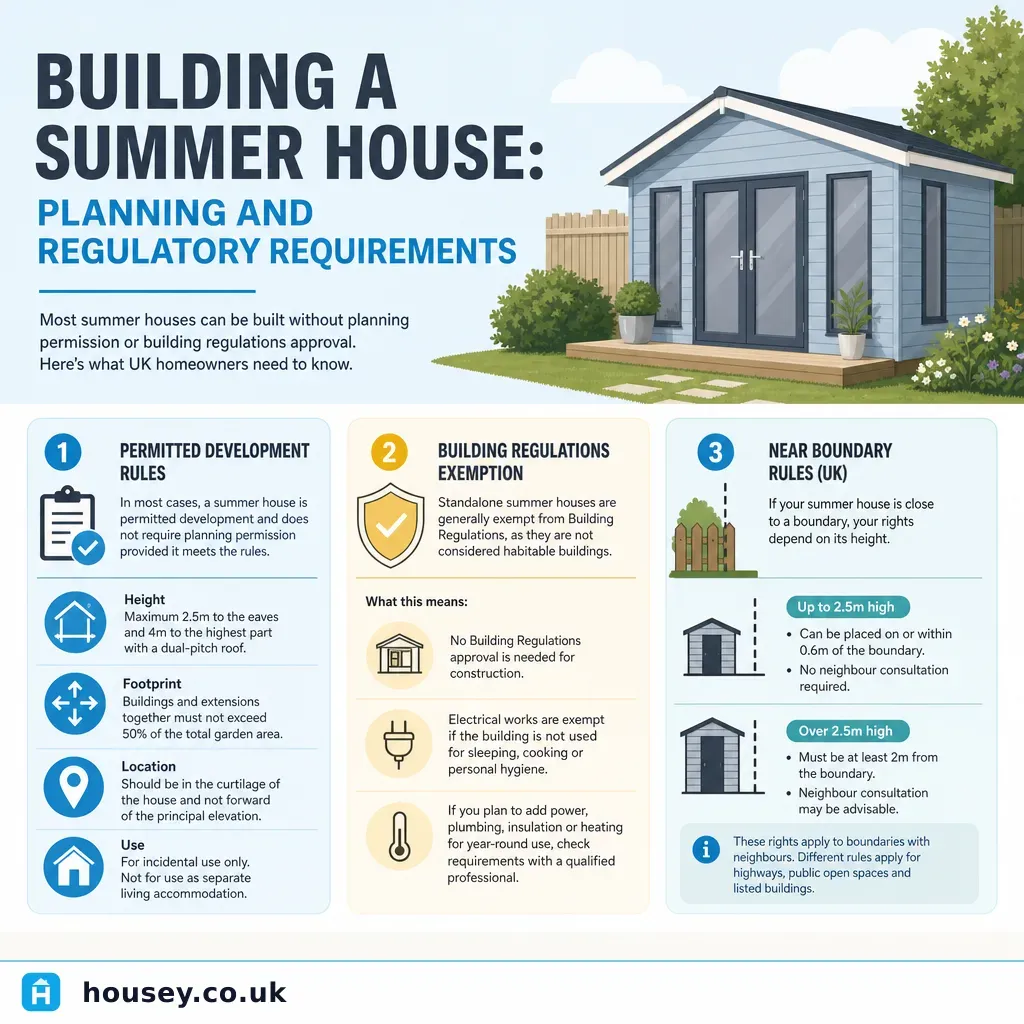
Building a Summer House: Planning and Regulatory Requirements
Most garden summer houses in England fall under Class E permitted development and need no planning permission, provided they are single-storey, within height limits, and not used for sleeping. Buildings under 15 m² are also exempt from building regulations. Conservation areas, listed buildings, and large-scale structures are the main exceptions to both rules.
 Planning & Pre-Build
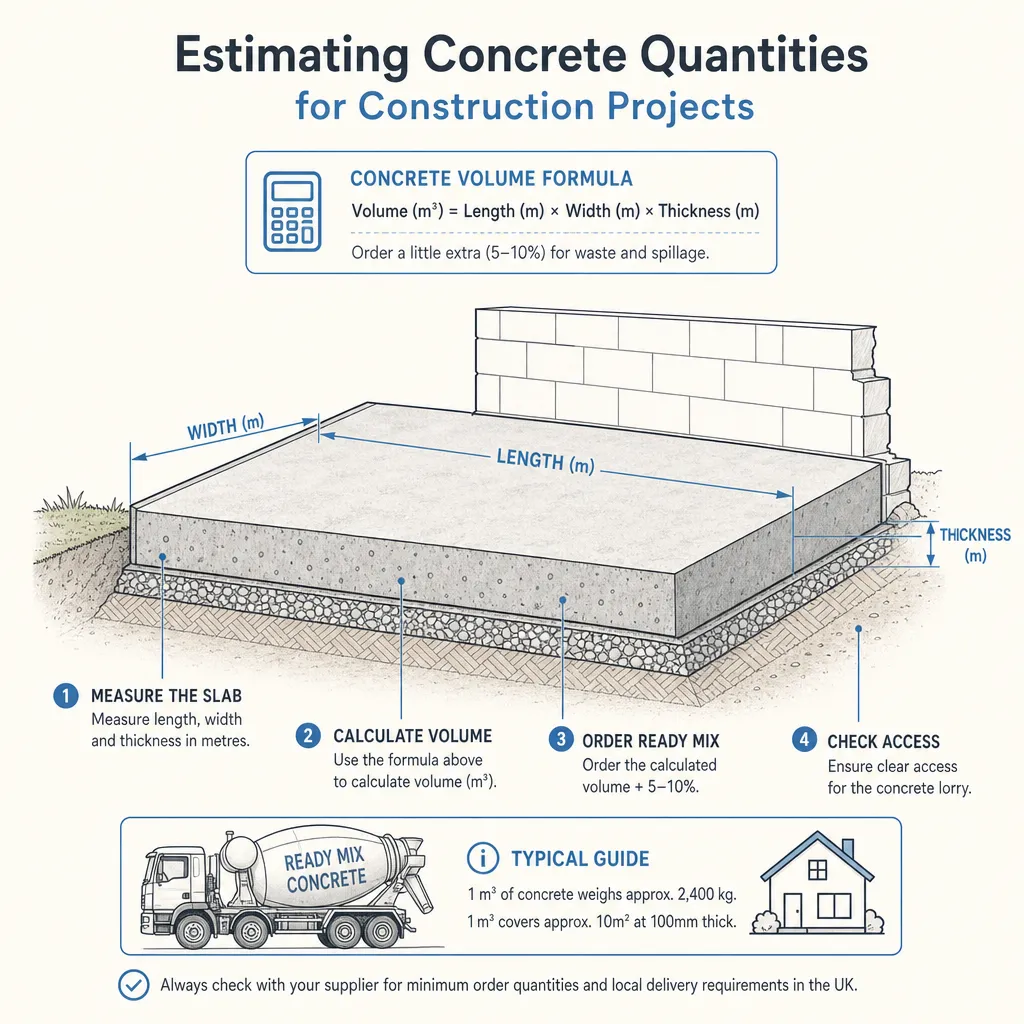
Estimating Concrete Quantities for Construction Projects
To estimate concrete quantities, calculate the volume in cubic metres (length × width × depth), then add a 5–10% wastage allowance. Ready-mix concrete is ordered by the cubic metre; site-mixed concrete requires separate weight-based calculations. Always confirm the mix specification with your structural engineer or building control officer before ordering.
 Planning & Pre-Build
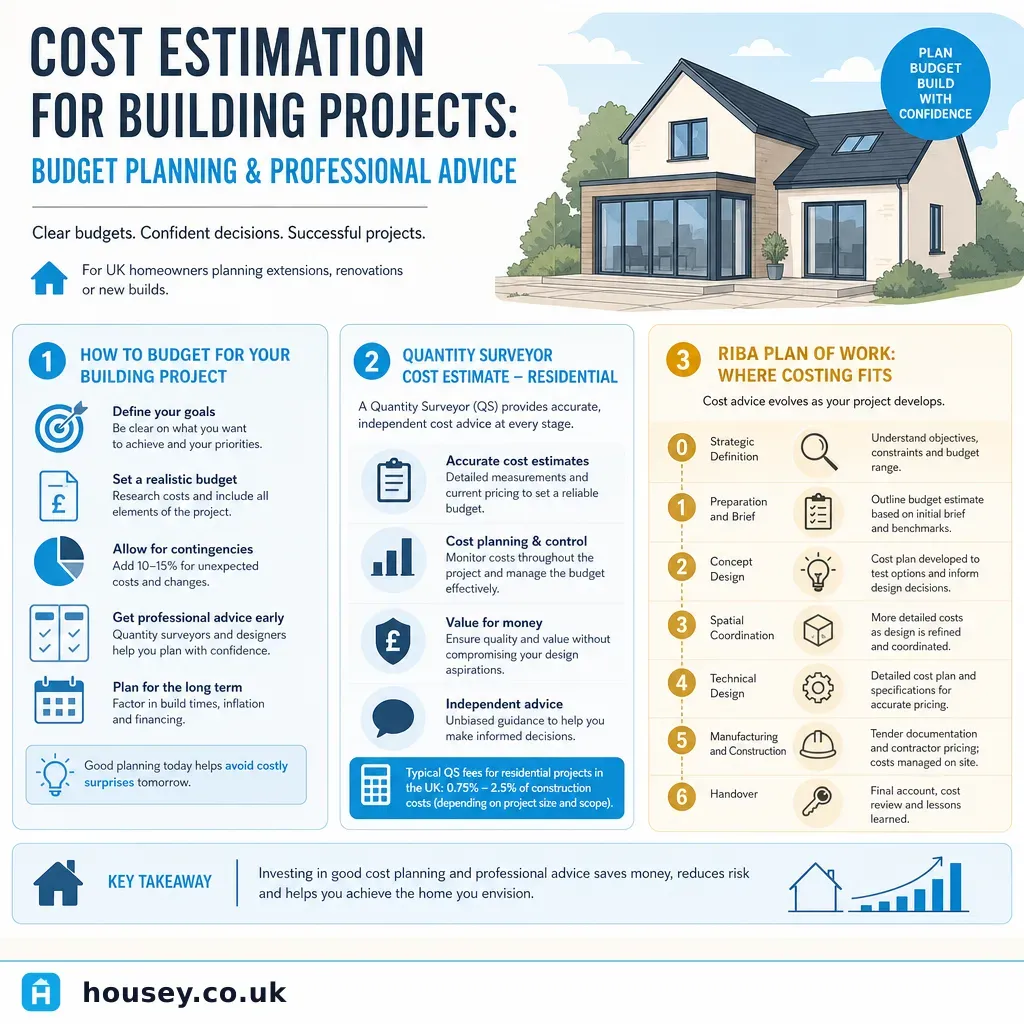
Cost Estimation for Building Projects: Budget Planning and Professional Advice
Build cost estimation involves calculating likely expenditure across design, materials, labour, fees, and contingency before committing to a project. In the UK, a quantity surveyor or cost consultant can produce a formal cost plan at RIBA Plan of Work stages, giving you a reliable budget before you apply for planning permission or appoint a contractor.
 Planning & Pre-Build
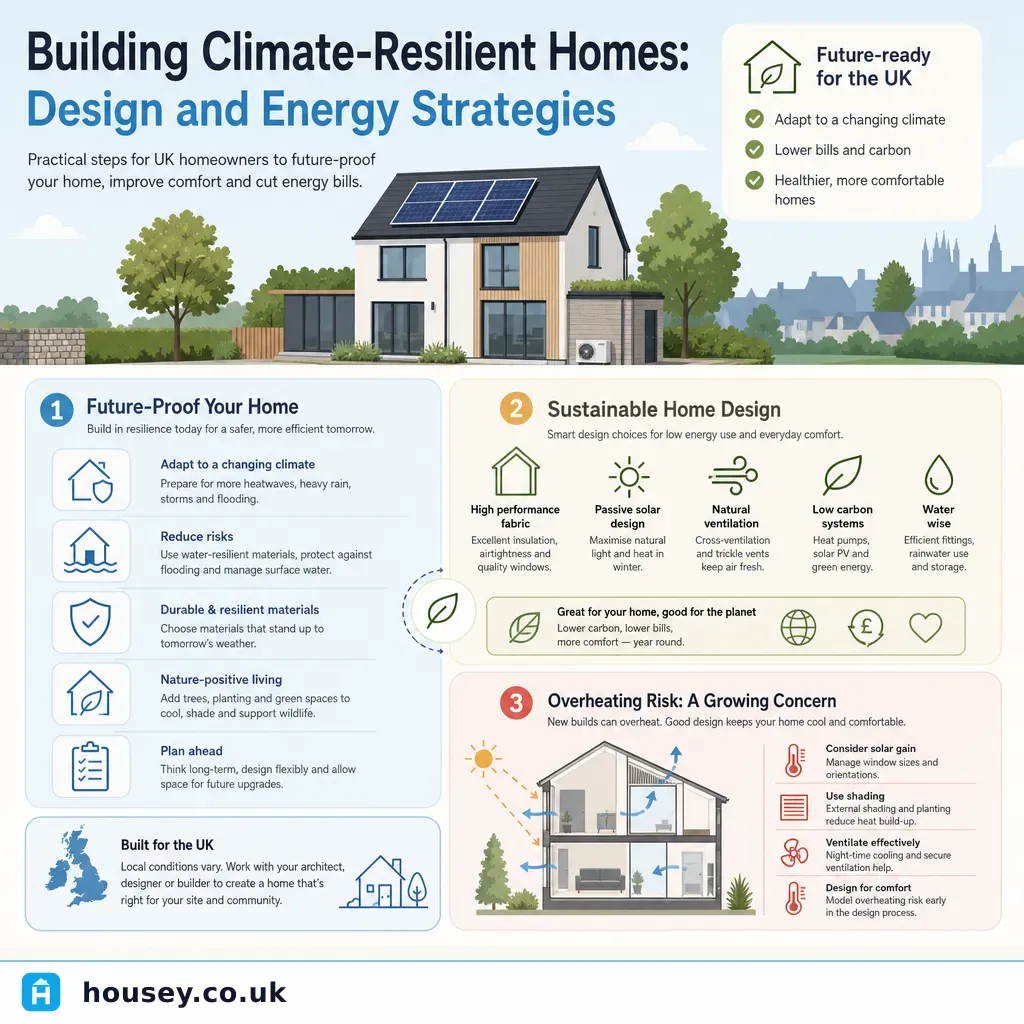
Building Climate-Resilient Homes: Design and Energy Strategies
A climate-resilient UK home handles hotter summers, wetter winters, and rising energy costs through high-performance insulation, overheating mitigation, flood-resilient construction, low-carbon heating, and good water management. Working with an architect or energy consultant at design stage is the most cost-effective way to future-proof a property, since fabric and drainage decisions are far cheaper to get right on the drawing board than to correct later.
 Planning & Pre-Build
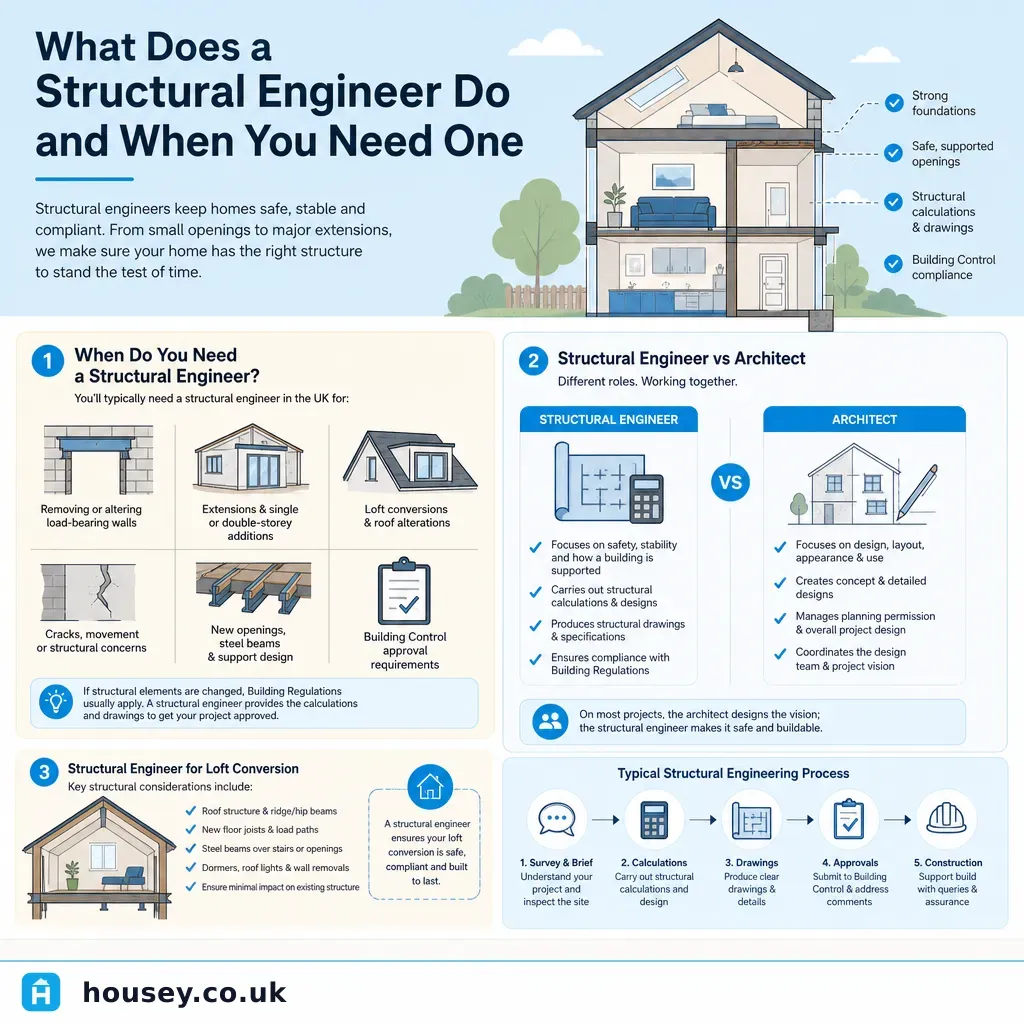
What Does a Structural Engineer Do and When You Need One
A structural engineer analyses and designs the load-bearing elements of a building — foundations, beams, columns, walls, and floors. In the UK, you typically need one when removing a load-bearing wall, converting a loft, building an extension, or when a surveyor flags structural movement that requires engineering assessment. They also produce structural calculations for building control sign-off.
 Planning & Pre-Build
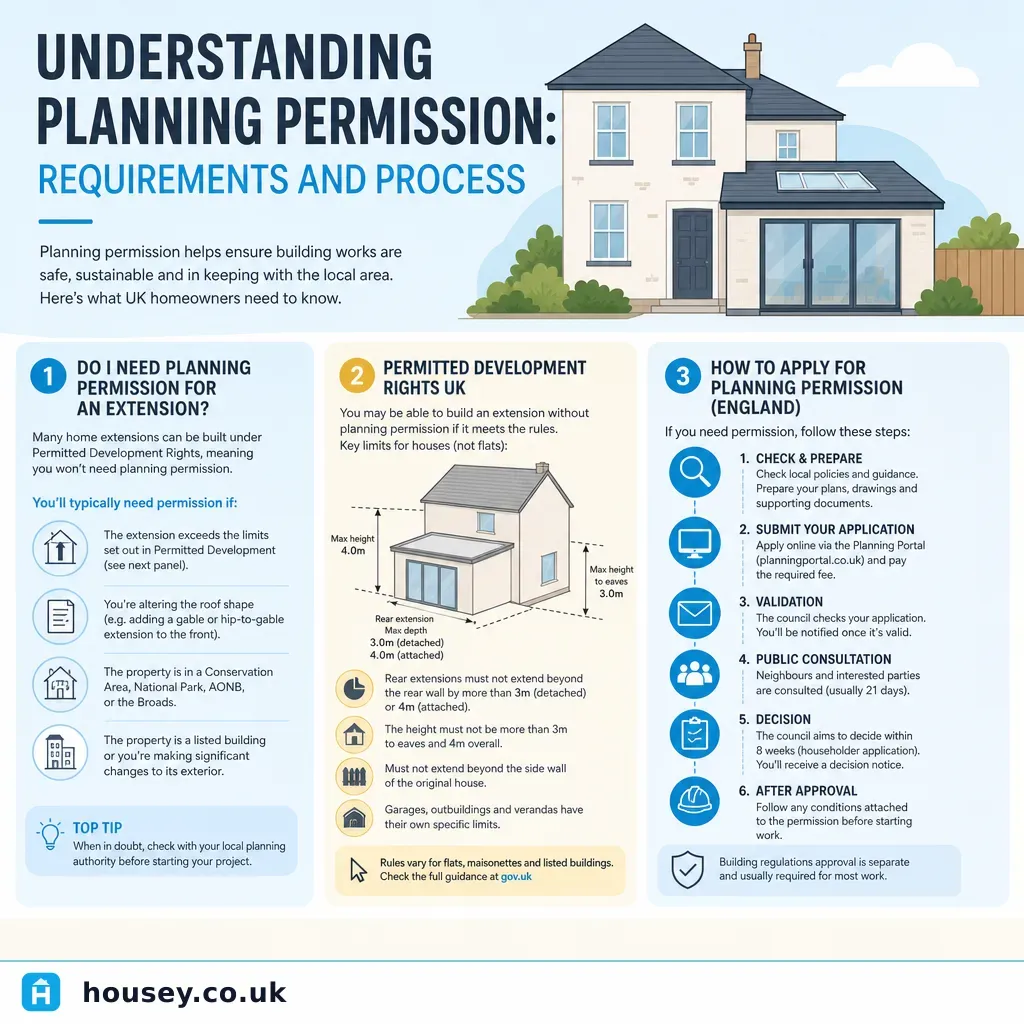
Understanding Planning Permission: Requirements and Process
Planning permission is required for most new buildings, significant extensions, and material changes of use in England and Wales. Many household projects fall under Permitted Development rights and do not need a formal application. Minor householder applications go to your local planning authority and are typically decided within eight weeks of submission.
 Planning & Pre-Build
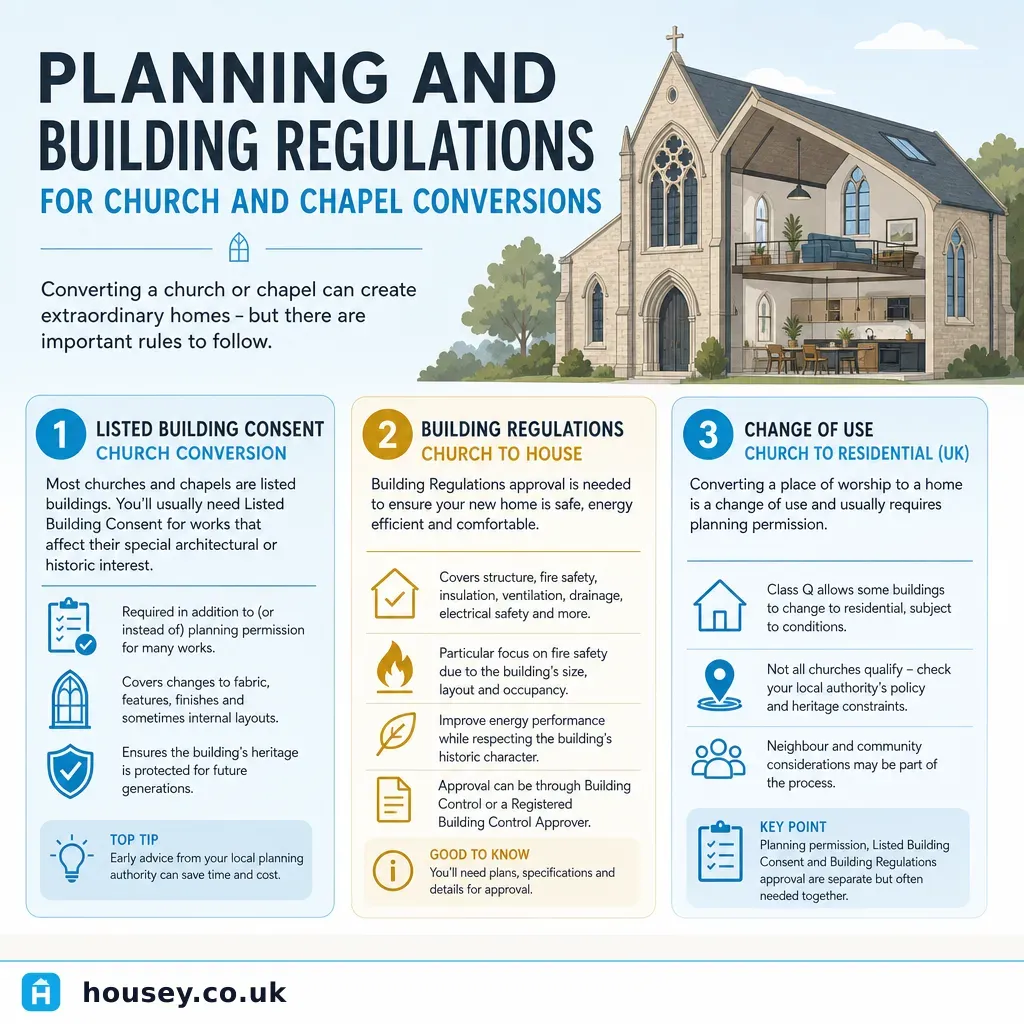
Planning and Building Regulations for Church and Chapel Conversions
Converting a church or chapel to residential use requires planning permission for change of use from Class F1 to Class C3, and listed building consent if the building is listed. Building regulations covering structure, fire, thermal performance, and ventilation also apply. Most projects need pre-application discussions, a heritage impact assessment, and a multi-disciplinary professional team.
 Planning & Pre-Build
Treatment and Eradication of Japanese Knotweed Infestation
Japanese knotweed can be managed through herbicide programmes, excavation, or containment, depending on site conditions, timescale, and proximity to watercourses or structures. Most residential properties use a glyphosate-based programme lasting three to five growing seasons, often supported by a management plan with an insurance-backed guarantee required by mortgage lenders. A qualified PCA-member specialist should assess and manage any confirmed infestation.
 Planning & Pre-Build
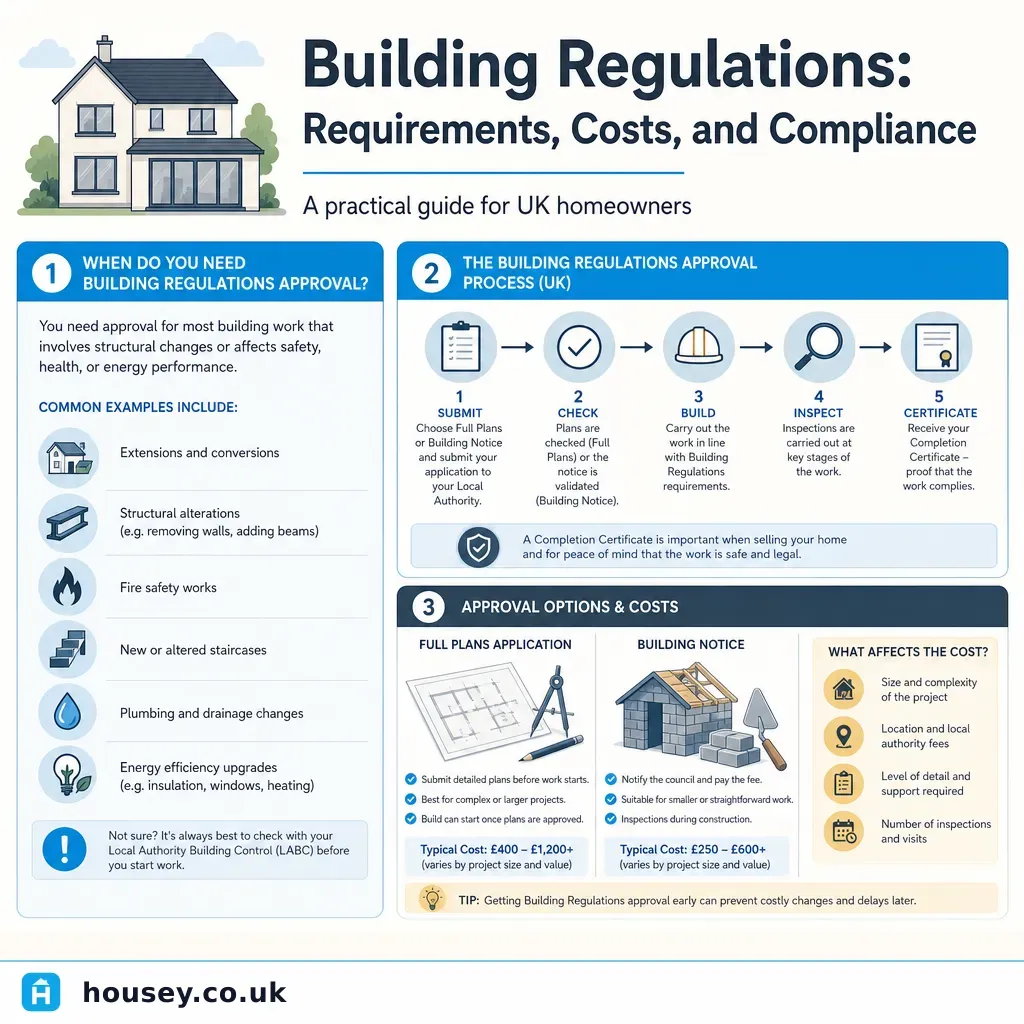
Building Regulations: Requirements, Costs, and Compliance
Building regulations set minimum standards for how construction work is carried out in the UK, covering structural stability, fire safety, energy efficiency, and ventilation. They apply to most building and conversion work, including extensions, loft conversions, and structural alterations. Approval is obtained through a local authority building control body or a Registered Building Control Approver before work begins.
 Planning & Pre-Build
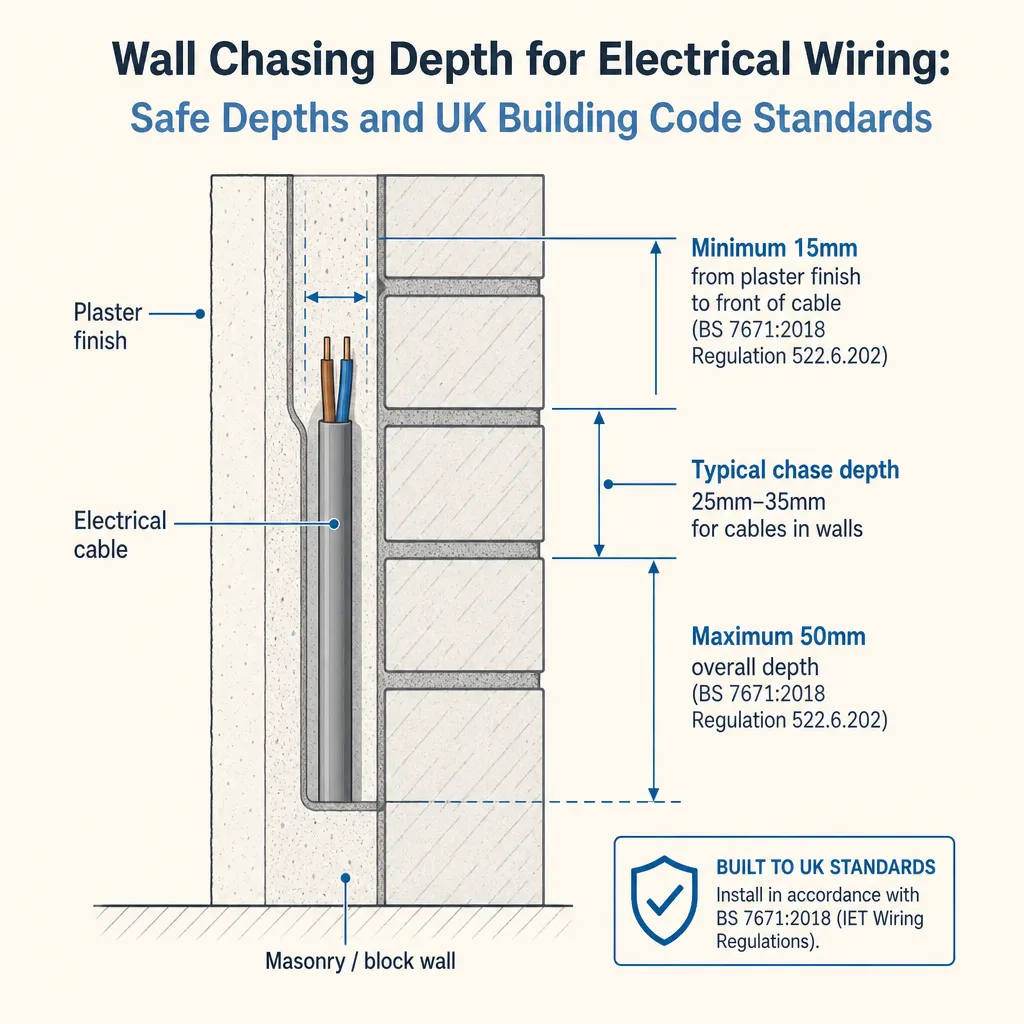
Wall Chasing Depth for Electrical Wiring: Safe Depths and UK Building Code Standards
Cables chased into walls must be within BS 7671 safe zones — within 150 mm of a ceiling, floor, or corner junction — or enclosed in rigid conduit for mechanical protection. A typical chase depth in masonry is 25–40 mm. Most new circuits also require notification under Building Regulations Part P and a completion certificate from a registered electrician.
 Planning & Pre-Build
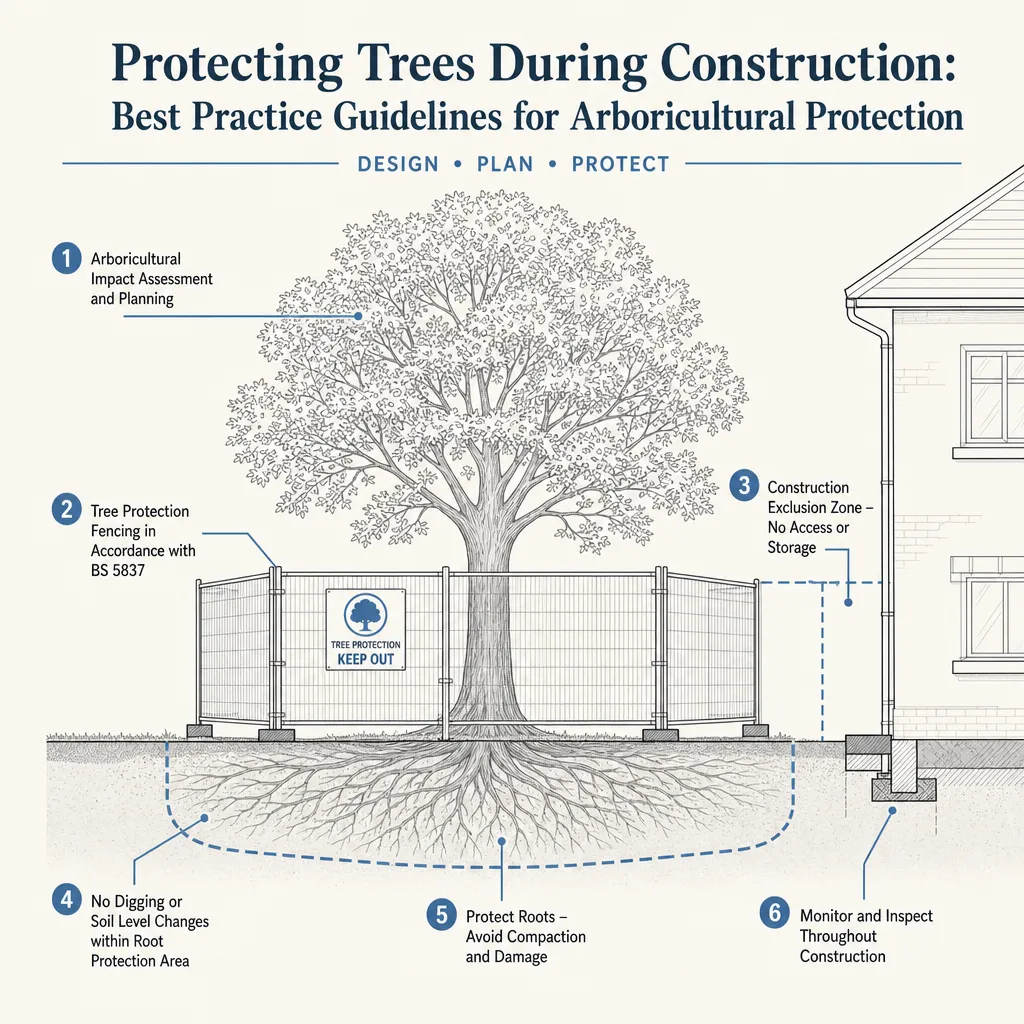
Protecting Trees During Construction: Best Practice Guidelines for Arboricultural Protection
Protecting trees on or near a construction site requires establishing Tree Protection Zones to BS 5837:2012 before any work starts. Local planning authorities routinely require an Arboricultural Method Statement and Arboricultural Impact Assessment. Trees with Tree Preservation Orders carry legal protection, and damage can result in prosecution. An arboricultural consultant should be involved from the earliest design stage.