Knowledge Base
Property advice that actually helps
Researched, UK-specific guides for every stage of homeownership — from buying and surveys to retrofit, planning and major works.
 Surveys & Inspections
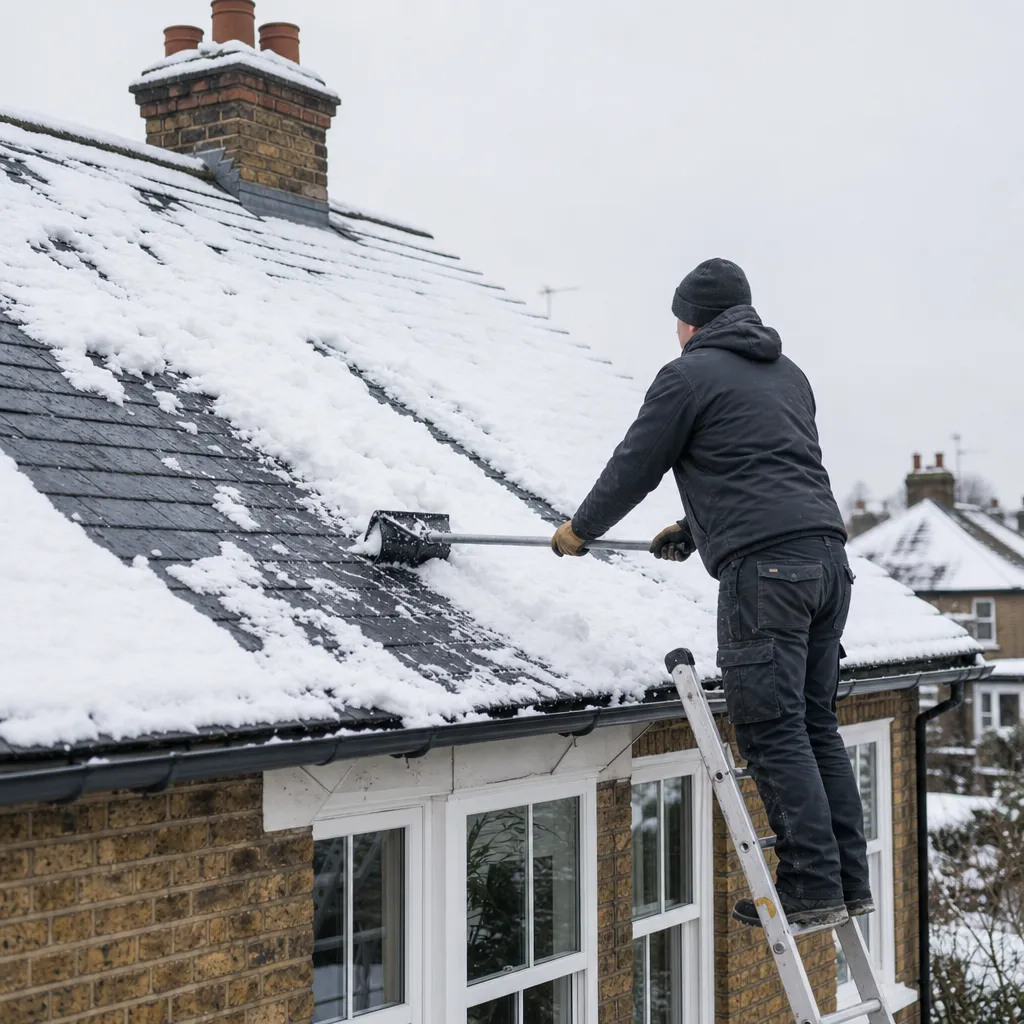
Roof Snow Removal: Safety and Structural Considerations
In the UK, most pitched roofs in good condition can tolerate typical snowfall without intervention. However, flat roofs, older properties, and any roof with pre-existing defects face greater risk. Deep or drifted snow can exceed safe load limits. Never attempt to remove snow from a roof yourself — call a qualified roofing contractor or structural engineer if you have any structural concerns.
 Surveys & Inspections
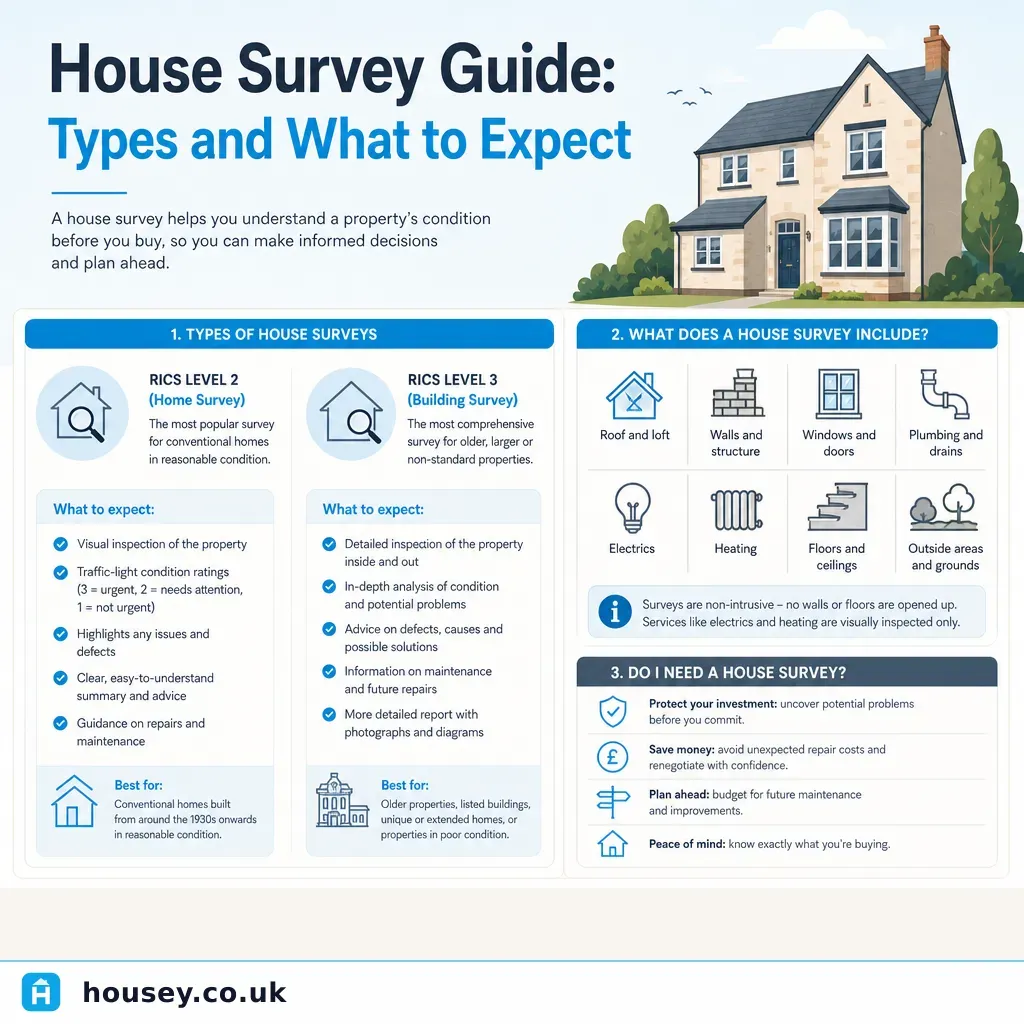
House Survey Guide: Types and What to Expect
UK house surveys come in three RICS-standardised levels: Level 1 (Condition Report) for new or near-new homes, Level 2 (Home Survey) for conventional post-war properties, and Level 3 (Building Survey) for older, altered, or defective properties. A mortgage lender's valuation is not a survey — it protects the lender, not you.
 Surveys & Inspections
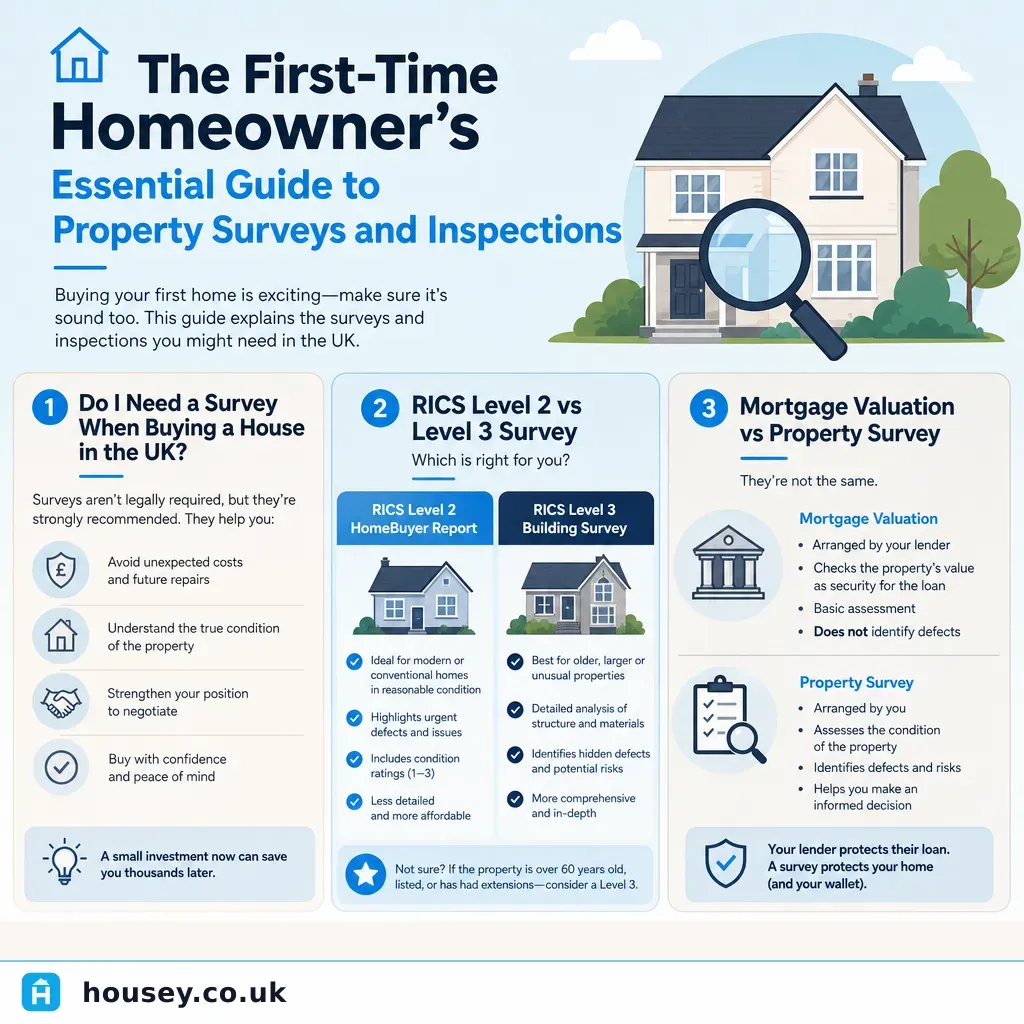
The First-Time Homeowner's Essential Guide to Property Surveys and Inspections
First-time buyers in the UK need more than the mortgage valuation — that report protects the lender, not you. A RICS Level 2 survey suits most conventional homes built after 1900 in reasonable condition; a Level 3 is advisable for older, extended, or visibly defective properties. Book your survey after your offer is accepted and before you exchange contracts.
 Surveys & Inspections
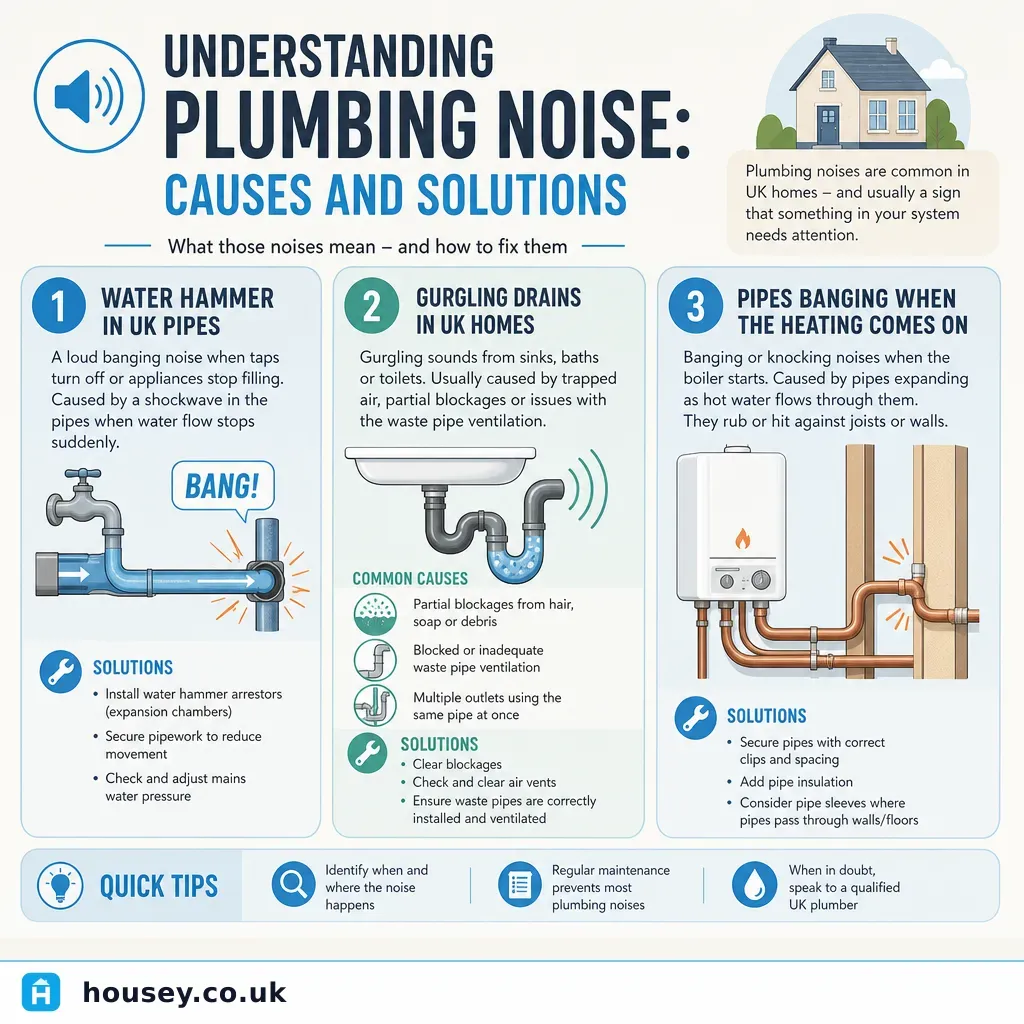
Understanding Plumbing Noise: Causes and Solutions
Most plumbing noises have a specific cause: banging usually means water hammer from high pressure or unsupported pipes; gurgling from drains points to a blockage or dry trap; ticking during heating is typically thermal expansion. Identifying the noise type helps determine whether a simple DIY fix will do or a qualified plumber or drain surveyor is needed.
 Surveys & Inspections
Basement Waterproofing Solutions for Damp Prevention
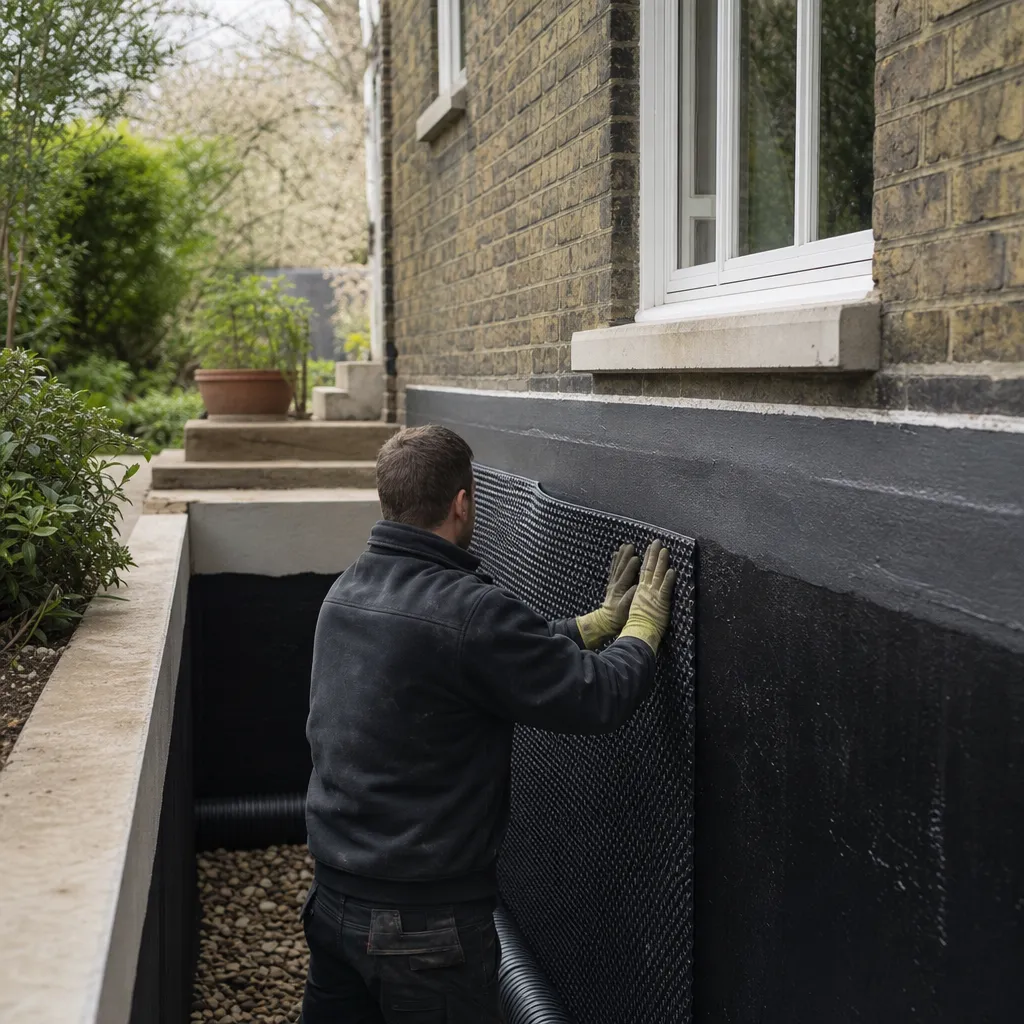
Basement waterproofing in the UK is governed by BS 8102:2022, which defines three system types: Type A (barrier coatings), Type B (structurally integral concrete), and Type C (cavity drain membrane with sump pump). Most retrofit projects in older UK properties use a Type C system. The correct choice depends on water pressure, construction type, and intended use, and should always be specified by a qualified waterproofing surveyor.
 Surveys & Inspections
Managing Property and Contents After Damp Treatment
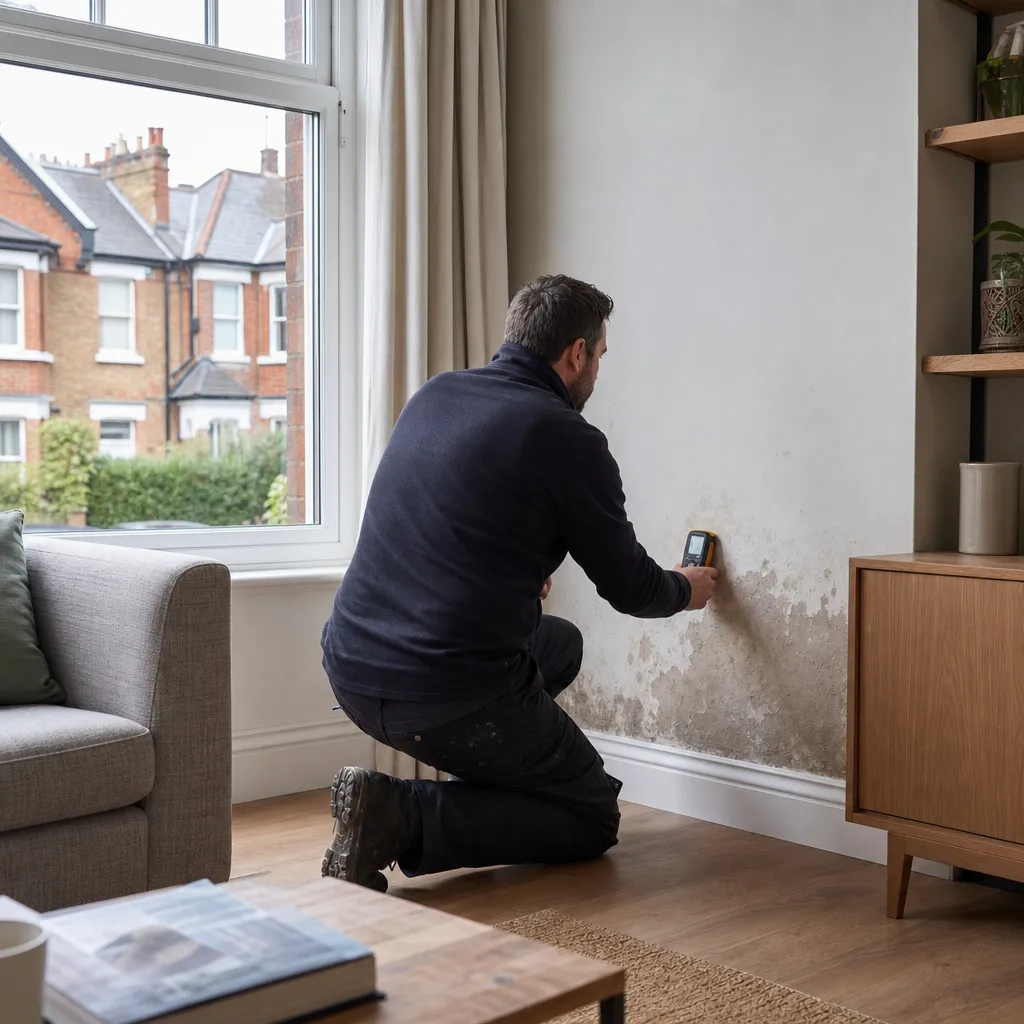
After damp treatment in a UK home, allow walls to dry fully before re-plastering or decorating — this typically takes six months to two years depending on construction and damp severity. Keep the property well ventilated, remove damaged contents promptly, and retain your guarantee documentation from the treating company for future property sales.
 Surveys & Inspections
Measured Building Survey Costs and Pricing Guide
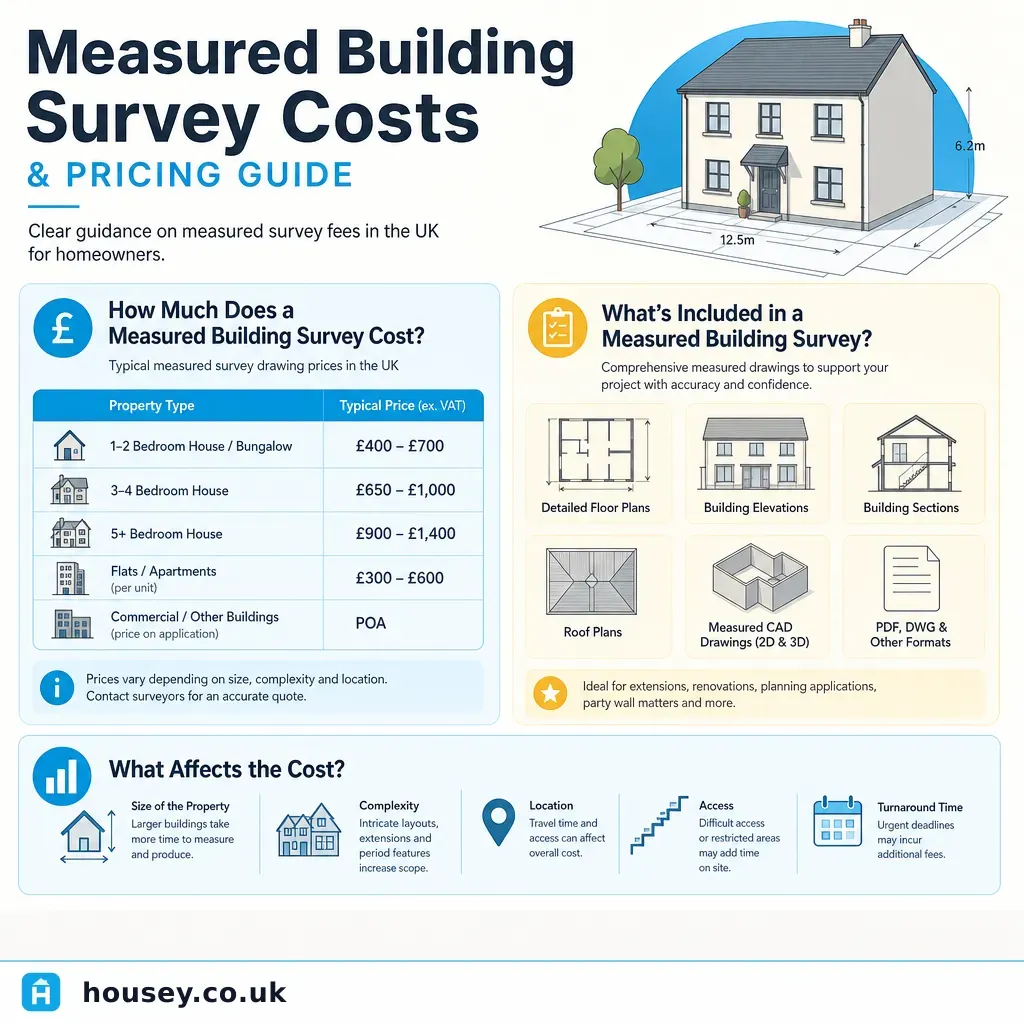
A measured building survey in the UK typically costs between £500 and £5,000 for residential properties, depending on floor area, number of levels, drawing scope, and survey method. Output is usually 2D CAD drawings — floor plans, elevations, and sections. Get at least three itemised quotes and confirm file formats with your architect before instructing.
 Surveys & Inspections
Understanding Damp Proofing and Waterproofing: Which Solution Does Your Home Need?
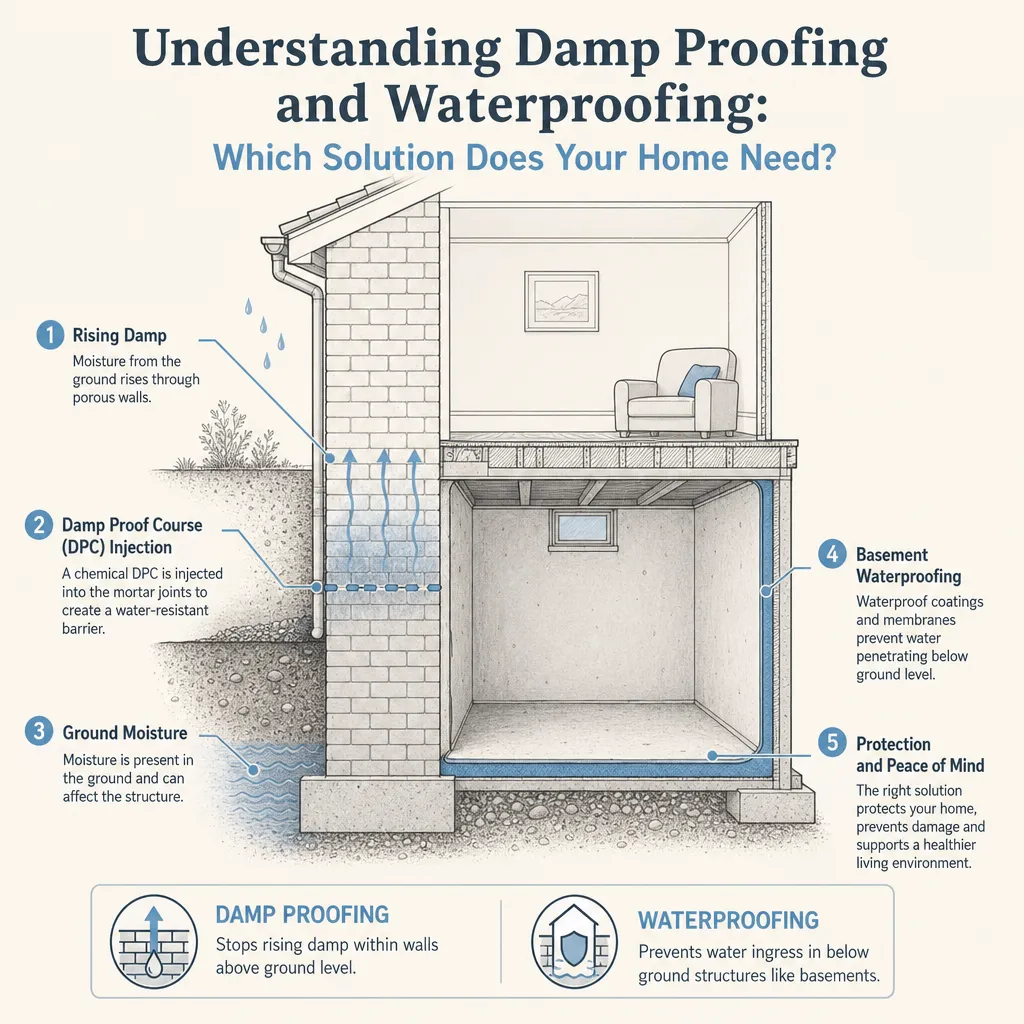
Damp proofing controls moisture movement through above-ground walls, while waterproofing excludes groundwater from below-ground structures. Correct diagnosis matters more than treatment choice: rising damp, penetrating damp, and condensation each require different solutions and are frequently confused. An independent survey before agreeing any remediation is strongly advisable in UK properties.
 Surveys & Inspections
Drone Surveys: Applications and Benefits in Property Inspection
Drone surveys use unmanned aircraft to photograph and film roofs, chimneys, and hard-to-reach building elements without scaffolding. In the UK, commercial operators must hold CAA accreditation and carry public liability insurance. Drone surveys are most useful for roof and large-building inspections and thermal imaging of flat roofs — but they do not replace a hands-on RICS structural assessment.
 Surveys & Inspections
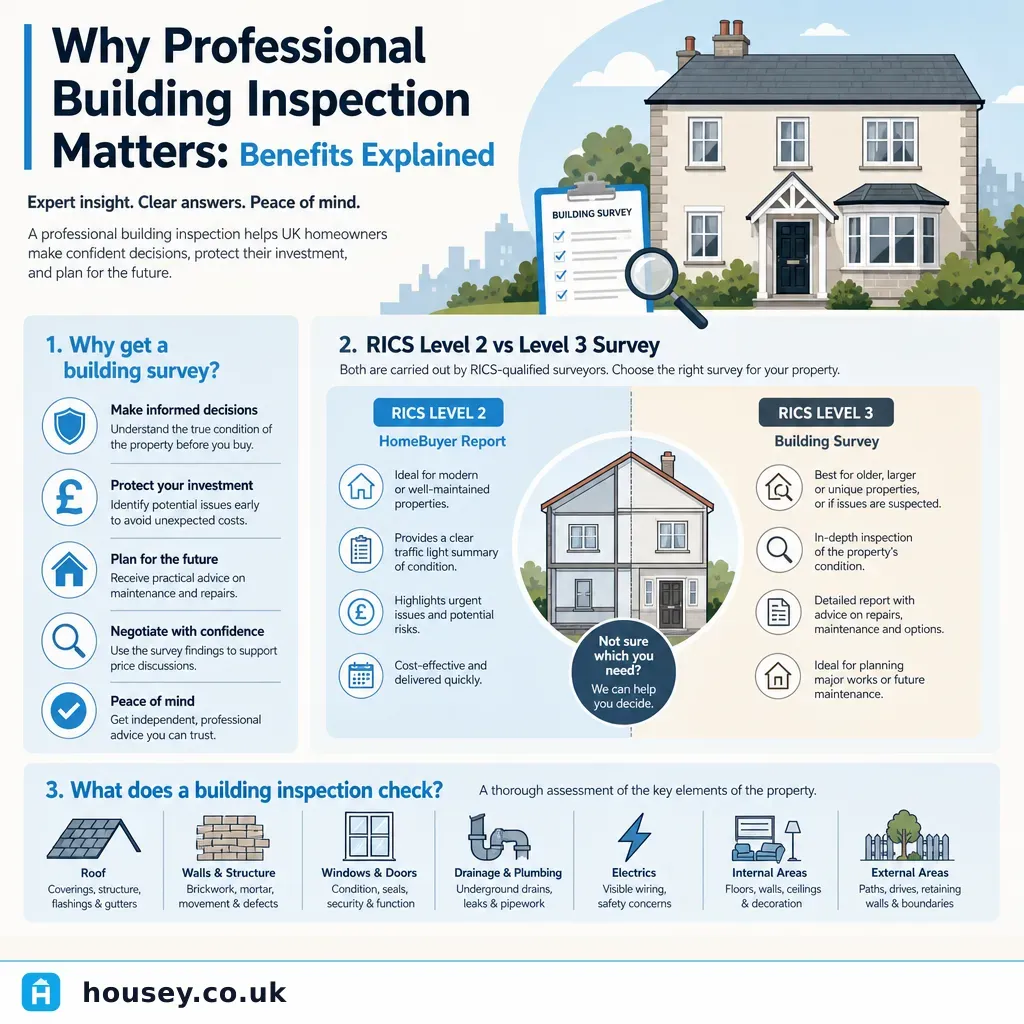
Why Professional Building Inspection Matters: Benefits Explained
Professional building inspection gives UK homeowners an independent, expert view of a property's condition and regulatory compliance. Before buying, a RICS Level 2 or Level 3 survey flags defects the seller may not have disclosed. During renovation, Building Control inspections confirm work meets the Building Regulations. Each inspection type serves a distinct purpose at a different stage of property ownership.
 Surveys & Inspections
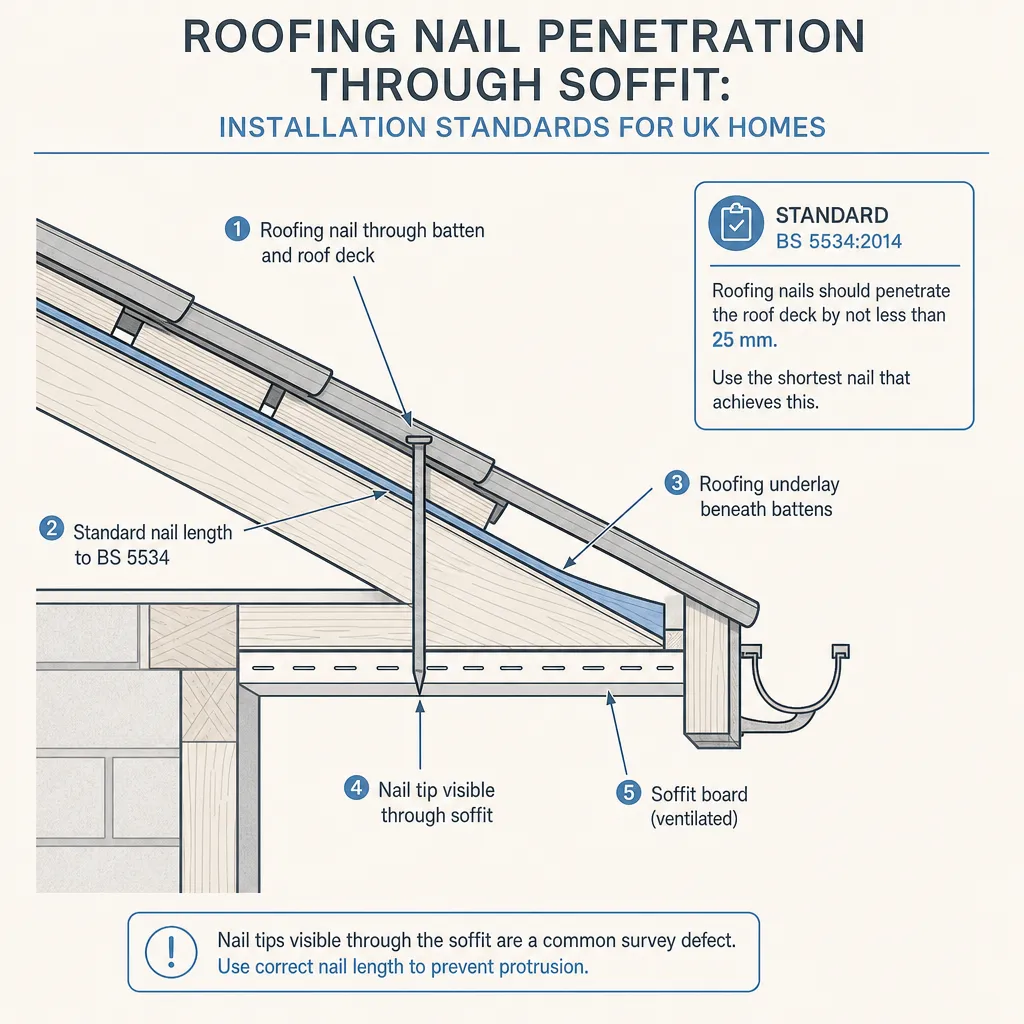
Roofing Nail Penetration Through Soffit: Installation Standards
Roofing nails penetrating through the soffit board indicate that over-length nails were used or batten depth was insufficient during installation. Commonly flagged as a Condition 2 defect in UK building surveys, it can allow moisture ingress at the eaves. A qualified roofer should inspect, assess any associated timber damage, and re-fix with correctly-sized nails.
 Surveys & Inspections
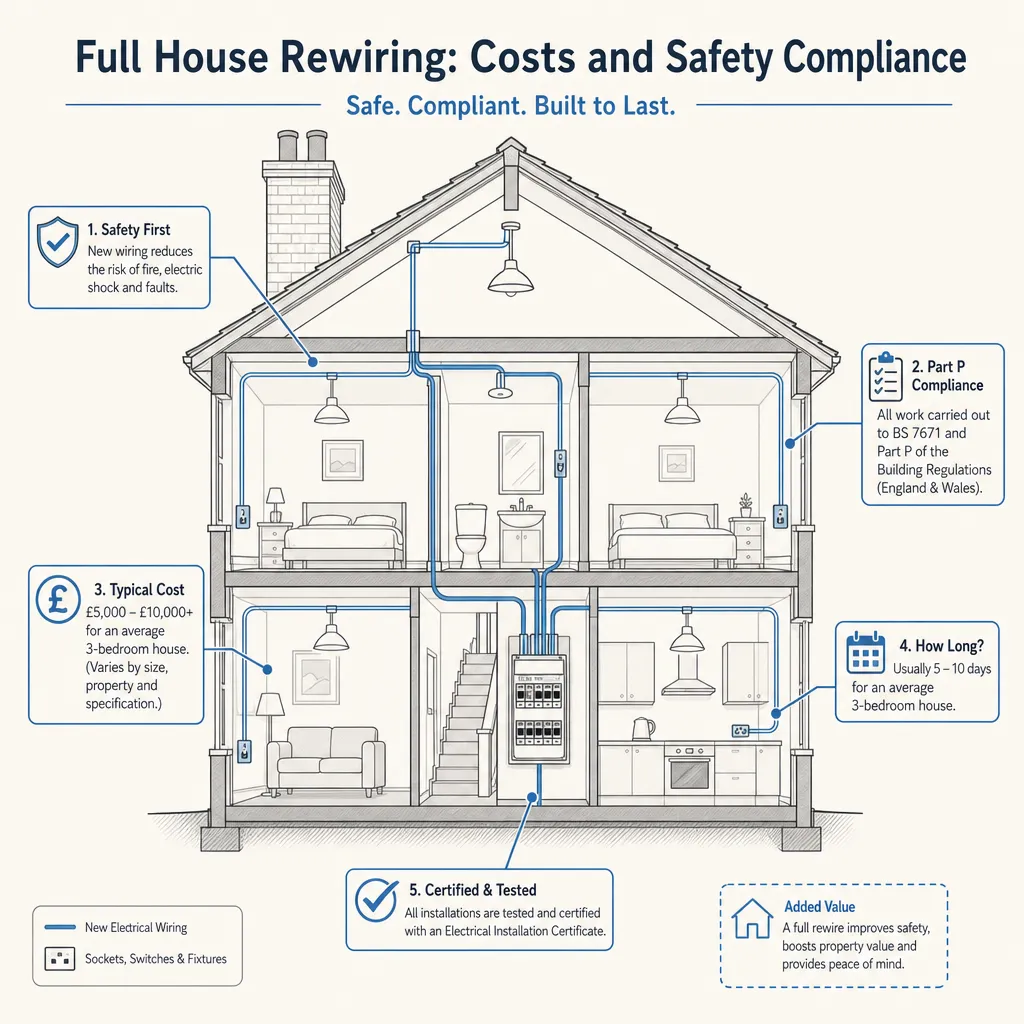
Full House Rewiring: Costs and Safety Compliance
A full house rewire in the UK typically costs £3,500–£6,000 for a three-bedroom semi and must comply with BS 7671:2018 and Building Regulations Part P. Work should be carried out by an NICEIC- or NAPIT-registered electrician who self-certifies and issues an Electrical Installation Certificate on completion. Retain all certificates — they are required by conveyancers on resale.