Knowledge Base
Property advice that actually helps
Researched, UK-specific guides for every stage of homeownership — from buying and surveys to retrofit, planning and major works.
 Surveys & Inspections
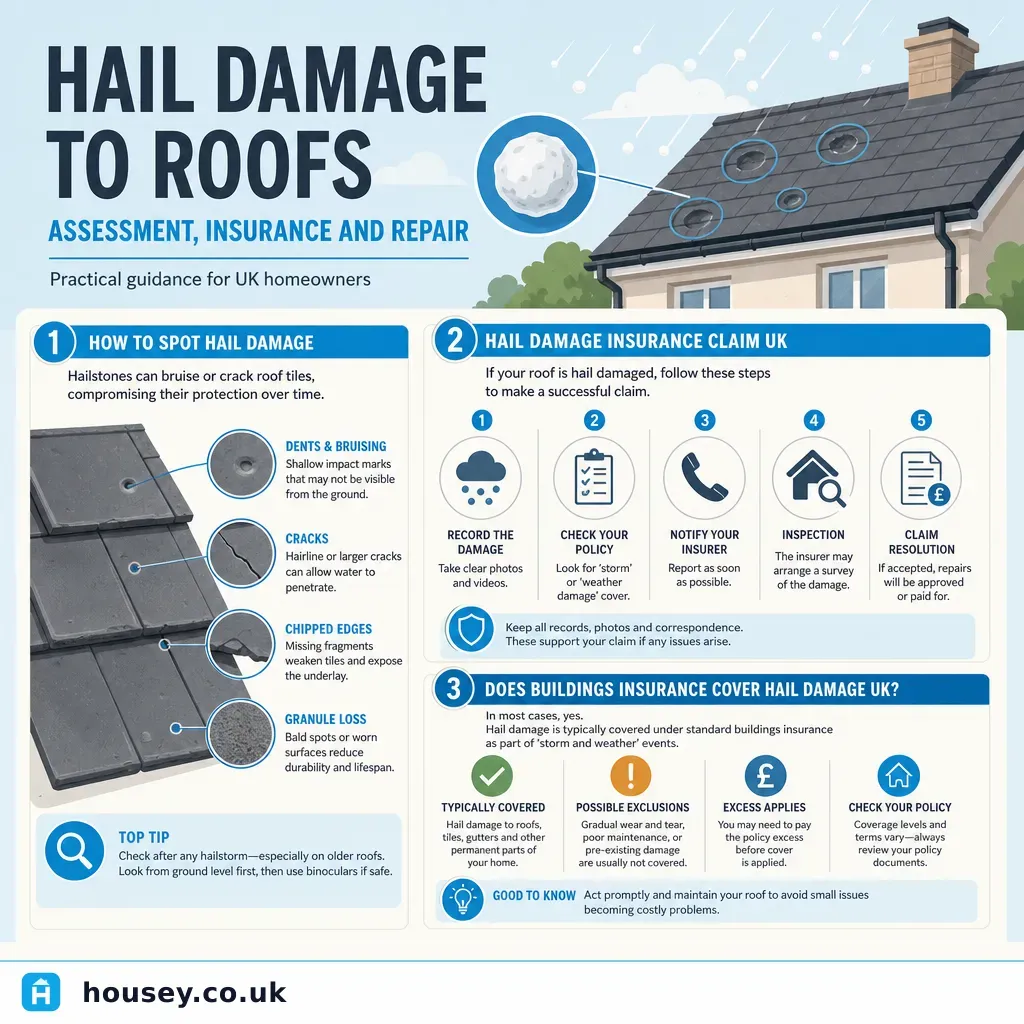
Hail Damage to Roofs: Assessment, Insurance and Repair
Hail damage to a roof commonly shows as cracked or chipped tiles, granule loss on flat roofs, dented flashings, and water ingress. A qualified roofing contractor or chartered surveyor should inspect after a hail event before you contact your insurer. Photograph all visible damage first and check your buildings insurance policy for storm damage cover.
 Surveys & Inspections
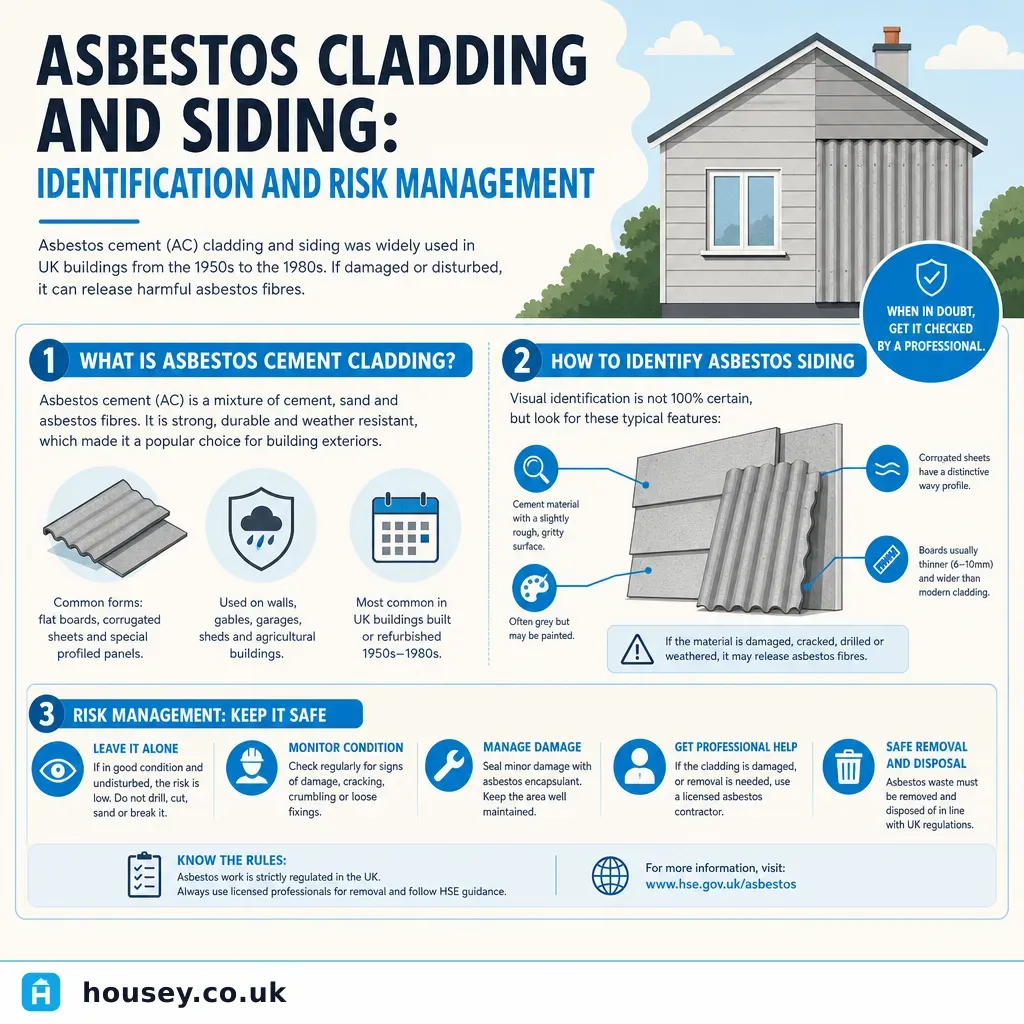
Asbestos Cladding and Siding: Identification and Risk Management
Asbestos cement cladding was widely used on UK buildings until 1999 and may be present on any property built before that date. The material is lower-risk when intact but must not be disturbed without a professional survey. The Control of Asbestos Regulations 2012 requires a refurbishment and demolition survey before any renovation work on pre-2000 buildings.
 Surveys & Inspections
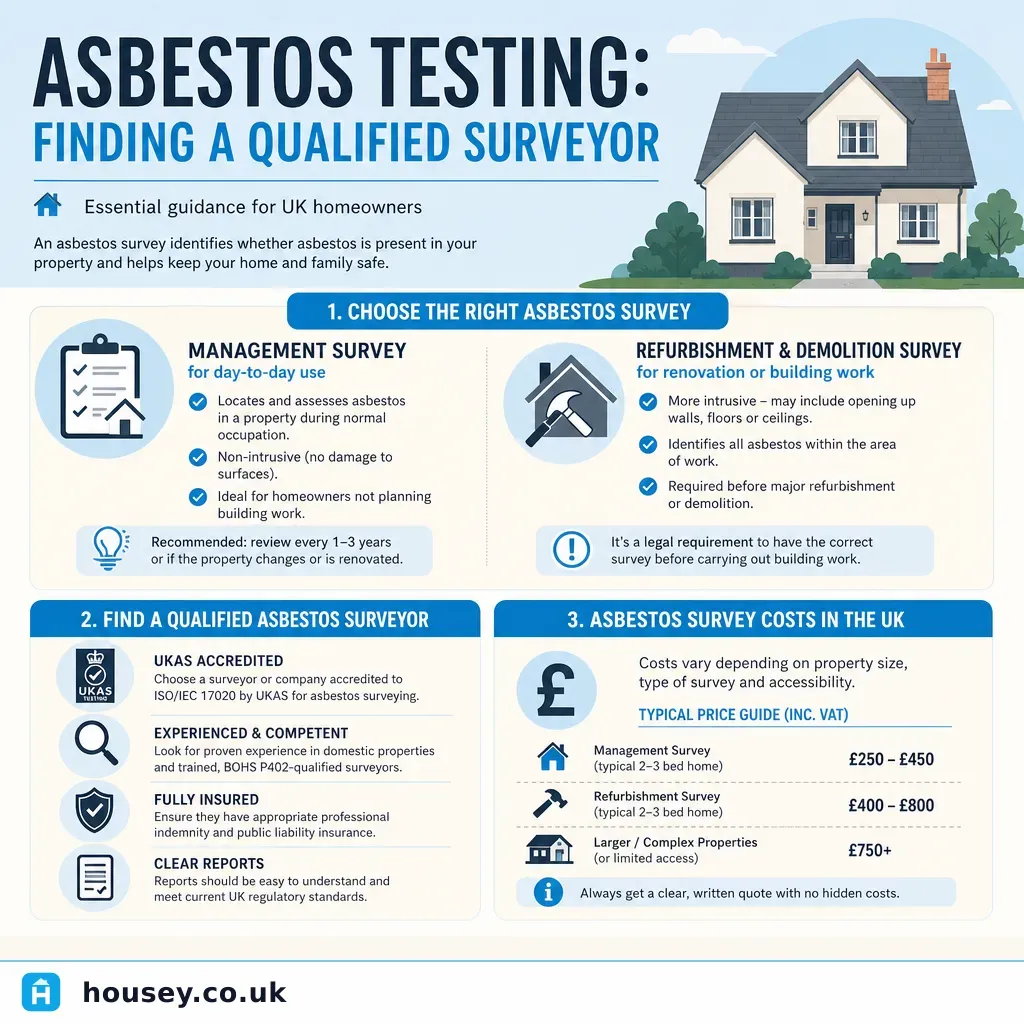
Asbestos Testing: Finding a Qualified Surveyor
Finding a qualified asbestos surveyor means choosing a company accredited by UKAS to ISO/IEC 17020, with analysts holding BOHS P402 or equivalent qualifications. There are two main survey types: a Management Survey for buildings in normal use, and a Refurbishment and Demolition Survey required before any structural or intrusive work begins. Never disturb suspect materials before a survey is completed.
 Surveys & Inspections
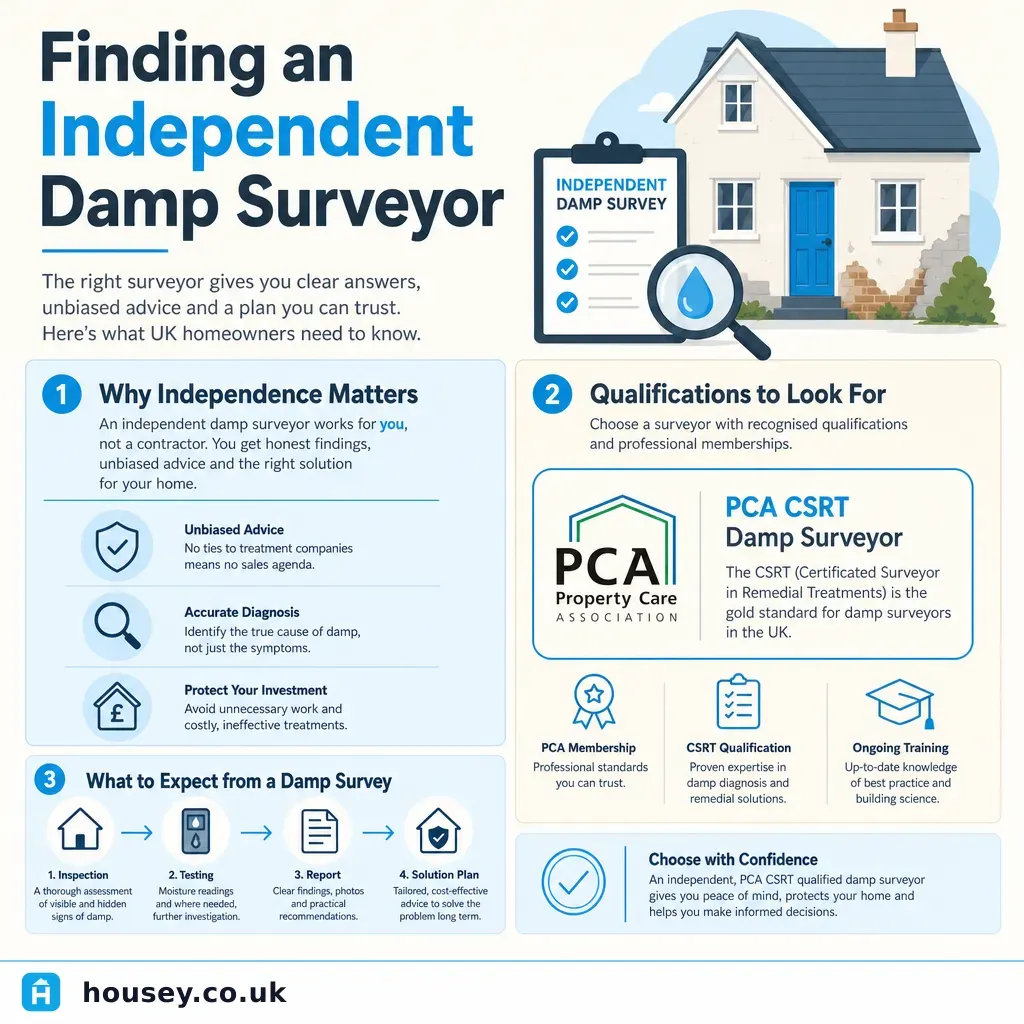
Finding an Independent Damp Surveyor
An independent damp surveyor has no financial tie to remediation contractors, so their diagnosis is less likely to reflect a sales interest. Look for PCA CSRT or RICS membership, insist on a written report that identifies the cause and specifies a remedy, and get at least two independent opinions before committing to any treatment work.
 Surveys & Inspections
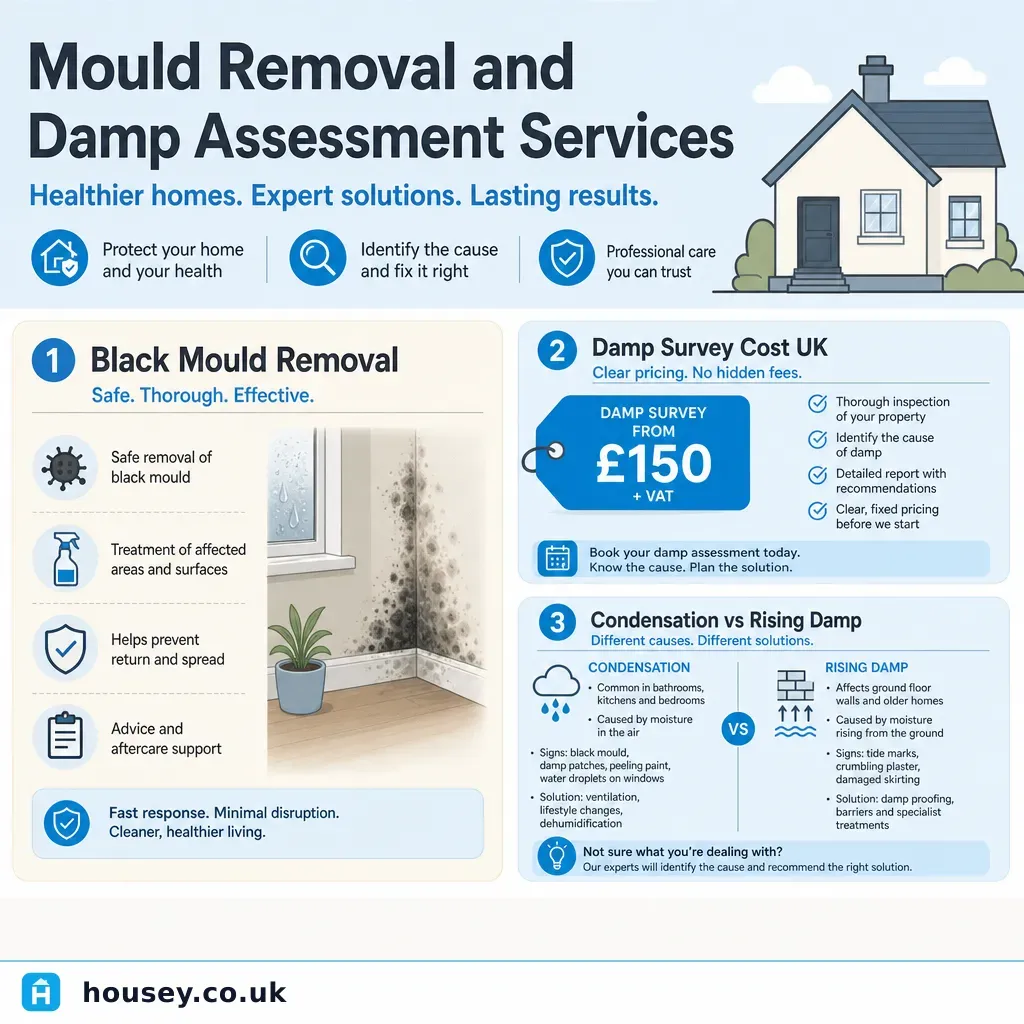
Mould Removal and Damp Assessment Services
Professional mould removal and damp assessment starts with identifying the moisture source—condensation, rising damp, or penetrating damp—before any treatment begins. Treating mould without diagnosing the cause almost always leads to recurrence. An independent damp and timber survey, typically costing £200–£500, is usually the right starting point for persistent damp or mould in a UK home.
 Surveys & Inspections
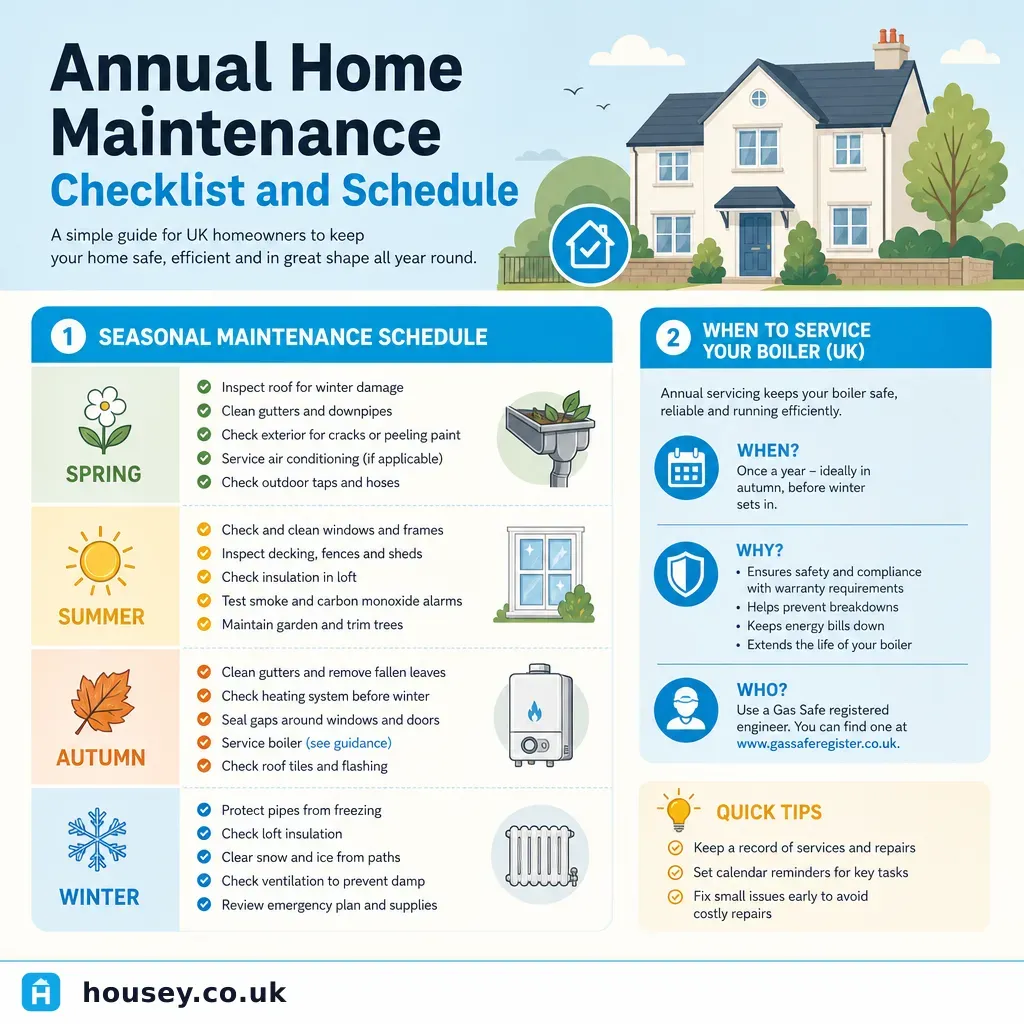
Annual Home Maintenance Checklist and Schedule
A structured annual maintenance schedule helps UK homeowners catch small problems before they become costly repairs. Key tasks include clearing gutters twice yearly, an annual boiler service by a Gas Safe registered engineer, pre-winter draught-proofing, and a post-winter roof and masonry inspection. A RICS survey every five years provides a professional baseline for monitoring your property's condition.
 Surveys & Inspections
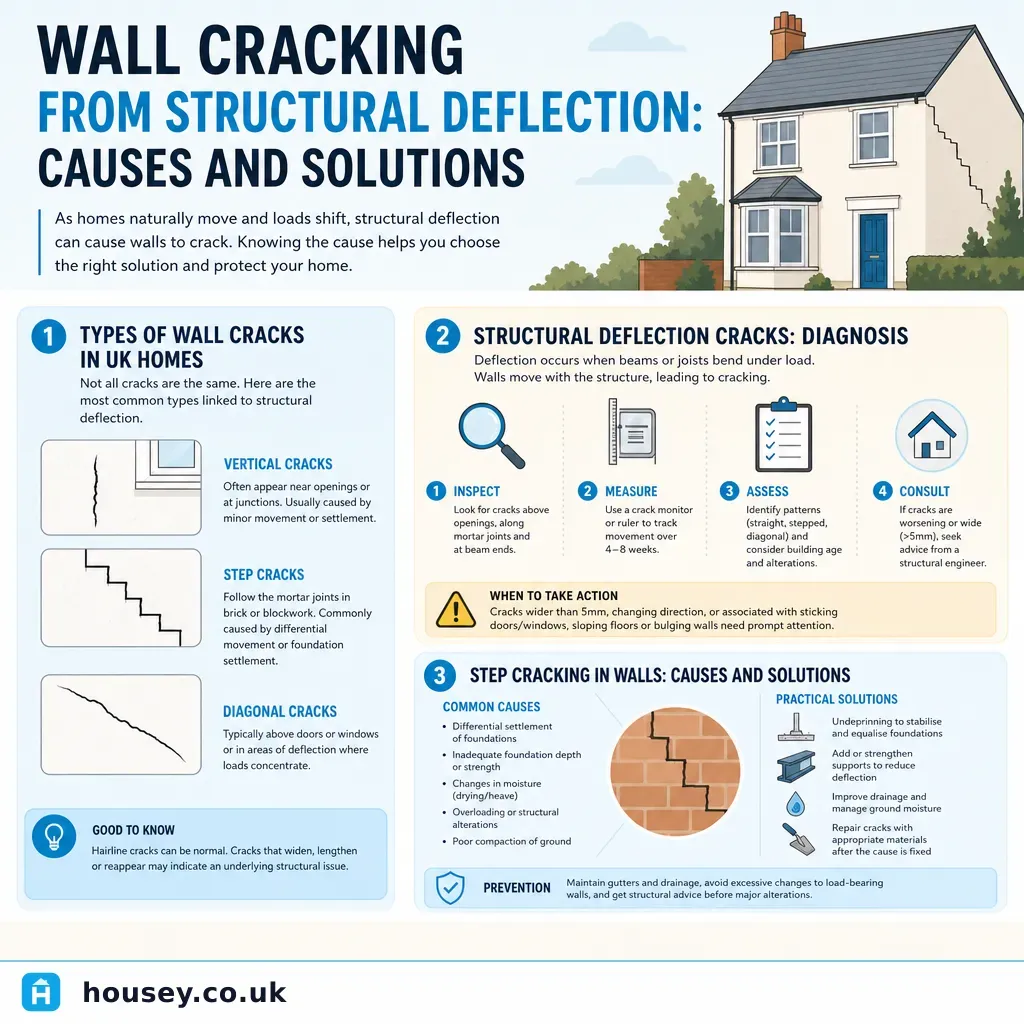
Wall Cracking from Structural Deflection: Causes and Solutions
Structural deflection occurs when a beam, floor, or lintel sags under load, transferring stress into surrounding masonry and causing characteristic cracks. Step cracking through mortar joints often indicates differential settlement; horizontal cracking at regular intervals in an outer brick leaf may signal wall-tie failure. Cracks wider than 5 mm or those that are widening warrant assessment by a RICS surveyor or structural engineer.
 Surveys & Inspections
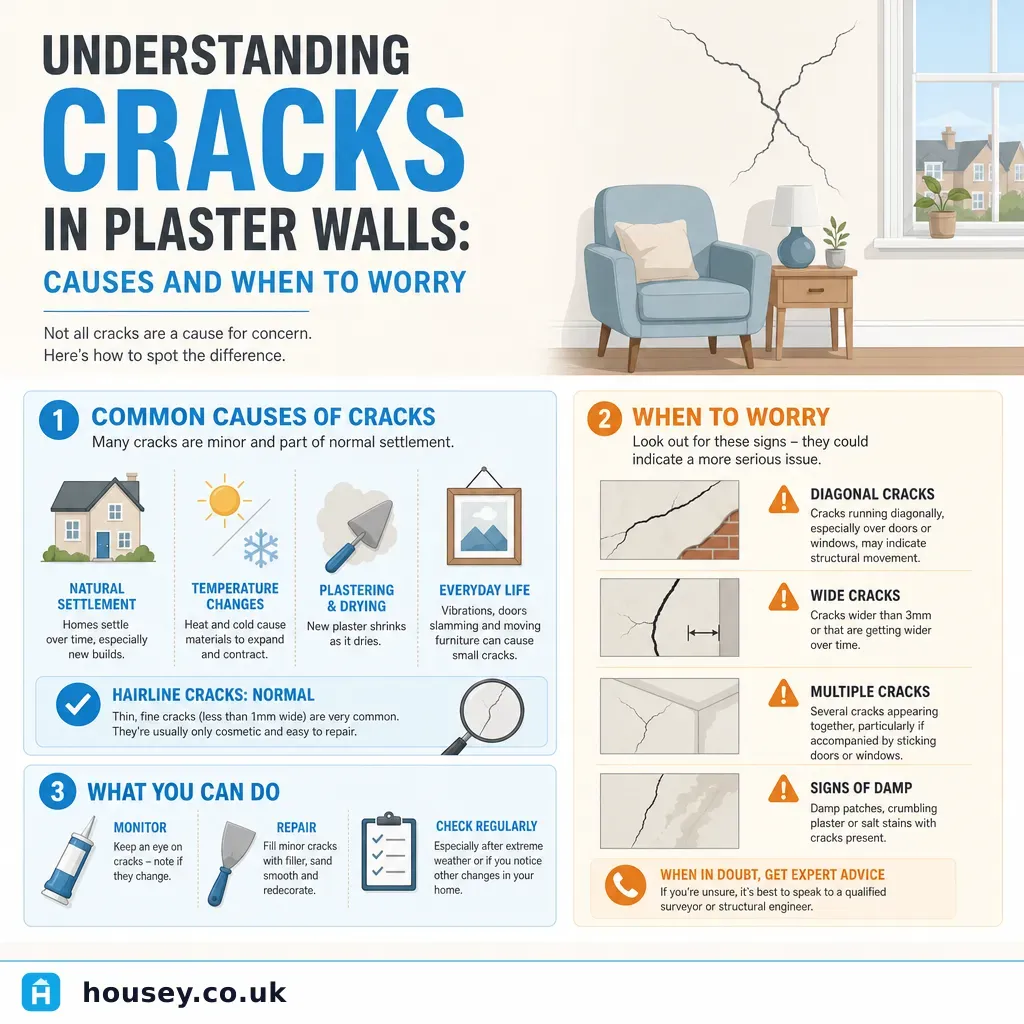
Understanding Cracks in Plaster Walls: Causes and When to Worry
Most hairline plaster cracks are cosmetic, caused by seasonal shrinkage or minor settlement. Cracks wider than 5 mm, diagonal cracks from window or door openings, stepped cracks through mortar joints, or cracks accompanied by sticking doors need professional assessment. A RICS-qualified surveyor or structural engineer can distinguish cosmetic movement from structural concern.
 Surveys & Inspections
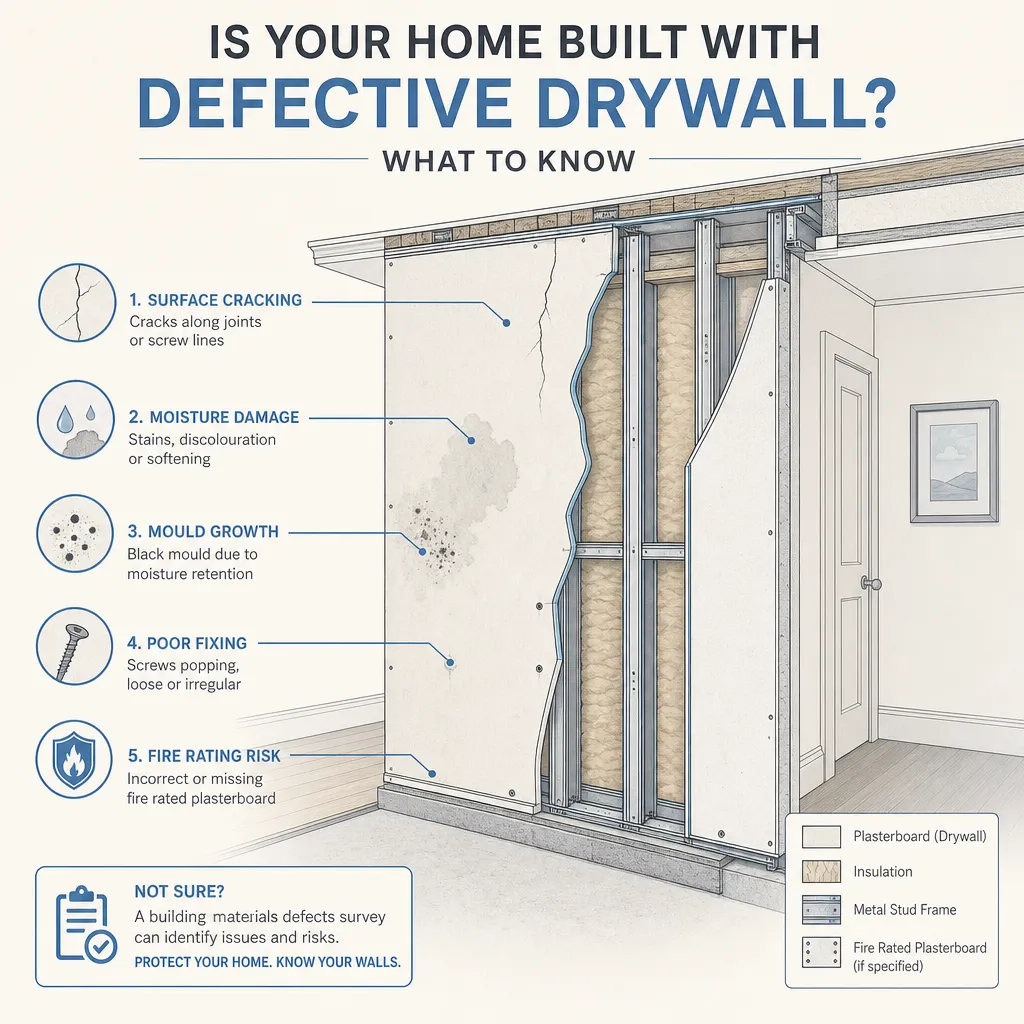
Is Your Home Built with Defective Drywall? What to Know
Contaminated Chinese drywall — as seen in US homes built 2001 to 2009 — is not a documented widespread problem in UK properties, where plasterboard is manufactured primarily to European standards. The main UK concerns are incorrect specification of fire-rated plasterboard and poor installation in loft, garage, or flat conversions. A RICS Level 3 survey or specialist inspection is the appropriate next step if you have concerns.
 Surveys & Inspections
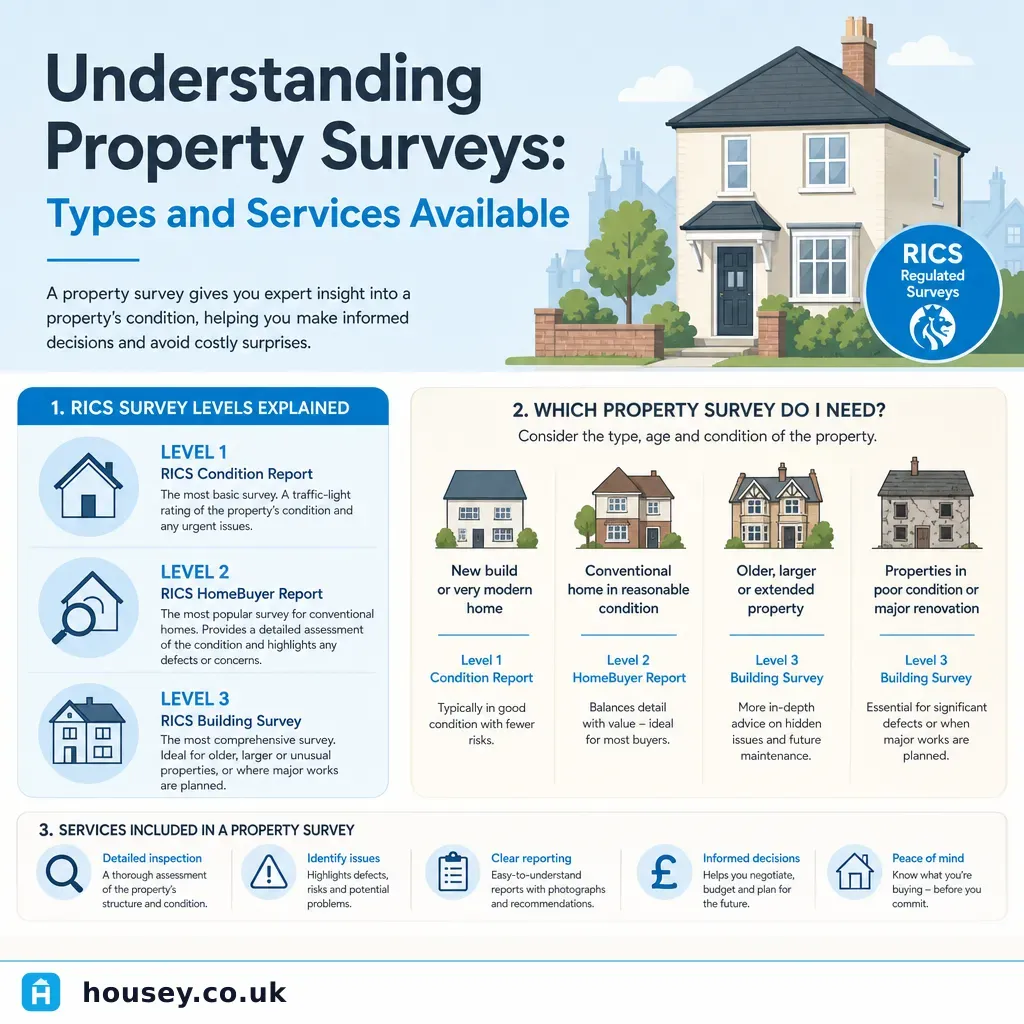
Understanding Property Surveys: Types and Services Available
UK property surveys follow three RICS-defined levels: Level 1 (Condition Report), Level 2 (Home Survey), and Level 3 (Building Survey). The right choice depends on the property's age, construction type, and condition. Specialist reports — structural, damp, drainage, and asbestos surveys — are separate services that supplement any RICS level when a specific defect needs closer investigation.
 Surveys & Inspections
Getting a Valuation Survey Before Selling Your Property
Before selling, a free estate agent appraisal gives a market price guide, but only a RICS Red Book valuation carries formal professional standards and legal weight. A pre-sale RICS Level 2 or Level 3 survey can reveal condition issues before a buyer's surveyor does, reducing the risk of late price renegotiations after an offer is accepted. There is no legal requirement to commission one, but it is often worthwhile.
 Surveys & Inspections
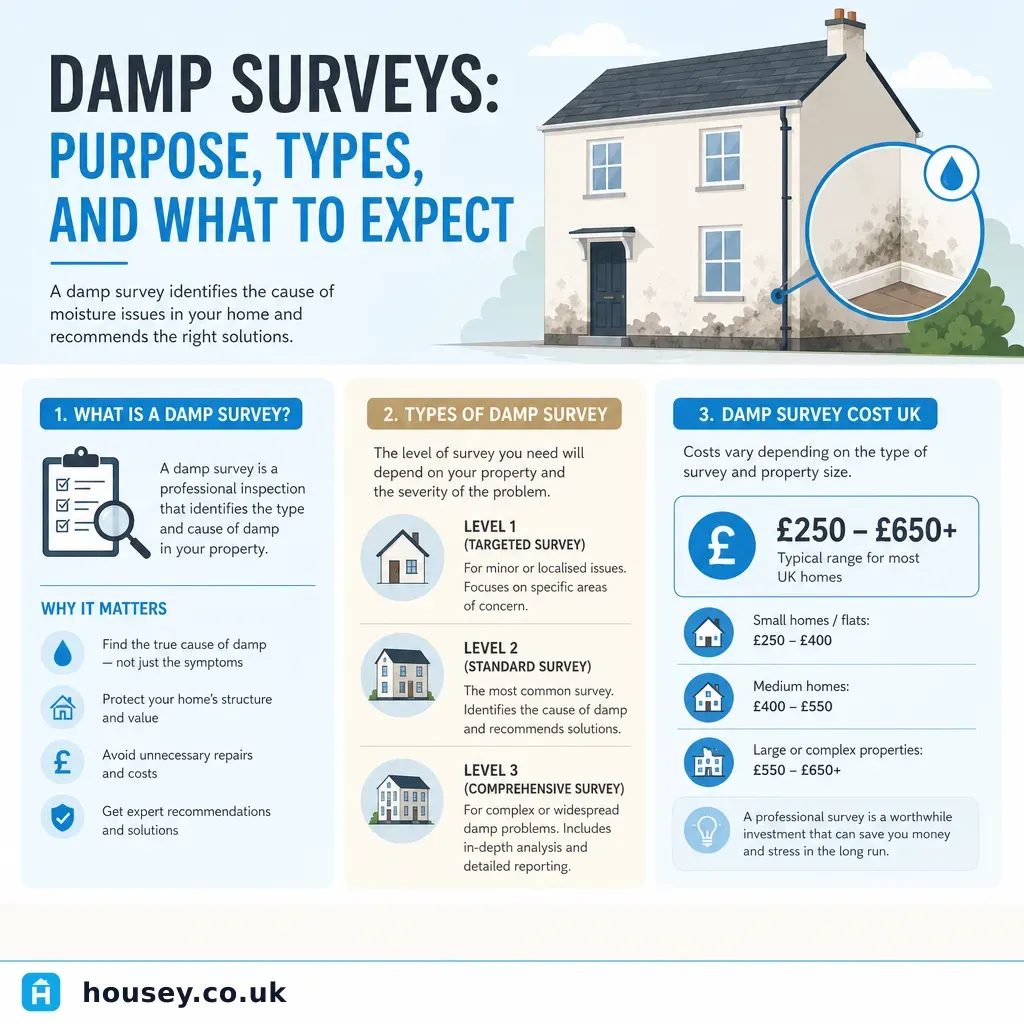
Damp Surveys: Purpose, Types, and What to Expect
A damp survey is a specialist inspection to identify the source, type, and extent of moisture in a property. A qualified surveyor uses moisture meters, salt analysis, and often thermal imaging to distinguish between rising damp, penetrating damp, and condensation, then produces a written report recommending remedial works.