Knowledge Base
Property advice that actually helps
Researched, UK-specific guides for every stage of homeownership — from buying and surveys to retrofit, planning and major works.
 Surveys & Inspections
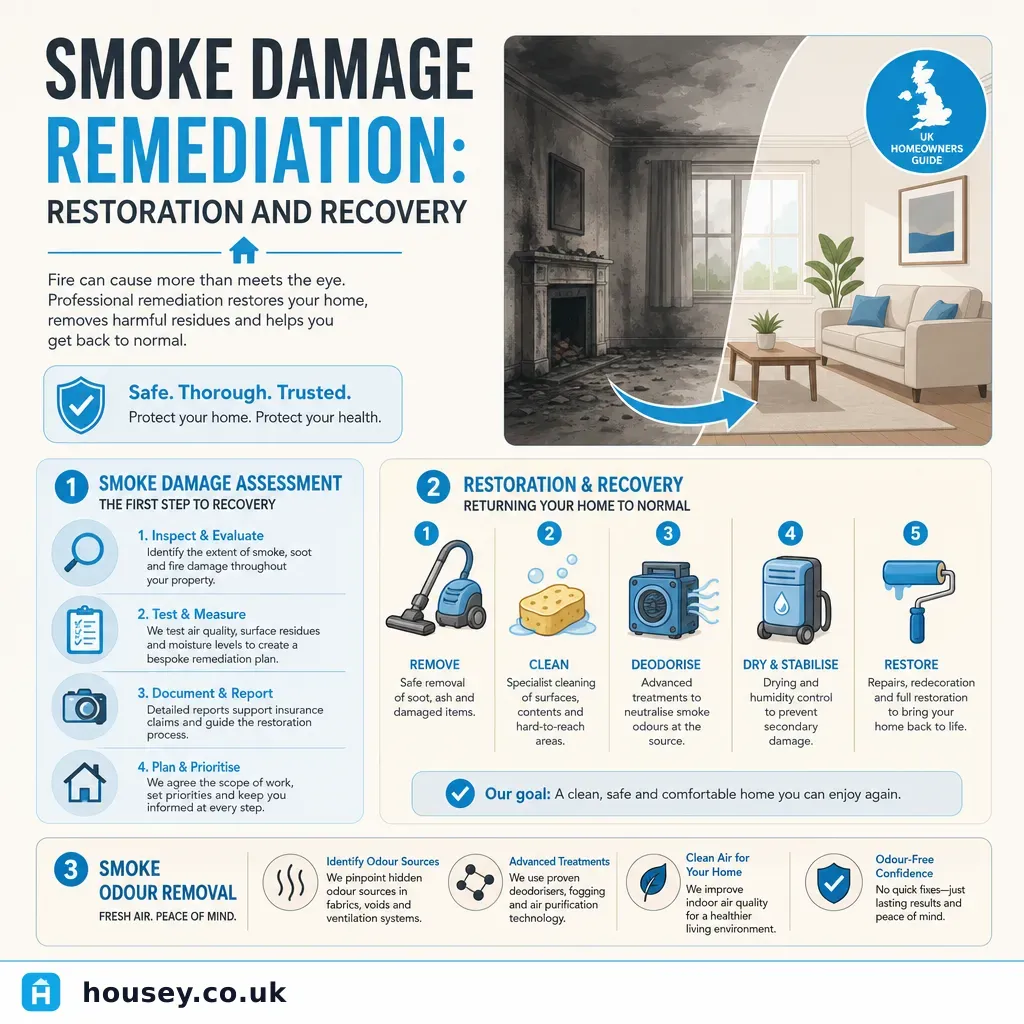
Smoke Damage Remediation: Restoration and Recovery
After a fire or smoke event, professional remediation involves safety assessment, dry cleaning to remove soot, chemical treatment, structural drying, and odour treatment. Contact your insurer before major cleaning begins, photograph all damage, and do not re-enter until the fire service confirms the structure is safe. Smoke residue is acidic and continues to cause damage if not treated promptly.
 Surveys & Inspections
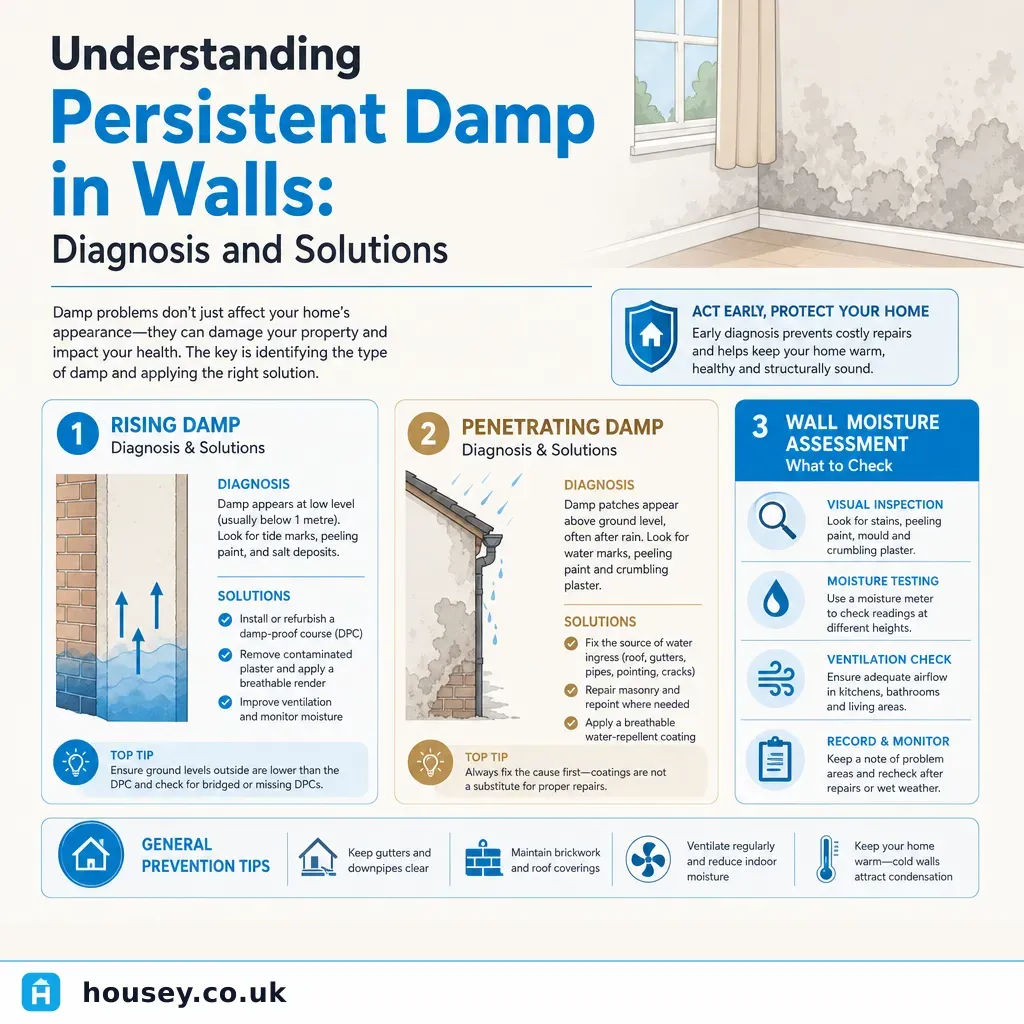
Understanding Persistent Damp in Walls: Diagnosis and Solutions
Persistent wall damp in UK homes most commonly stems from penetrating damp, rising damp, or condensation — and these are frequently confused with one another. Each has a distinct pattern, cause, and solution. A professional assessment using a calibrated carbide meter, external inspection, and contextual analysis is the only reliable way to identify the source before committing to remedial works.
 Surveys & Inspections
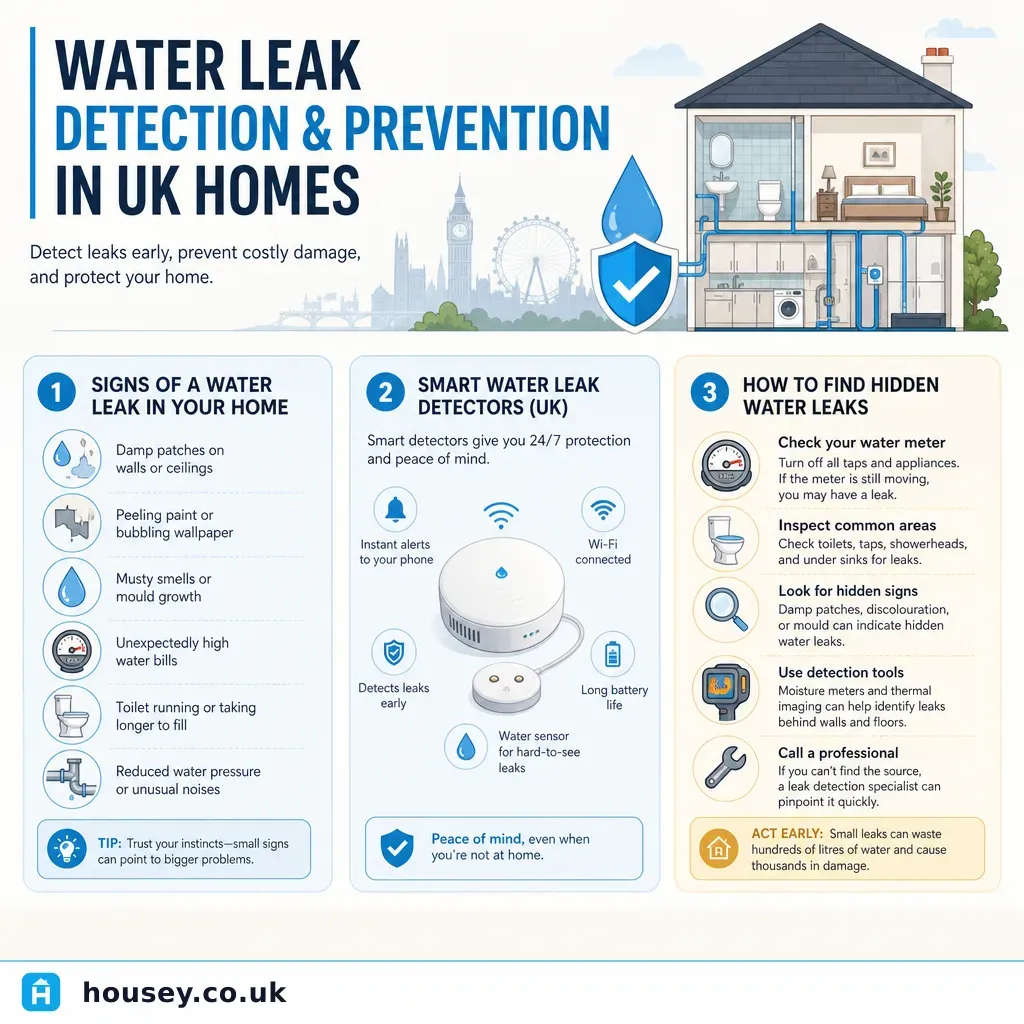
Water Leak Detection and Prevention in UK Homes
Water leaks in UK homes are best caught early through routine visual checks, water meter monitoring, and smart sensors placed under sinks and appliances. If you notice damp patches, a rising meter reading with all taps off, or unexplained drops in boiler pressure, act immediately — turn off your stopcock and call a plumber or drainage specialist.
 Surveys & Inspections
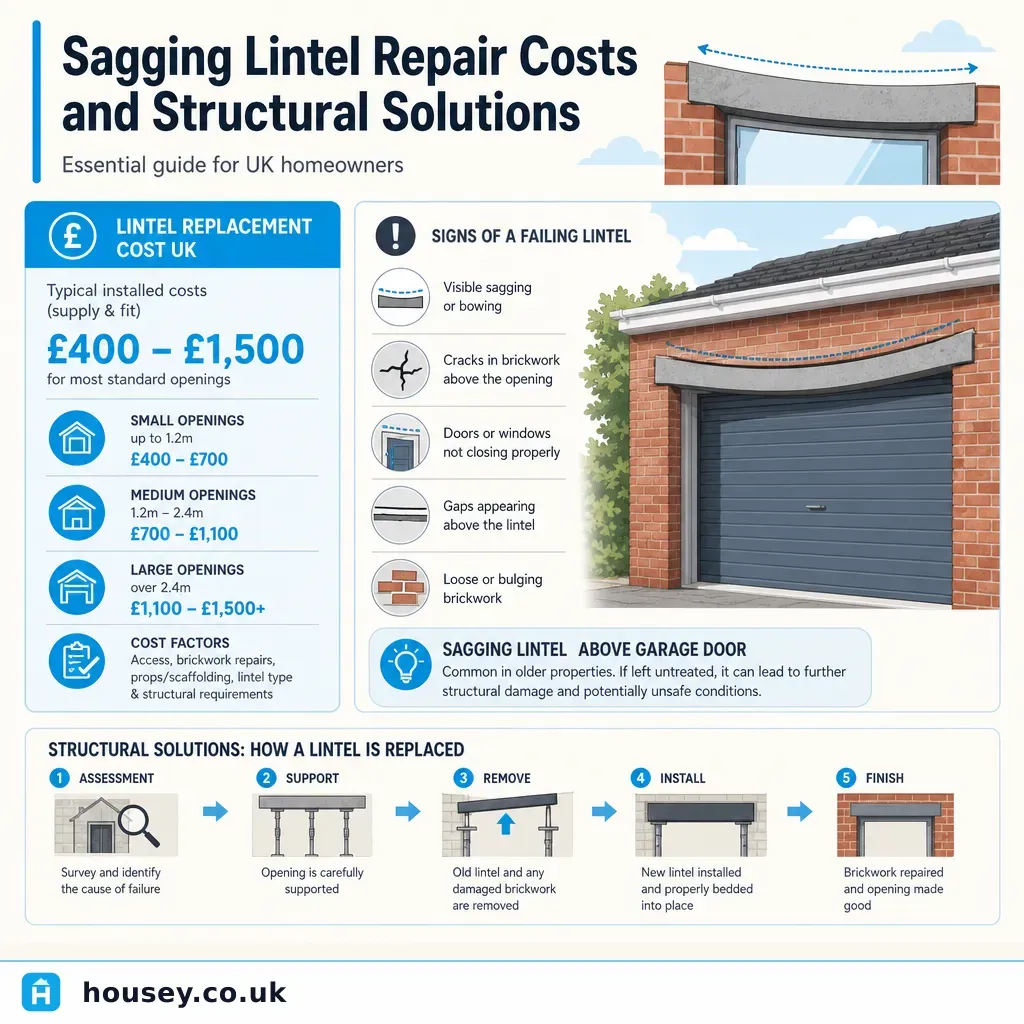
Sagging Lintel Repair Costs and Structural Solutions
A sagging lintel is a structural defect requiring prompt professional assessment. UK repair costs typically range from around £500 for minor remedial work to £5,000 or more for a full lintel replacement with masonry reinstatement, depending on lintel size, material, access, and the extent of damage. Always commission a structural engineer or chartered surveyor before any repair work begins.
 Surveys & Inspections
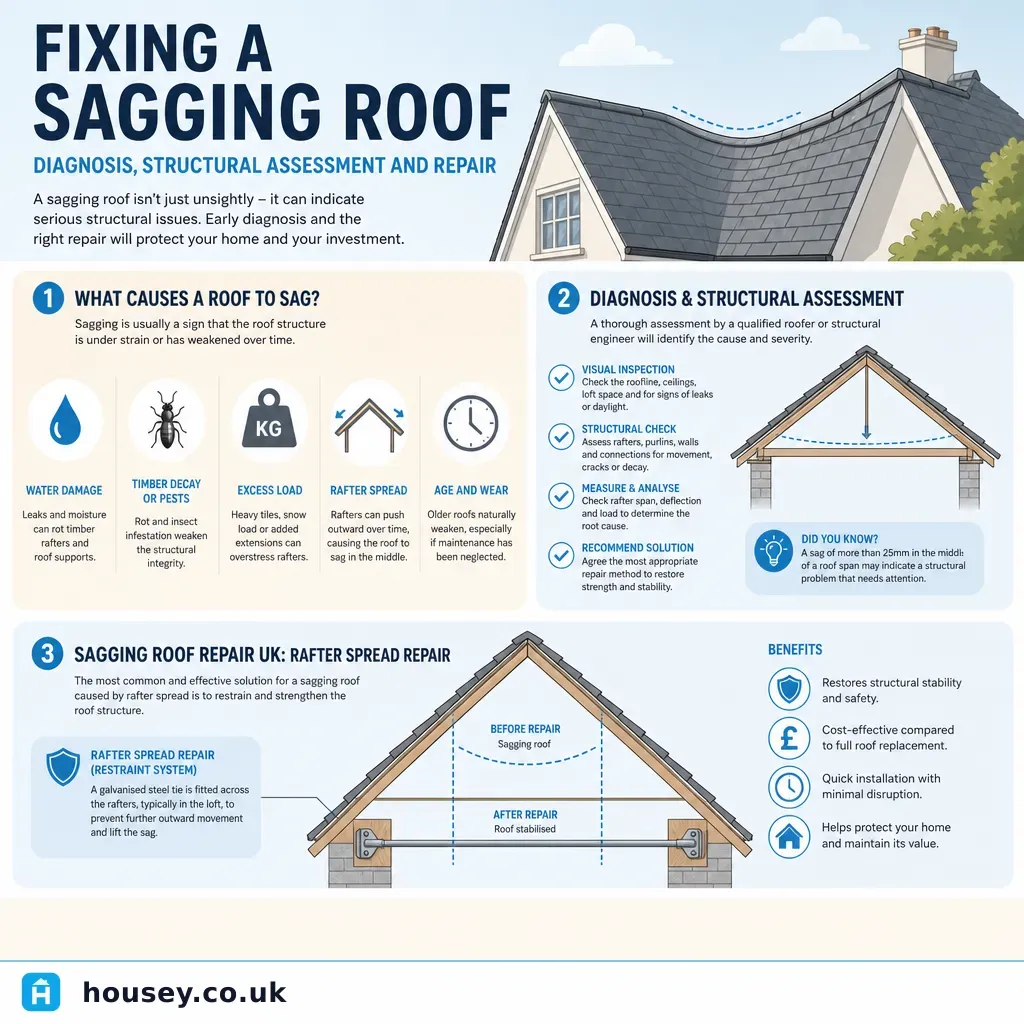
Fixing a Sagging Roof: Diagnosis, Structural Assessment and Repair
A sagging roof usually points to failed or overloaded roof timbers, rafter spread, or a compromised ridge board. It requires assessment by a structural engineer or chartered surveyor, as continued loading can lead to partial collapse. Temporary propping may be recommended while a full structural assessment and repair specification is prepared. Do not instruct roofing work before obtaining a structural opinion.
 Surveys & Inspections
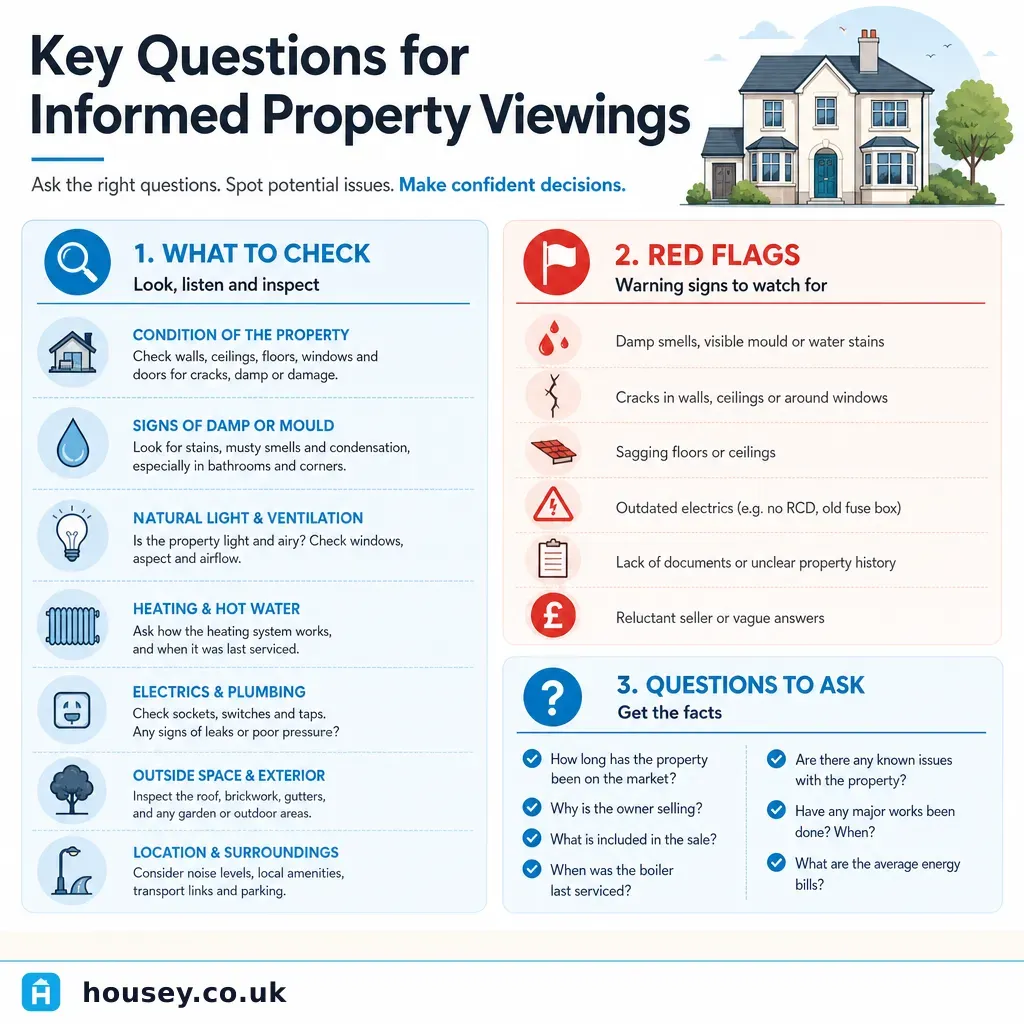
Key Questions for Informed Property Viewings
At a property viewing, ask specifically about structural movement, damp or water ingress, the age and service history of the boiler and electrics, whether any extensions obtained building regulations sign-off, and the seller's chain position. In England and Wales, sellers are not obliged to volunteer information about defects, so direct questions and a professional survey before exchange are essential.
 Surveys & Inspections
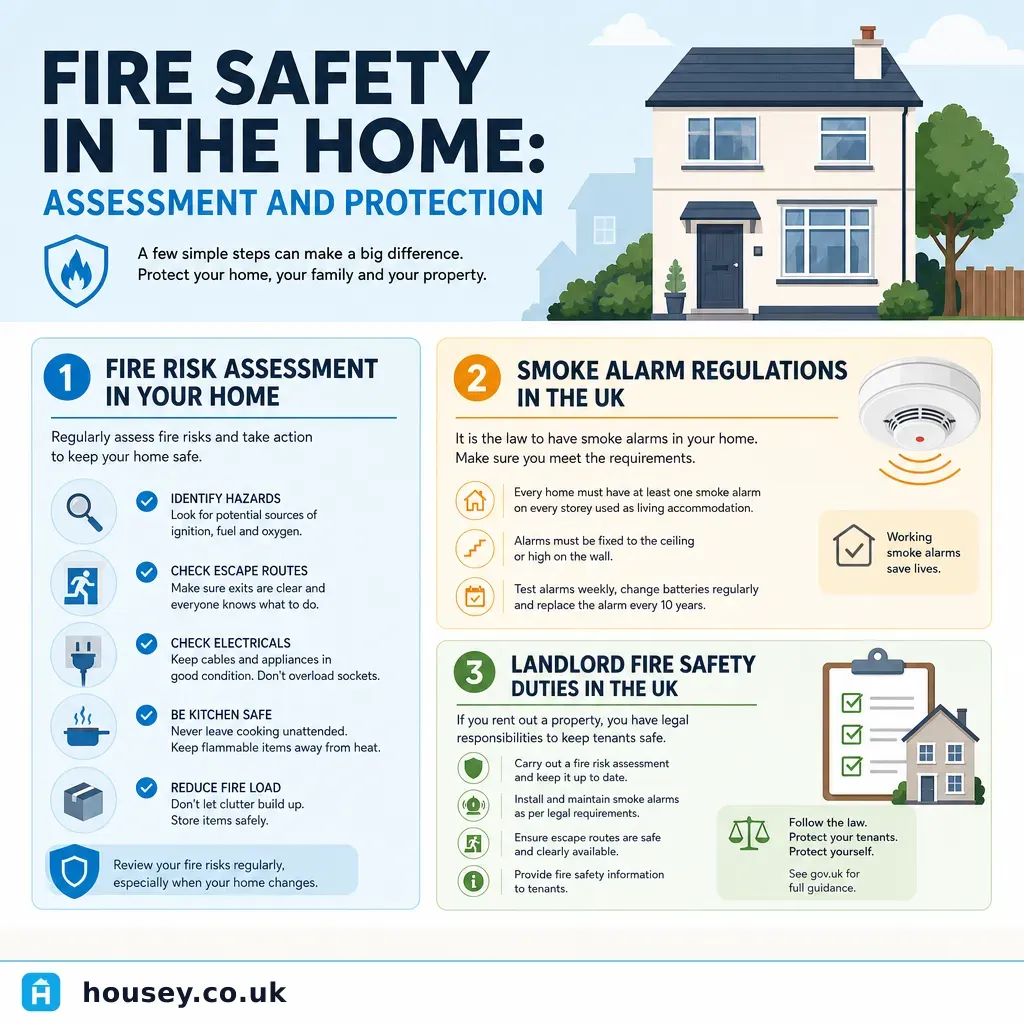
Fire Safety in the Home: Assessment and Protection
Most UK owner-occupied homes are the homeowner's responsibility to make fire-safe, while landlords have a legal duty to carry out fire risk assessments under the Regulatory Reform (Fire Safety) Order 2005. Key steps include fitting interlinked smoke and CO alarms, keeping escape routes clear, checking electrical installations, and understanding the fire-resistance of your property's construction.
 Surveys & Inspections
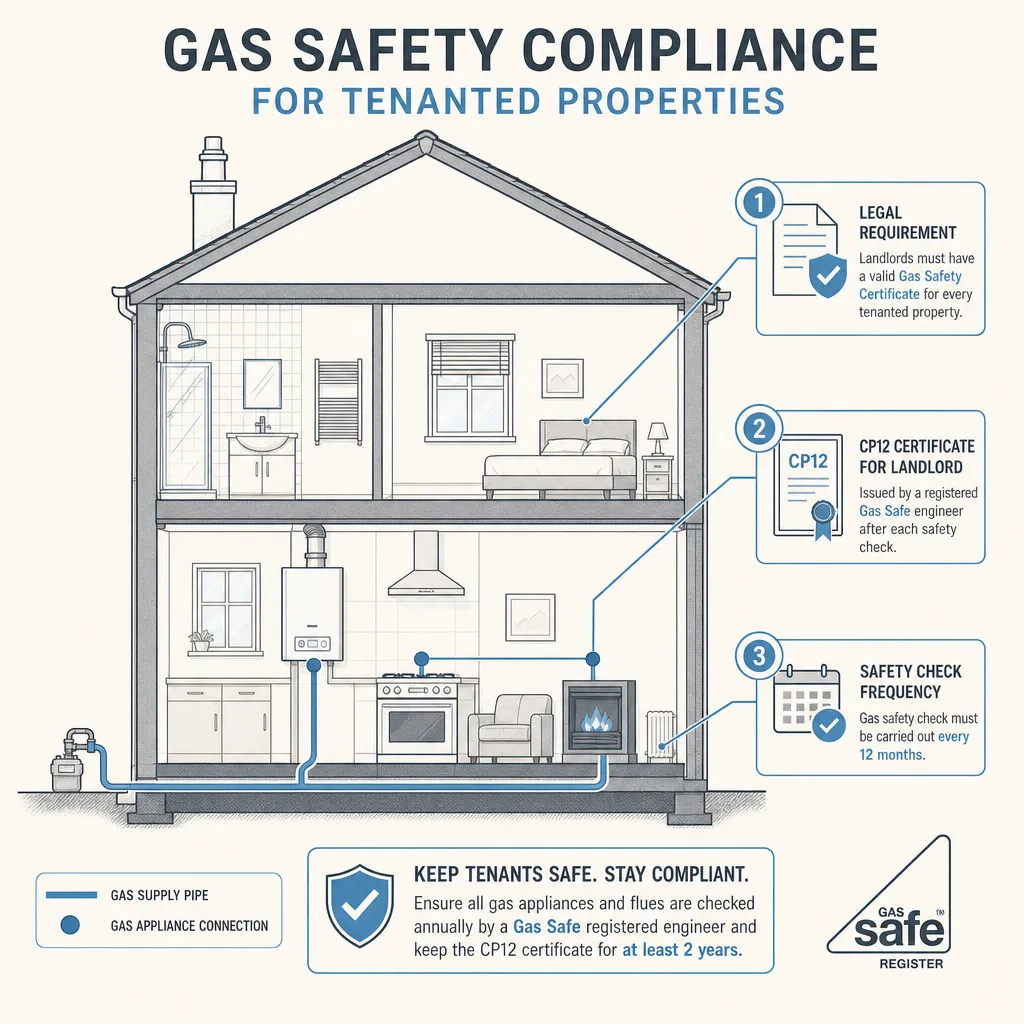
Gas Safety Compliance for Tenanted Properties
UK landlords are legally required to arrange an annual gas safety check by a Gas Safe registered engineer for every tenanted property with a gas appliance. A Landlord Gas Safety Record (CP12) must be issued, given to existing tenants within 28 days, and provided to new tenants before they move in. Records must be kept for at least two years.
 Surveys & Inspections
Japanese Knotweed and Property Purchase: Impact on Mortgages and Valuations
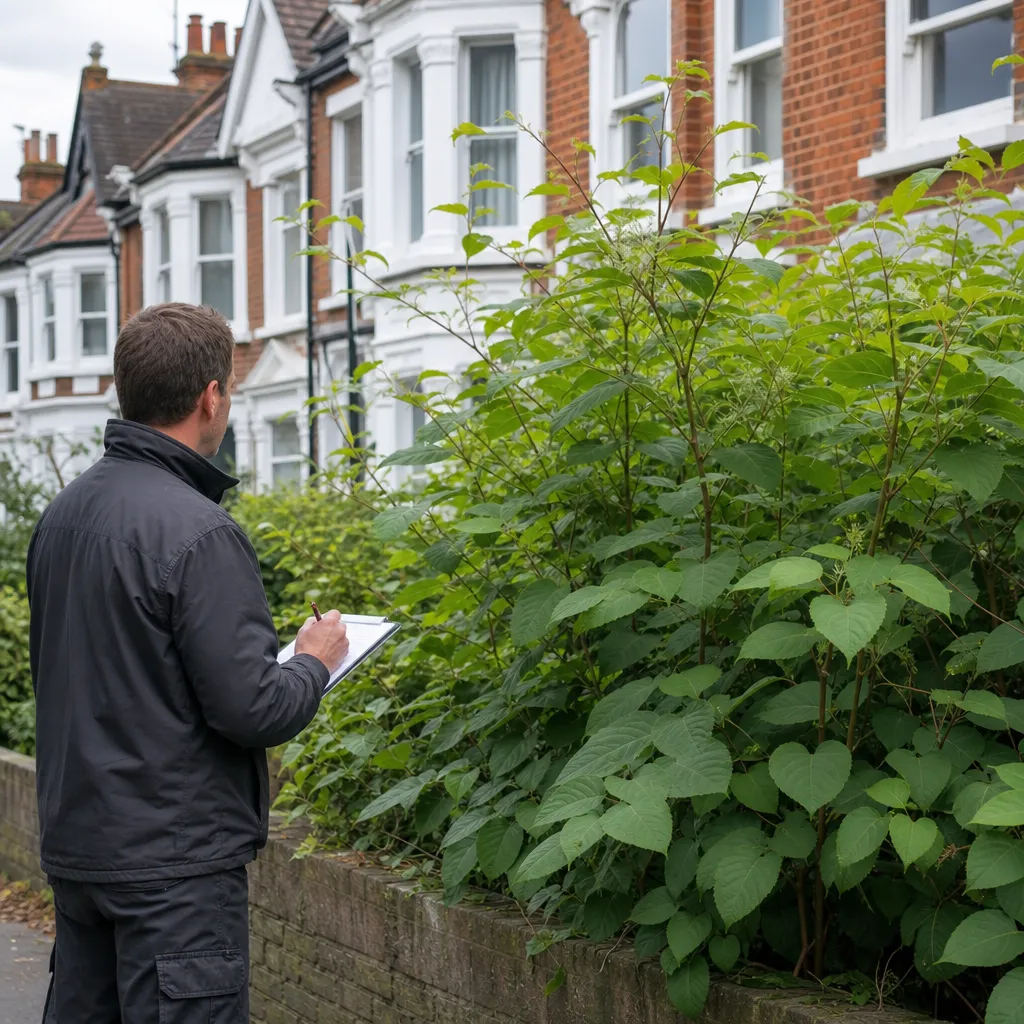
Japanese knotweed can prevent mortgage approval and reduce a property's value, especially if it is within 7 metres of a habitable structure. Lenders typically require a RICS-categorised management plan from an approved contractor. The risk level depends on the plant's proximity and RICS category — professional assessment is essential before exchange.
 Surveys & Inspections
Insurance and Damage Reimbursement: Supporting Homeowners Through Property Recovery
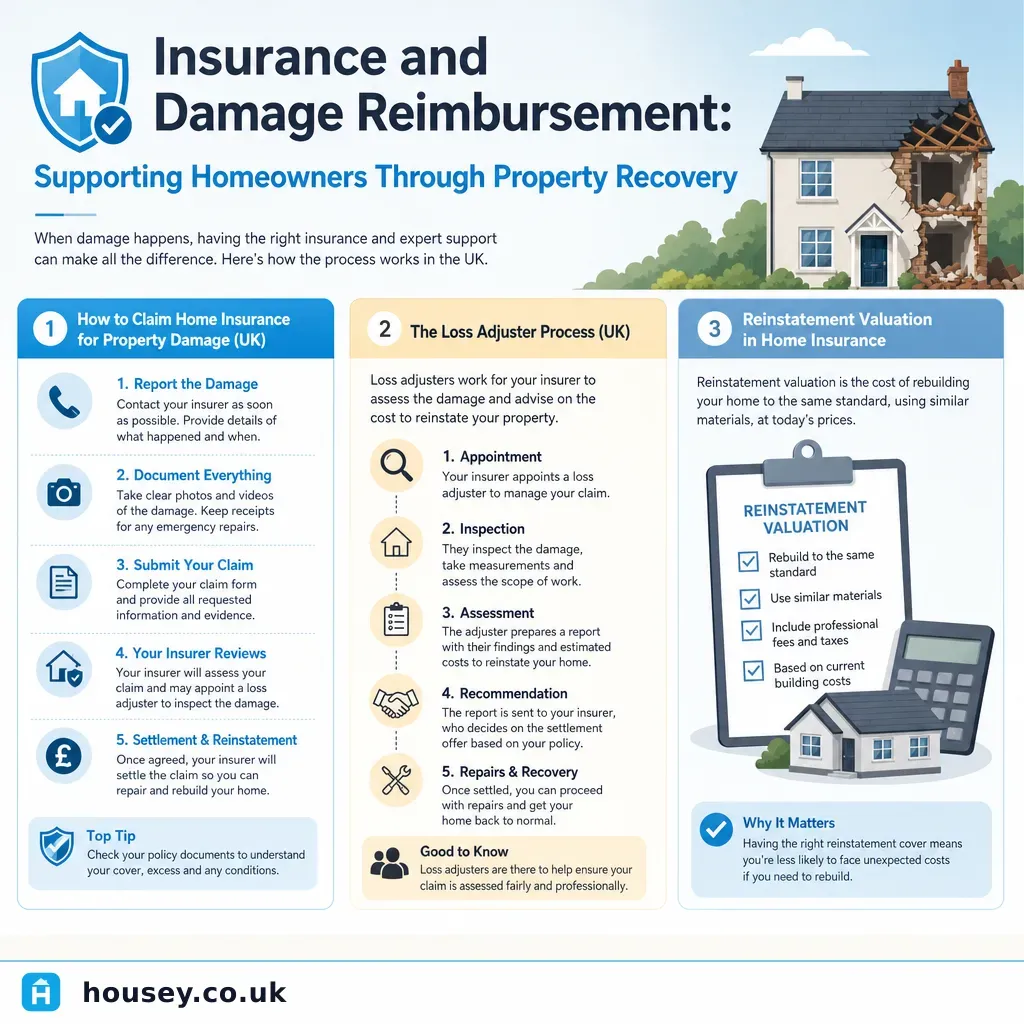
After property damage, your insurer will typically appoint a loss adjuster to assess the claim. Reimbursement depends on your policy terms — reinstatement value (cost to rebuild) versus market value. Getting an independent insurance valuation and structural survey protects your interests and helps ensure a fair settlement.
 Surveys & Inspections
CCTV Drain Survey Costs and What to Expect
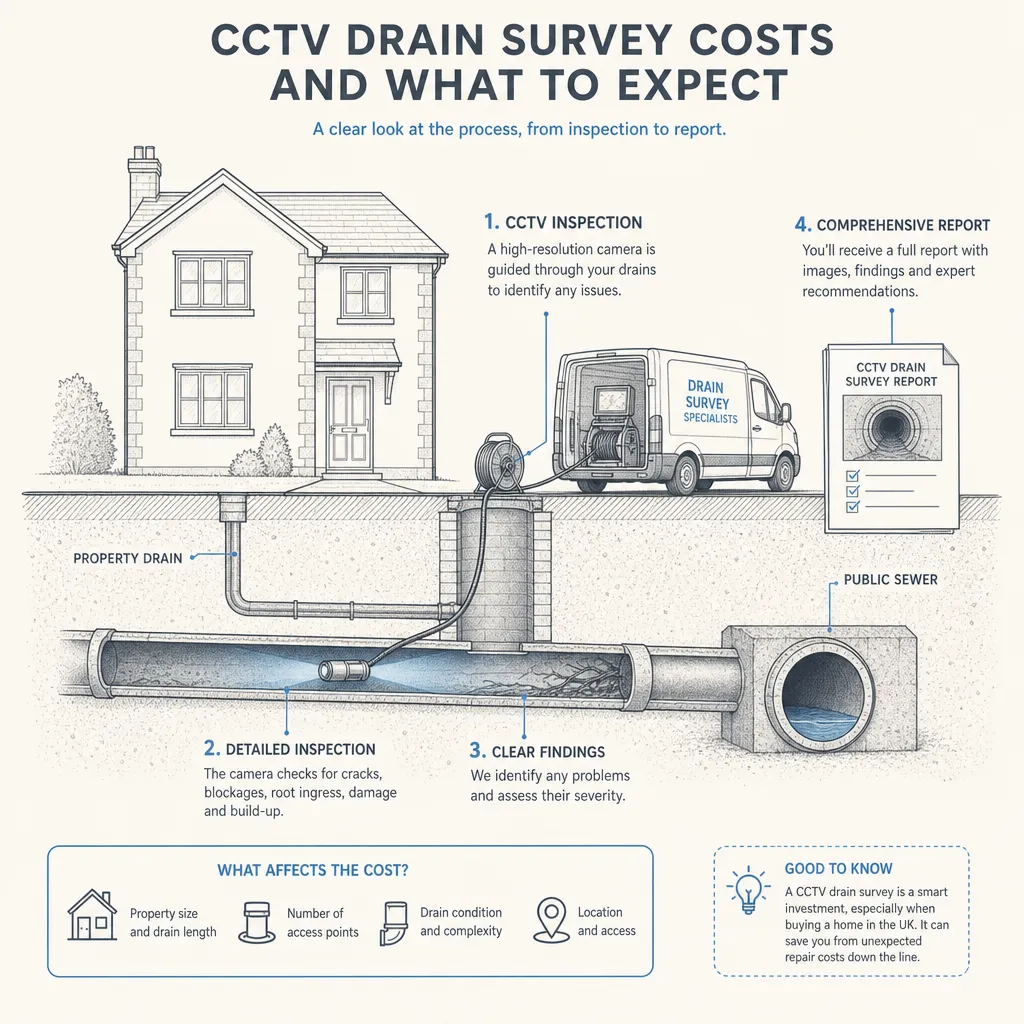
A CCTV drain survey in the UK typically costs between £150 and £400 for a standard residential survey covering one or two drainage runs. The exact price depends on the number of drains inspected, access conditions, and whether a formal written report is included. Pre-purchase surveys suitable for conveyancers tend to sit at the higher end of this range.
 Surveys & Inspections
Recognising Serious Structural Defects in Your Property
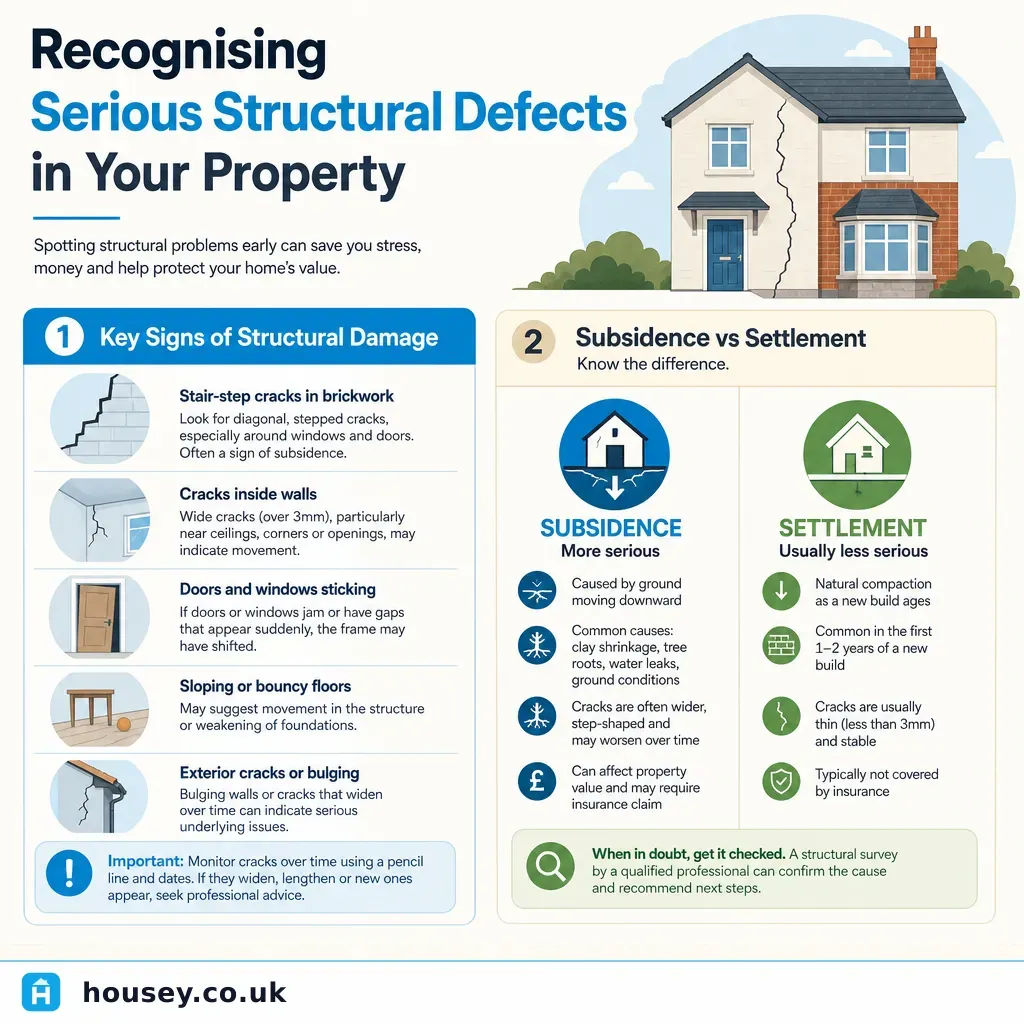
Serious structural defects in UK homes include wide or diagonal cracks through brickwork, bowing or leaning walls, a sagging roof ridge, and floors or door frames notably out of level. Not every crack is serious — most hairline cracks are cosmetic — but any crack that is widening, runs diagonally through masonry, or accompanies sticking doors and windows warrants professional inspection without delay.