Knowledge Base
Property advice that actually helps
Researched, UK-specific guides for every stage of homeownership — from buying and surveys to retrofit, planning and major works.
 Surveys & Inspections
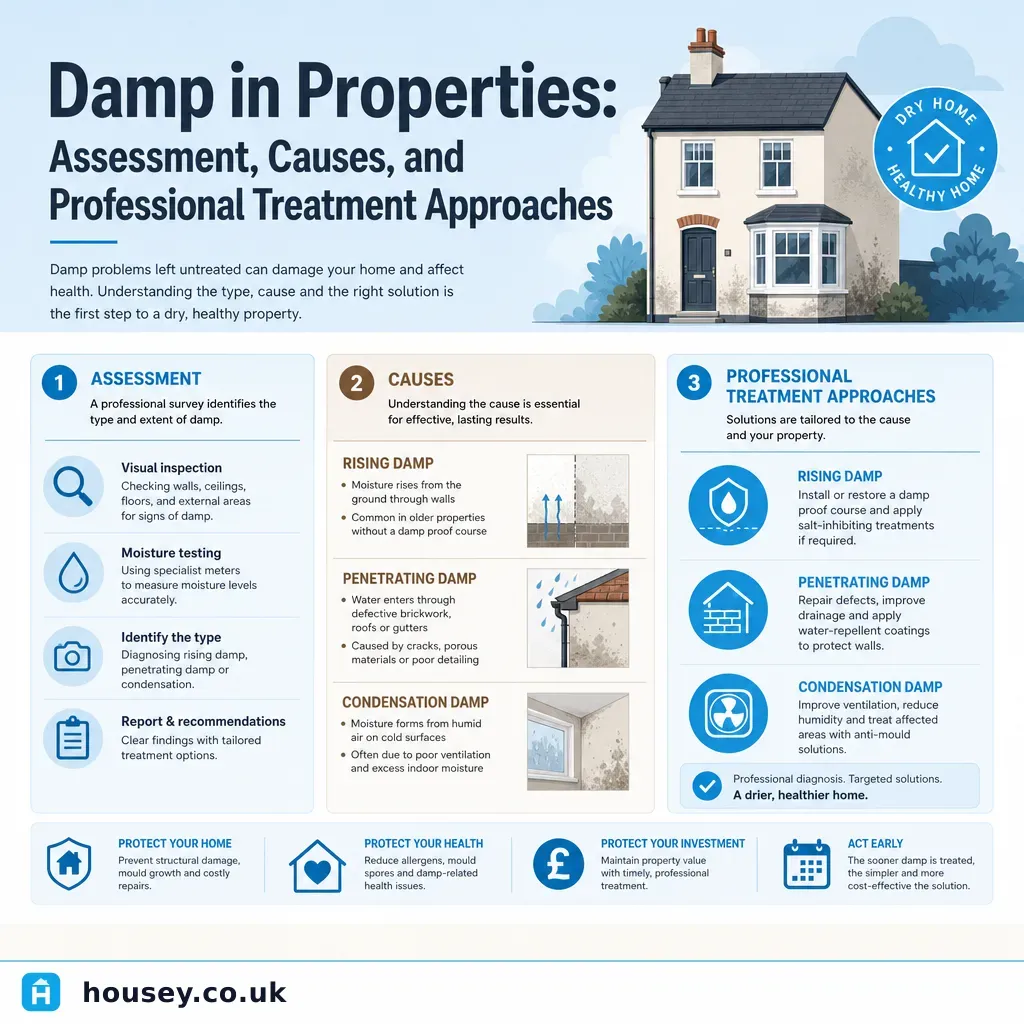
Damp in Properties: Assessment, Causes, and Professional Treatment Approaches
Damp in UK homes falls into three main categories: rising damp, penetrating damp, and condensation. Each has different causes, evidence patterns, and treatments. An independent damp and timber survey by a PCA-qualified specialist is the most reliable way to identify which type you have before agreeing to any treatment programme.
 Surveys & Inspections
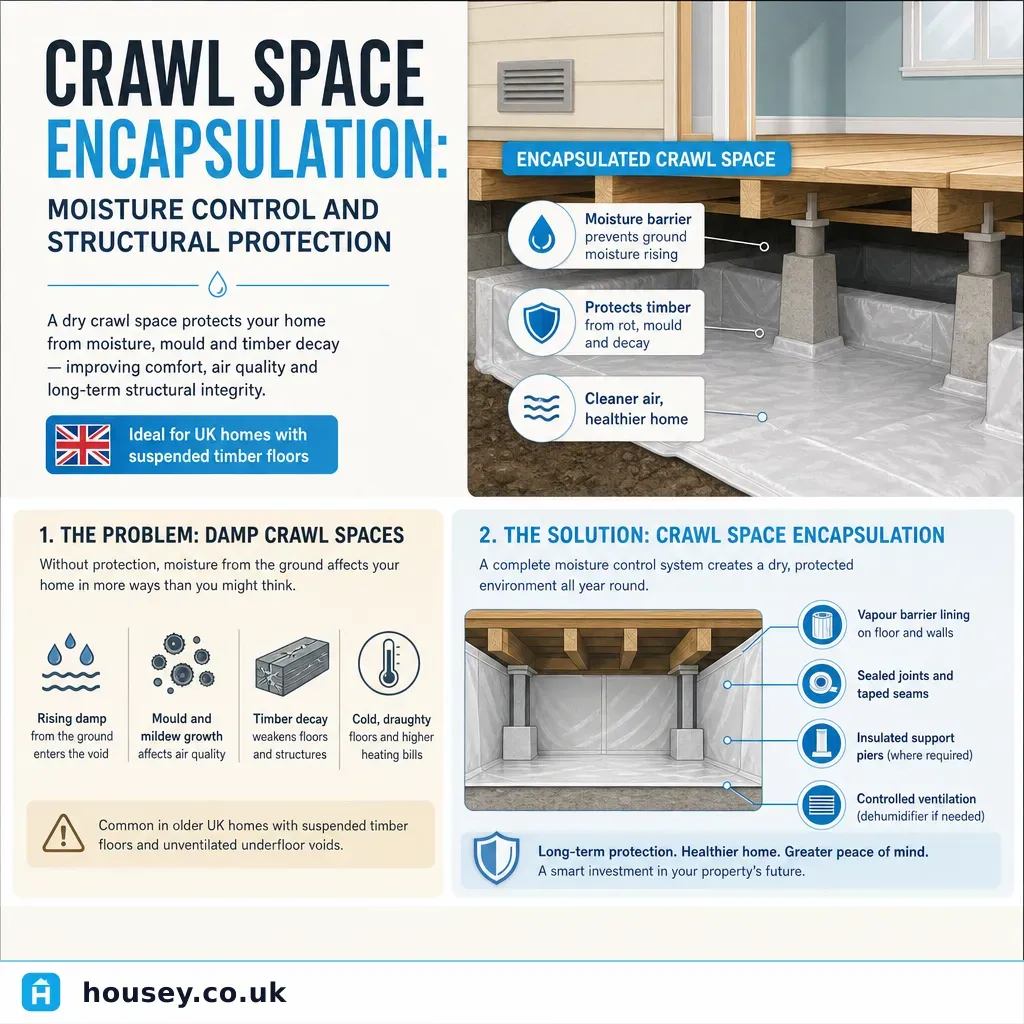
Crawl Space Encapsulation: Moisture Control and Structural Protection
Crawl space encapsulation seals the subfloor void beneath suspended timber floors with a vapour control layer and improved ventilation to prevent rising damp, condensation, timber rot and structural damage. In UK homes — particularly Victorian, Edwardian and interwar properties — it is typically the most practical long-term approach to managing persistent underfloor moisture.
 Surveys & Inspections
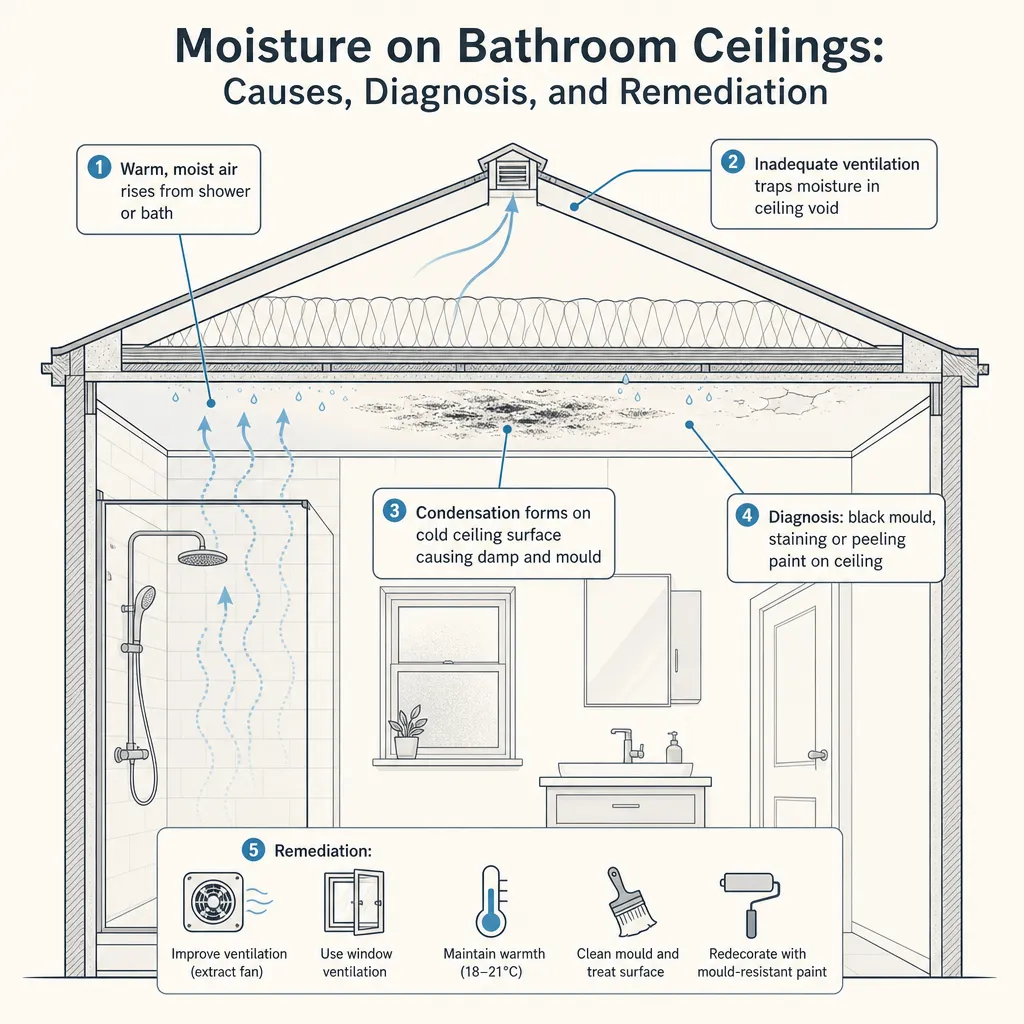
Moisture on Bathroom Ceilings: Causes, Diagnosis, and Remediation
Moisture on a bathroom ceiling is most often caused by condensation from poor ventilation, but can also indicate a leak from above or penetrating damp. Identifying the source correctly matters — condensation and leaks require different fixes. Persistent moisture or visible mould warrants a professional damp or ventilation assessment to prevent structural damage and health risks.
 Surveys & Inspections
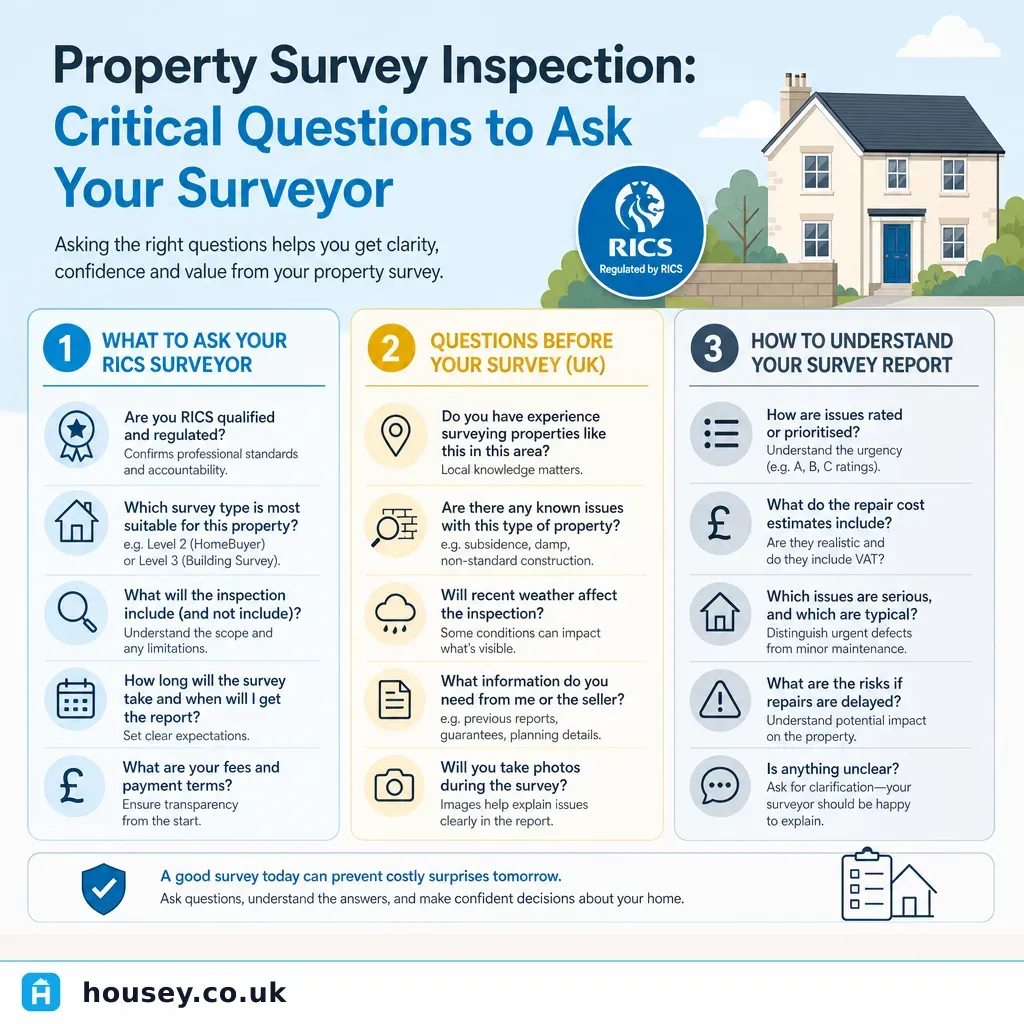
Property Survey Inspection: Critical Questions to Ask Your Surveyor
Before instructing a surveyor, ask which RICS level suits your property and what the report will and will not cover. Once you have the report, call your surveyor to discuss any Condition Rating 3 findings, which specialist follow-up they recommend, and whether defects are likely to affect the property's value or its insurability.
 Surveys & Inspections
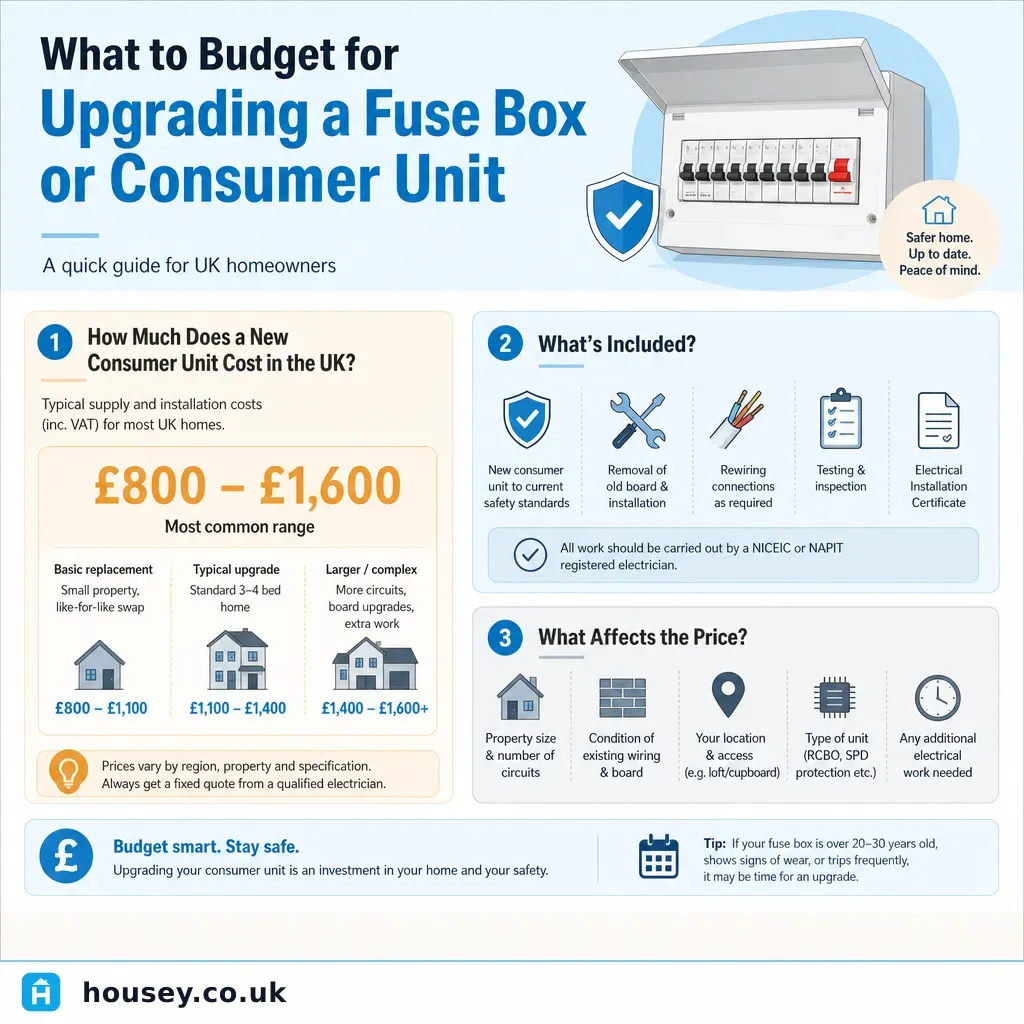
What to Budget for Upgrading a Fuse Box or Consumer Unit
Replacing a consumer unit (fuse box) in the UK typically costs £400–£900 for a straightforward installation by a Part P registered electrician. The work is notifiable under Building Regulations and must meet BS 7671:2018. Always obtain an EICR to establish the full scope before getting quotes.
 Surveys & Inspections
Property Valuation Survey: Understanding Market Worth and Cost Assessment
A property valuation survey establishes a property's market value at a specific date. Mortgage valuations are produced for lenders, not buyers. Formal RICS Red Book valuations are required for probate, capital gains tax, matrimonial settlements and lease extension calculations. Automated online estimates are not accepted for legal or HMRC purposes.
 Surveys & Inspections
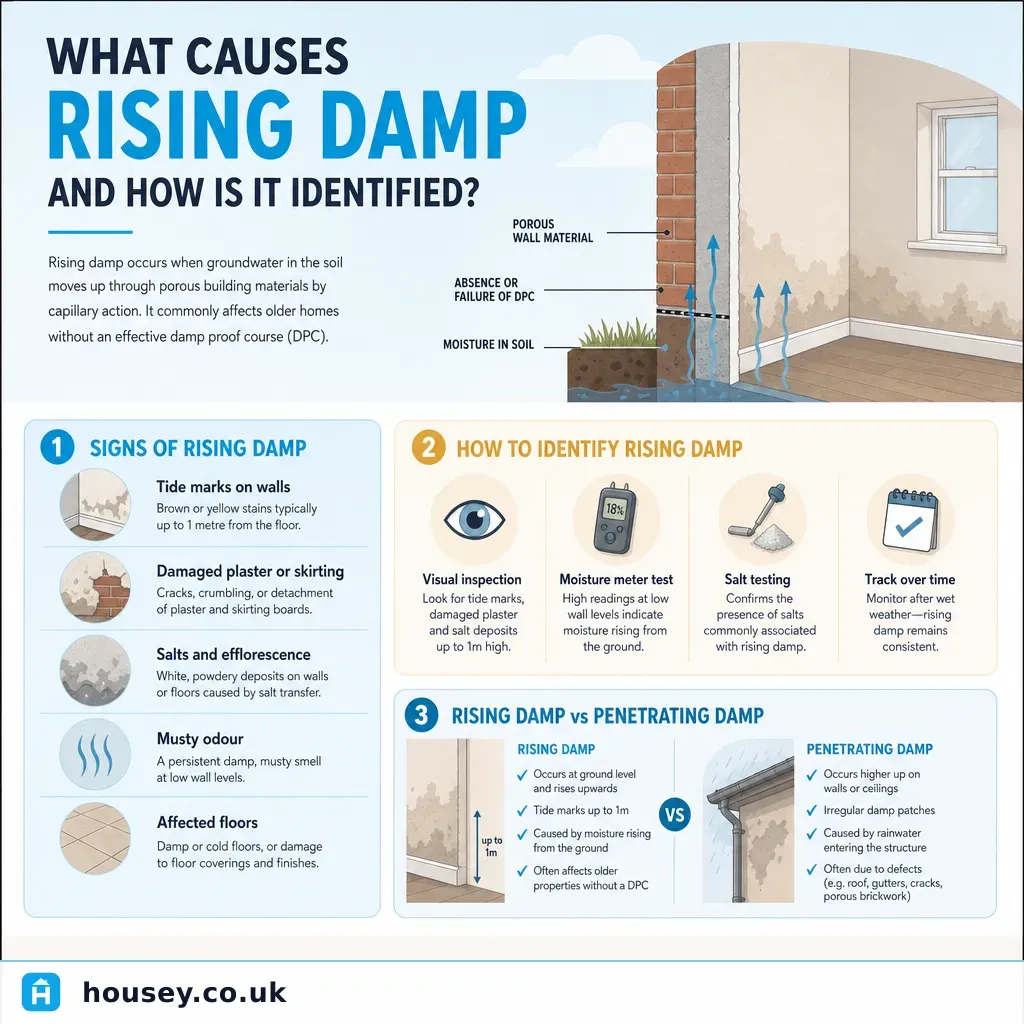
What Causes Rising Damp and How Is It Identified?
Rising damp occurs when groundwater travels upward through masonry via capillary action, usually because the damp-proof course (DPC) has failed, is absent, or has been bridged. It typically appears on ground-floor walls as a damp tide mark below 1 m, often with white salt deposits (efflorescence). A proper diagnosis requires a carbide moisture test, not just a pin meter.
 Surveys & Inspections
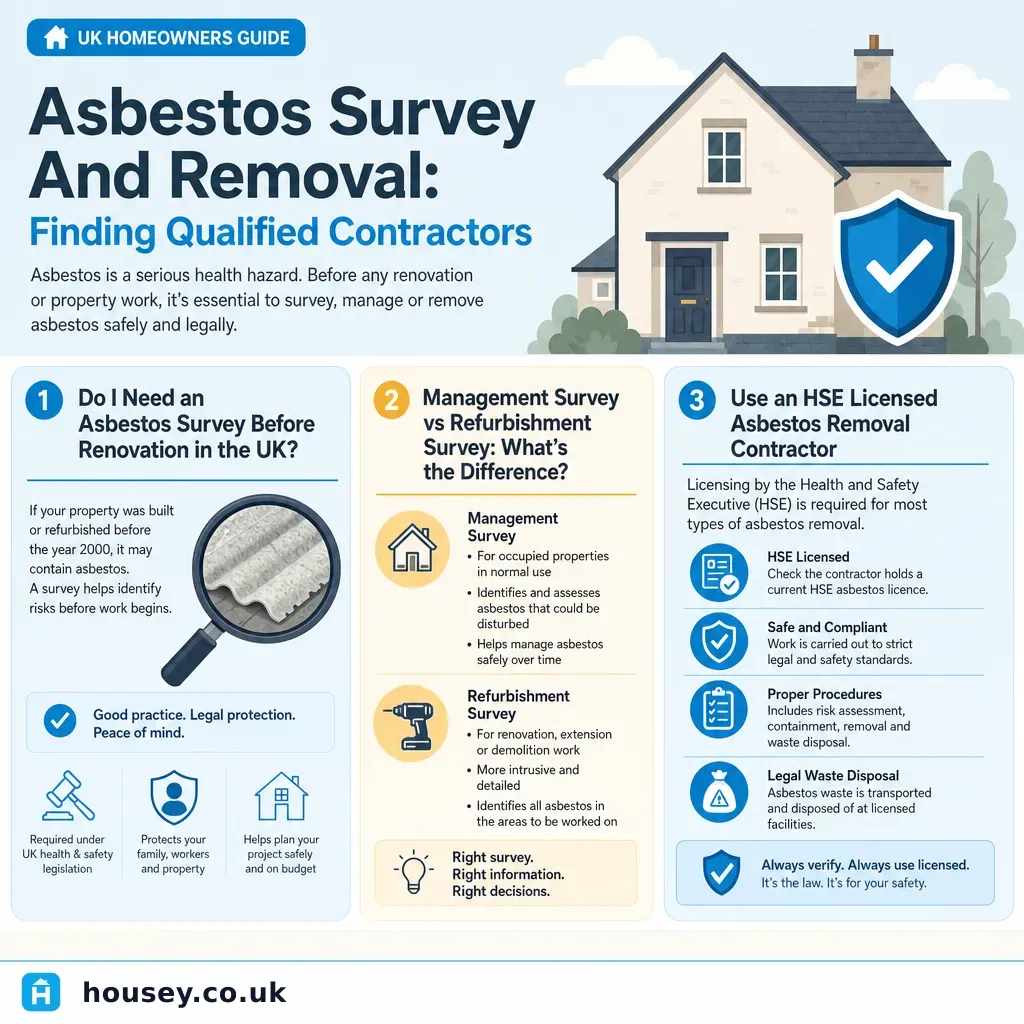
Asbestos Survey And Removal: Finding Qualified Contractors
An asbestos survey establishes whether asbestos-containing materials are present in your property and their condition. Management surveys suit occupied buildings; refurbishment and demolition surveys are required before intrusive work begins. Only HSE-licensed contractors may remove most forms of notifiable asbestos. Always use a UKAS-accredited surveyor and verify any contractor's licence on the HSE public register before work starts.
 Surveys & Inspections
Structural Building Survey Costs
A RICS Level 3 Building Survey typically costs £500–£1,500 in the UK, depending on property size, age, and location. A structural engineer's defect report costs £300–£800 for a specific concern. Older or more complex properties attract higher fees. Always use a RICS-registered surveyor or a Chartered Member of the Institution of Structural Engineers.
 Surveys & Inspections
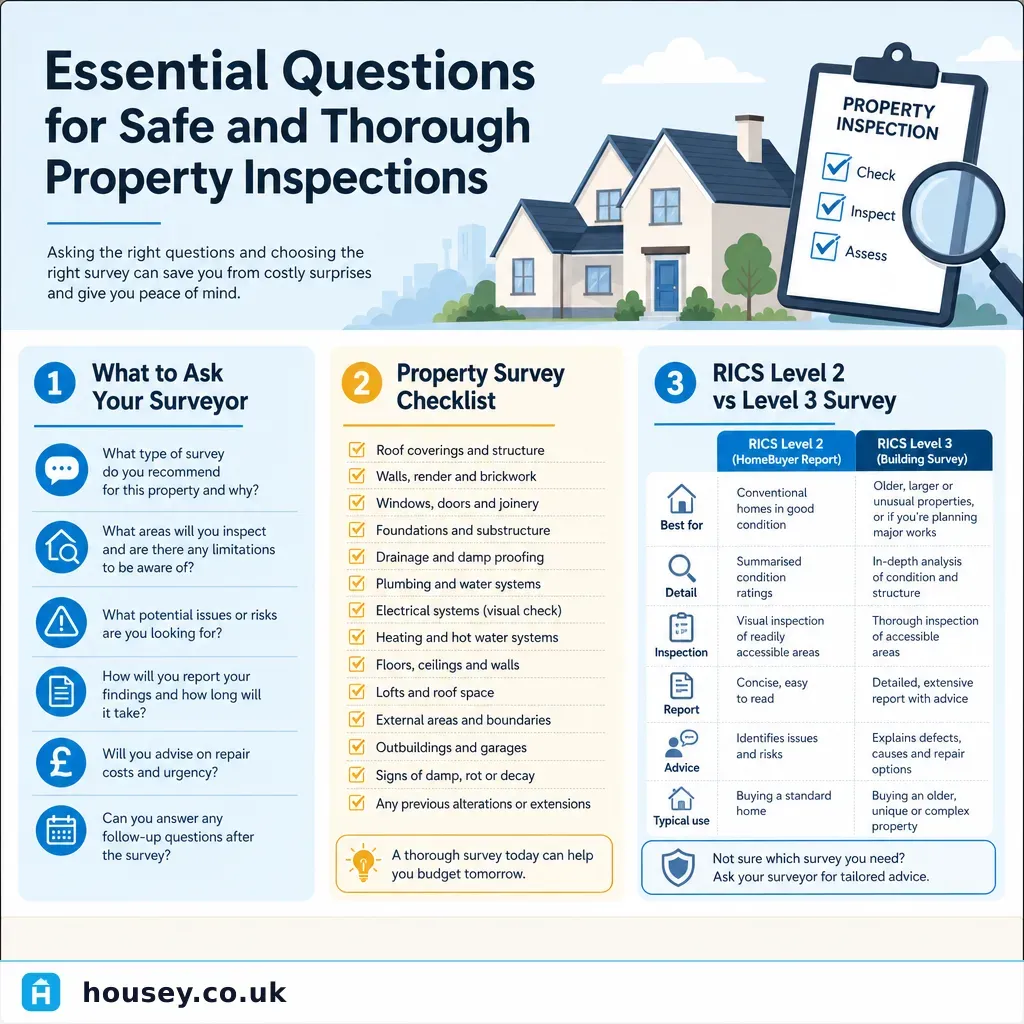
Essential Questions for Safe and Thorough Property Inspections
Before commissioning a property survey, confirm what type of inspection suits your property's age and condition, ask the surveyor what defects they will and will not assess, and understand what the report will recommend. At viewings, note visible cracks, damp patches, roof sag, and evidence of alterations — each could indicate a defect requiring a more detailed inspection.
 Surveys & Inspections
Timber Pest Damage Assessment and Repair
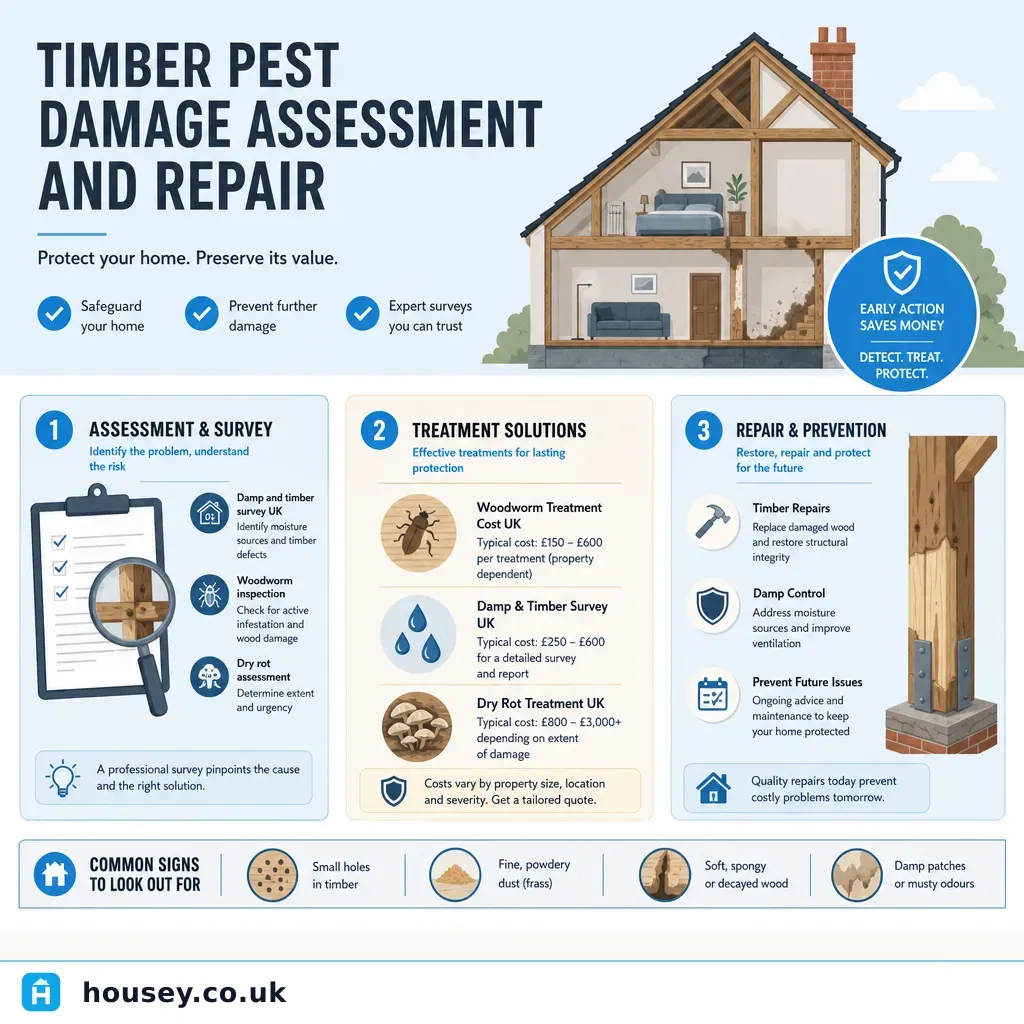
Timber pest damage in UK homes is most commonly caused by Common Furniture Beetle (woodworm), Death Watch Beetle, or fungal decay such as dry rot. Assessment by a PCA-accredited damp and timber specialist is the standard first step. Where structural timbers are affected, a structural engineer may also be needed. Treatment guarantees from accredited contractors typically run for 20 to 30 years.
 Surveys & Inspections
Understanding Property Boundaries and Party Wall Agreements
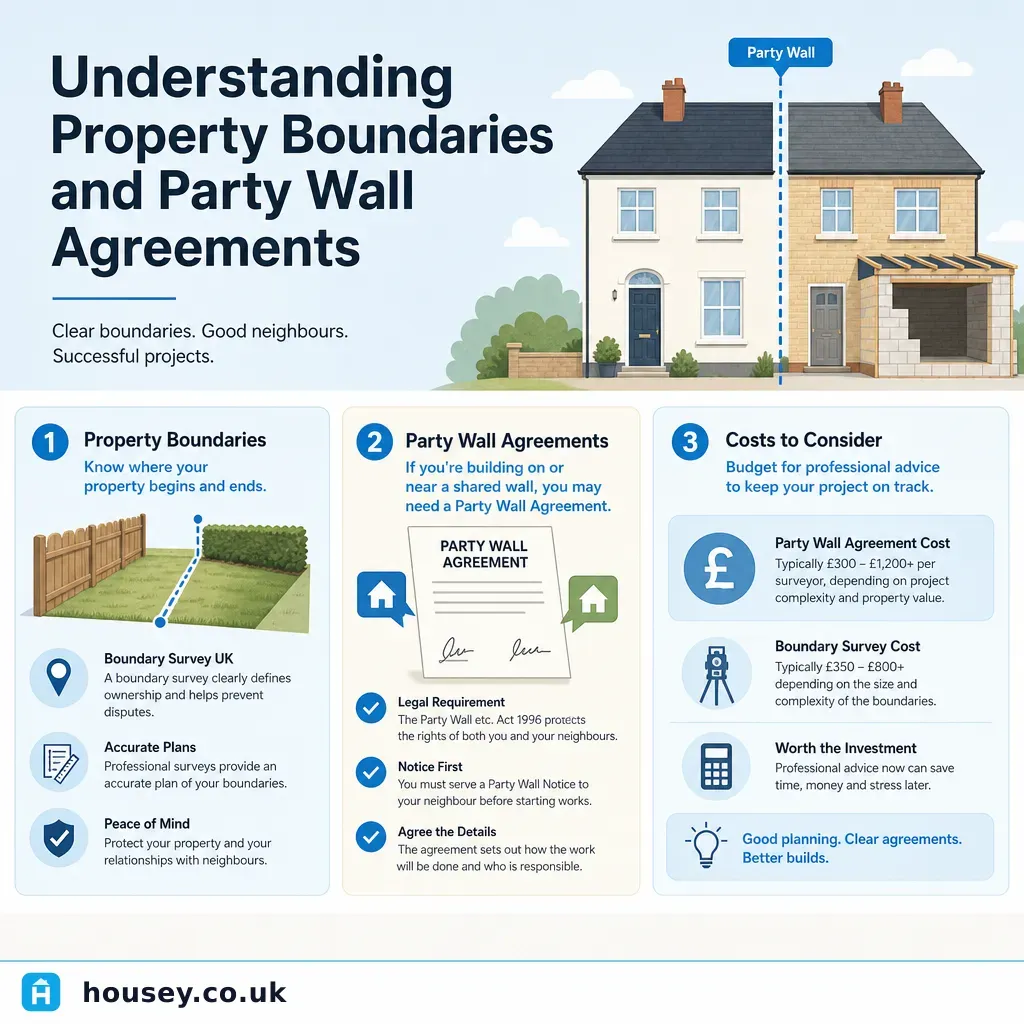
Property boundaries define the legal extent of your land; the Party Wall etc. Act 1996 is a separate statutory regime covering works affecting shared walls, boundary structures, and excavations near neighbouring foundations. A boundary dispute and a party wall matter require different professionals and procedures. Failing to serve the correct notice before notifiable works can result in an injunction stopping the project.