Knowledge Base
Property advice that actually helps
Researched, UK-specific guides for every stage of homeownership — from buying and surveys to retrofit, planning and major works.
 Surveys & Inspections
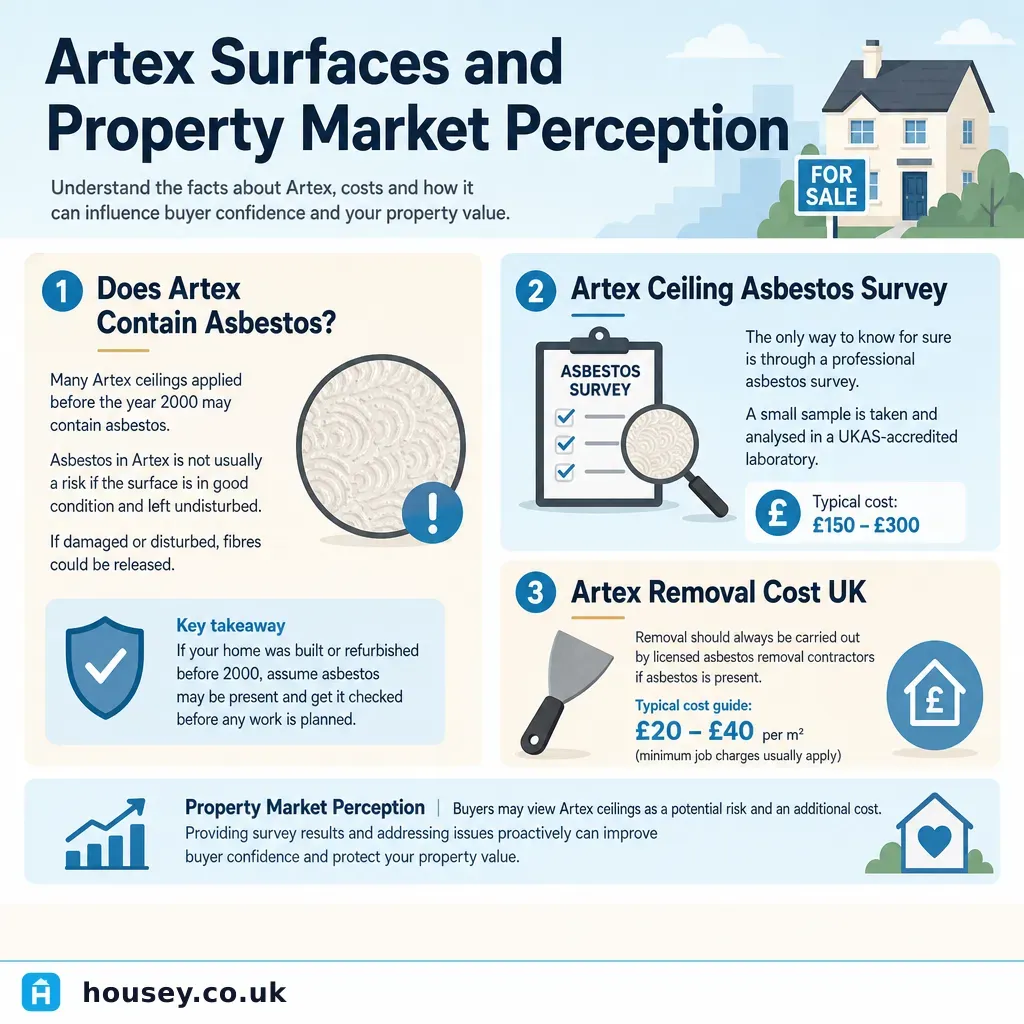
Artex Surfaces and Property Market Perception
Artex applied before 2000 may contain chrysotile asbestos, which is safe when undisturbed but hazardous if sanded or scraped without professional assessment. A RICS survey will typically flag untested textured coatings and recommend specialist sampling. Artex does not automatically reduce a property's value, but confirmed asbestos in poor condition can affect buyer confidence and survey condition ratings.
 Surveys & Inspections
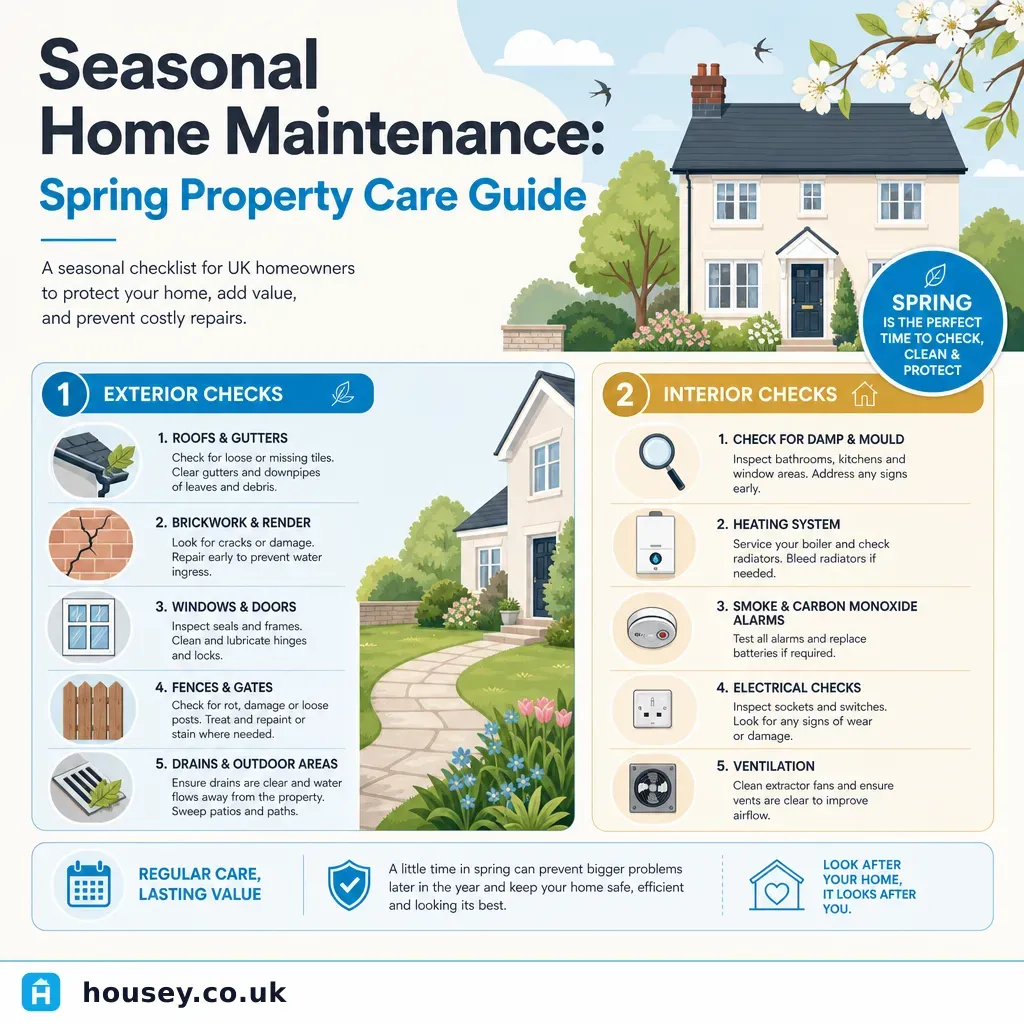
Seasonal Home Maintenance: Spring Property Care Guide
Spring is the best time to inspect your home after winter. Focus on gutters, roof tiles, external pointing, window seals, and drainage. Walk the perimeter of your property on a dry day, note any cracks, damp patches, or displaced materials, and arrange professional help for anything structural or above first-floor level.
 Surveys & Inspections
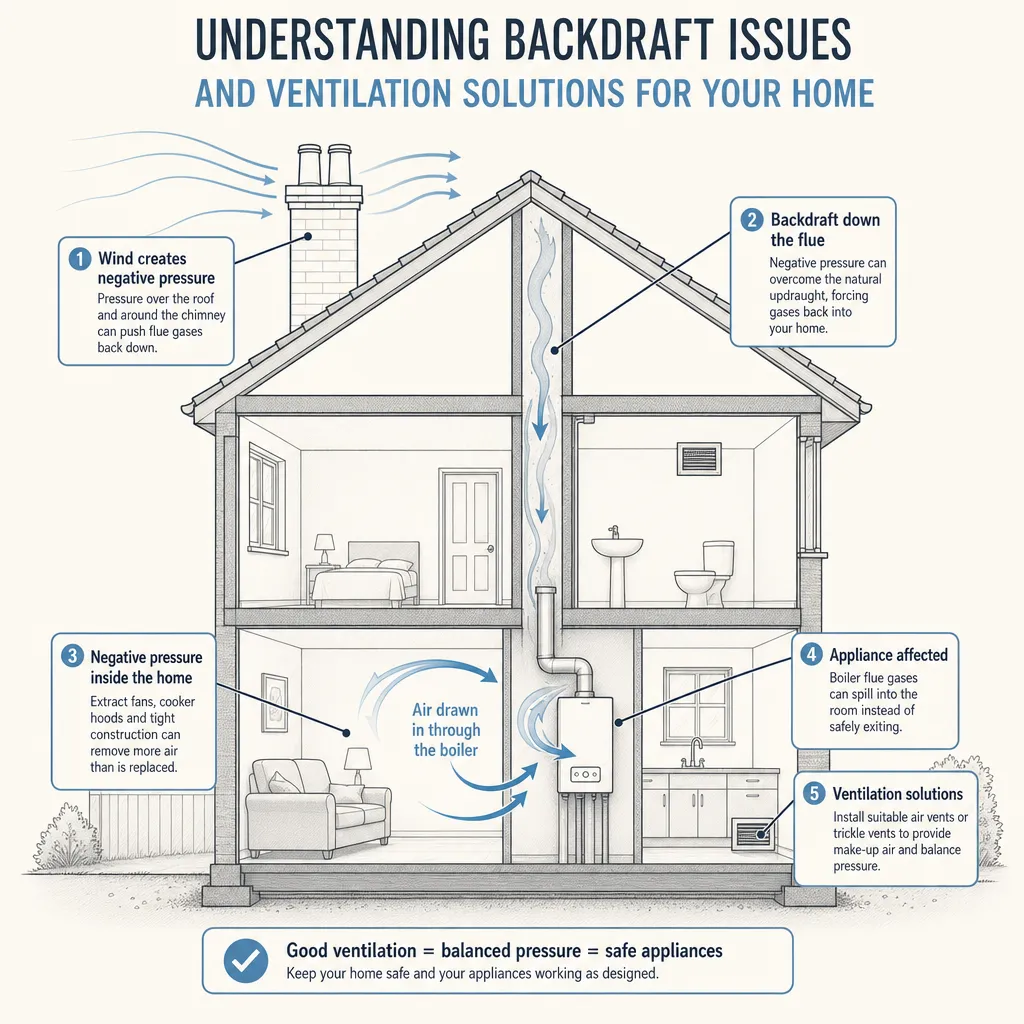
Understanding backdraft issues and ventilation solutions for your home
Backdraft occurs when negative pressure inside a building draws combustion gases back through a flue or chimney instead of expelling them outside. It can cause carbon monoxide build-up, a serious safety risk. Common causes include sealed trickle vents, powerful extractor fans, and blocked flues. A ventilation specialist or HETAS-registered engineer should diagnose and resolve persistent backdraft.
 Surveys & Inspections
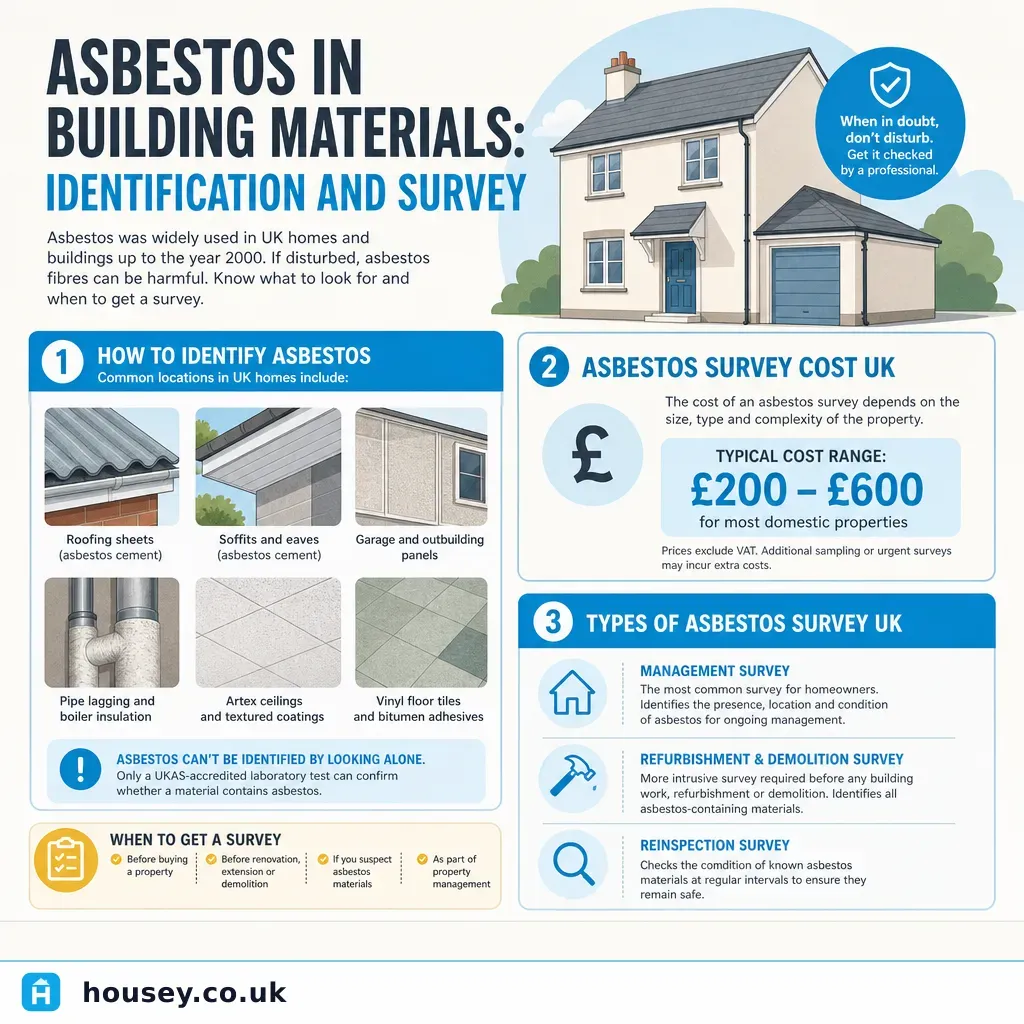
Asbestos in Building Materials: Identification and Survey
Asbestos-containing materials (ACMs) are present in many UK homes built before 2000, including floor tiles, textured coatings such as Artex, roof sheets, pipe lagging, and ceiling tiles. You cannot safely identify asbestos by sight alone — only accredited laboratory analysis of a sample taken by a competent surveyor can confirm presence. If you suspect ACMs, do not disturb them; commission an asbestos survey first.
 Surveys & Inspections
Gas Safety Certificate: What Landlords and Homeowners Need
Landlords in England, Scotland, and Wales must arrange a gas safety check every 12 months by a Gas Safe registered engineer under the Gas Safety (Installation and Use) Regulations 1998. Tenants must receive a copy of the Gas Safety Record (CP12) before moving in or within 28 days of each annual renewal. Homeowners are not legally required to hold one, but an annual check is strongly recommended.
 Surveys & Inspections
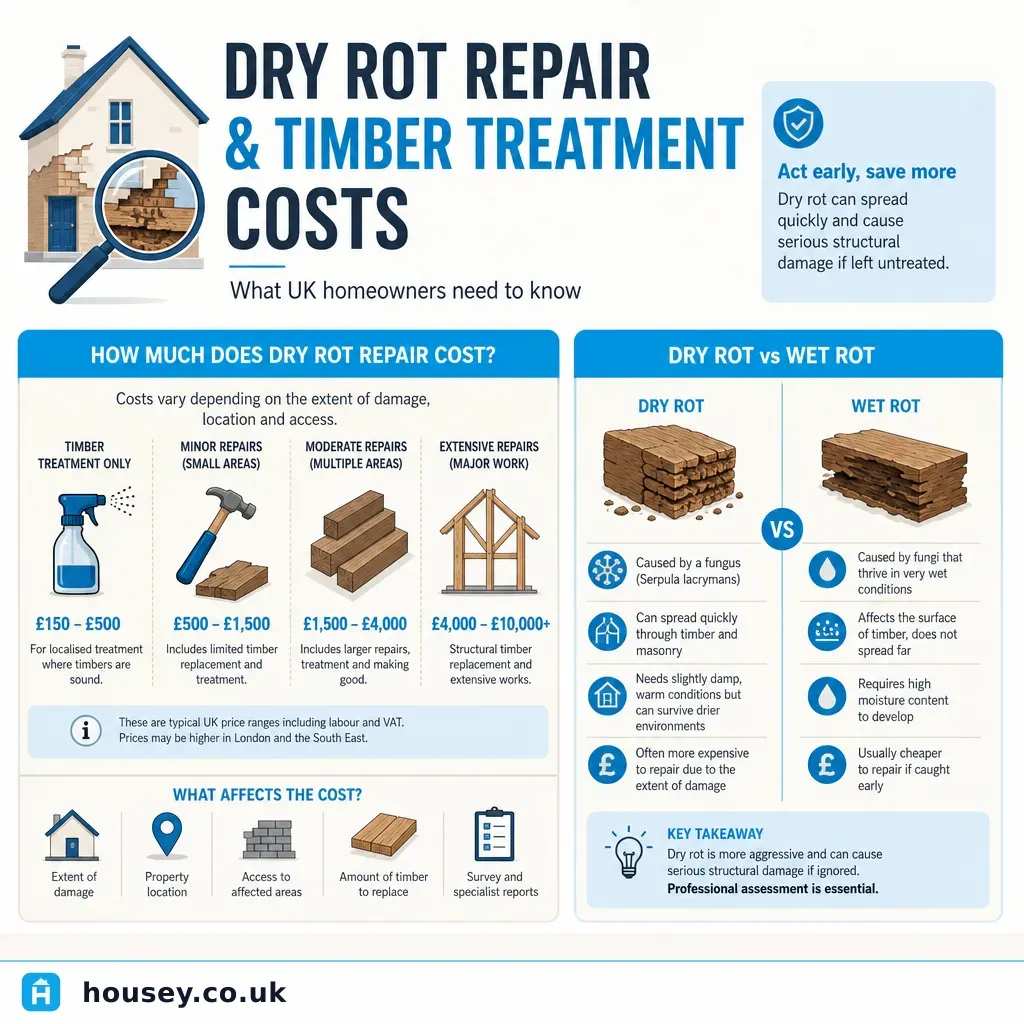
Dry Rot Repair and Timber Treatment Costs
Dry rot repair costs in the UK range from around £500 for a minor localised outbreak to £15,000 or more where structural joists or floors are significantly affected. A professional damp and timber survey should always precede any treatment. Costs vary by extent of damage, masonry involvement, property type, and region.
 Surveys & Inspections
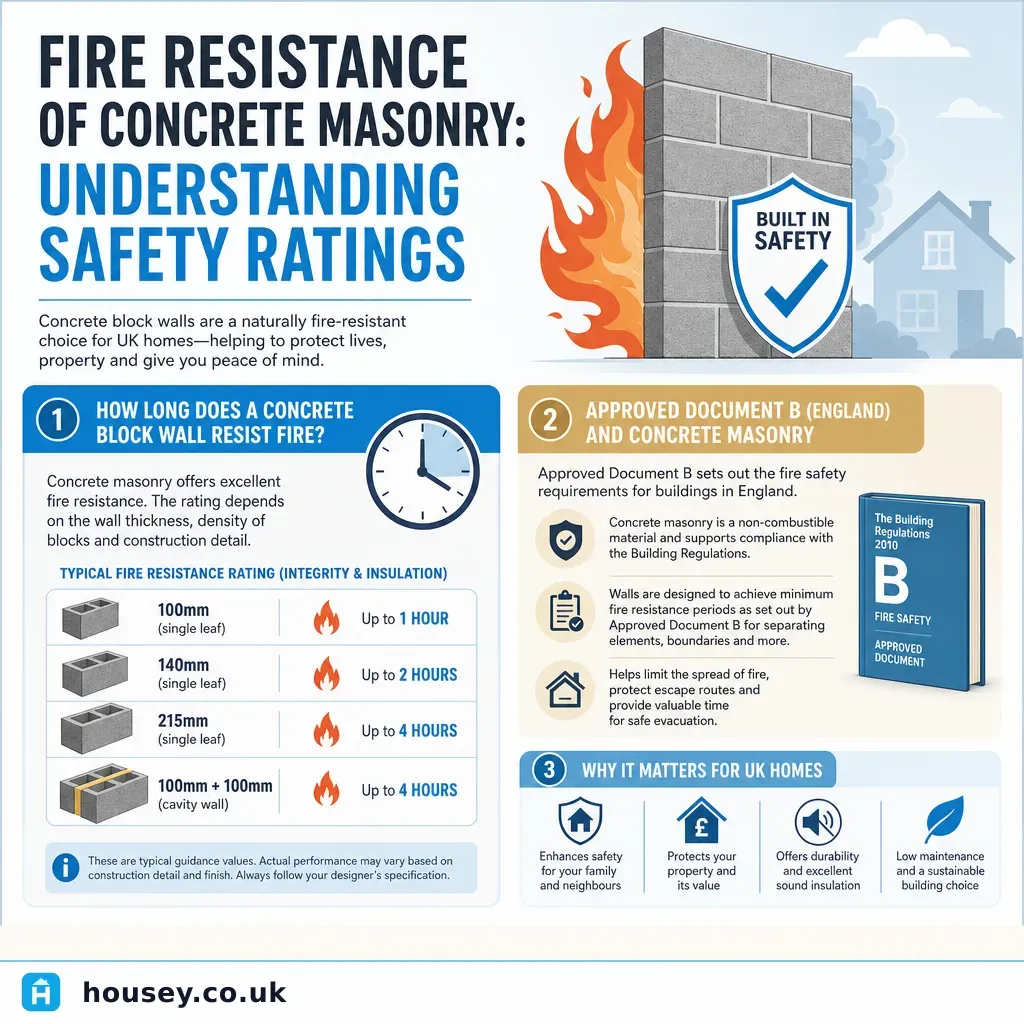
Fire Resistance of Concrete Masonry: Understanding Safety Ratings
Concrete masonry walls typically achieve 60 to 240 minutes of fire resistance depending on thickness, aggregate type, and construction method. Fire resistance is classified using REI criteria per BS EN 1996-1-2, and minimum periods are set by Approved Document B of the Building Regulations for England and Wales.
 Surveys & Inspections
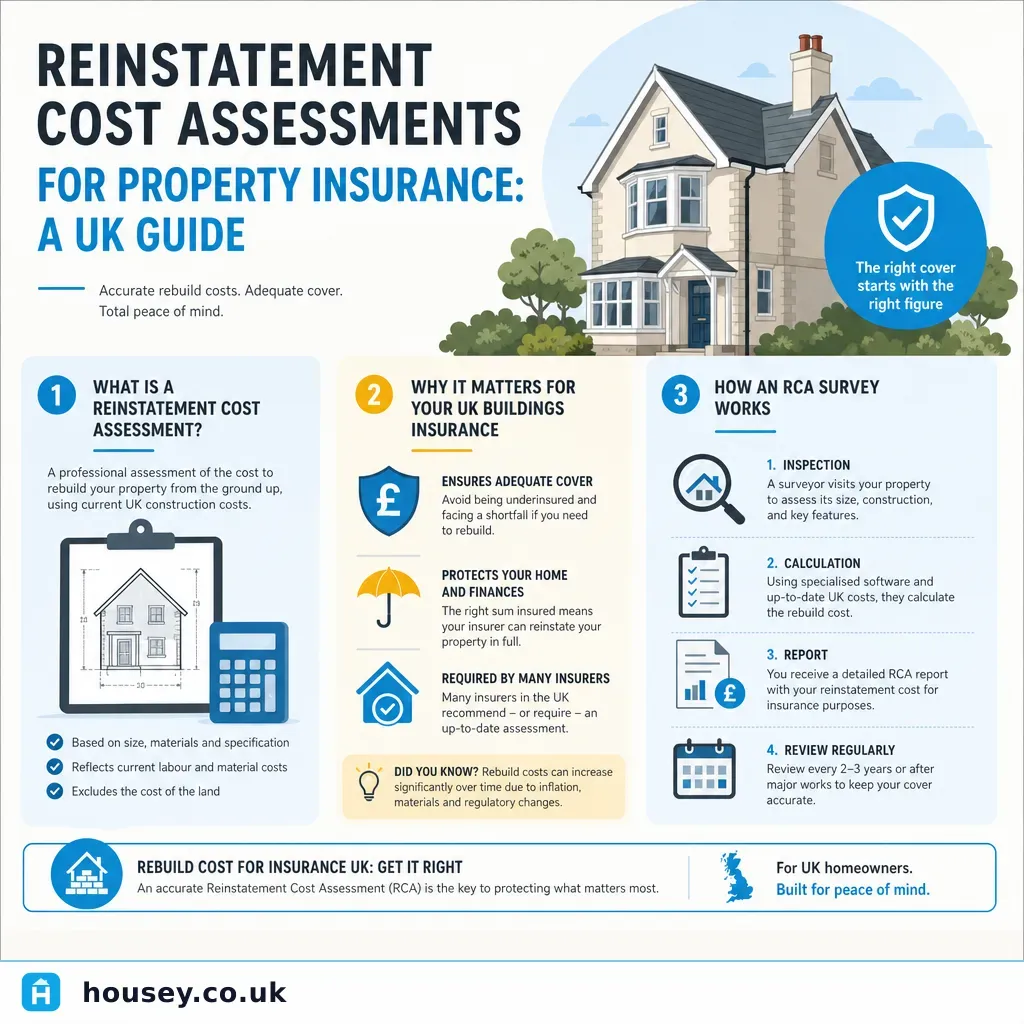
Reinstatement Cost Assessments for Property Insurance: A UK Guide
A reinstatement cost assessment (RCA) estimates what it would cost to completely rebuild your property if it were destroyed. It sets the sum insured on your buildings insurance policy and is not the same as market value. A RICS-accredited surveyor carries out the assessment, which should be reviewed every three to five years or after significant alterations.
 Surveys & Inspections
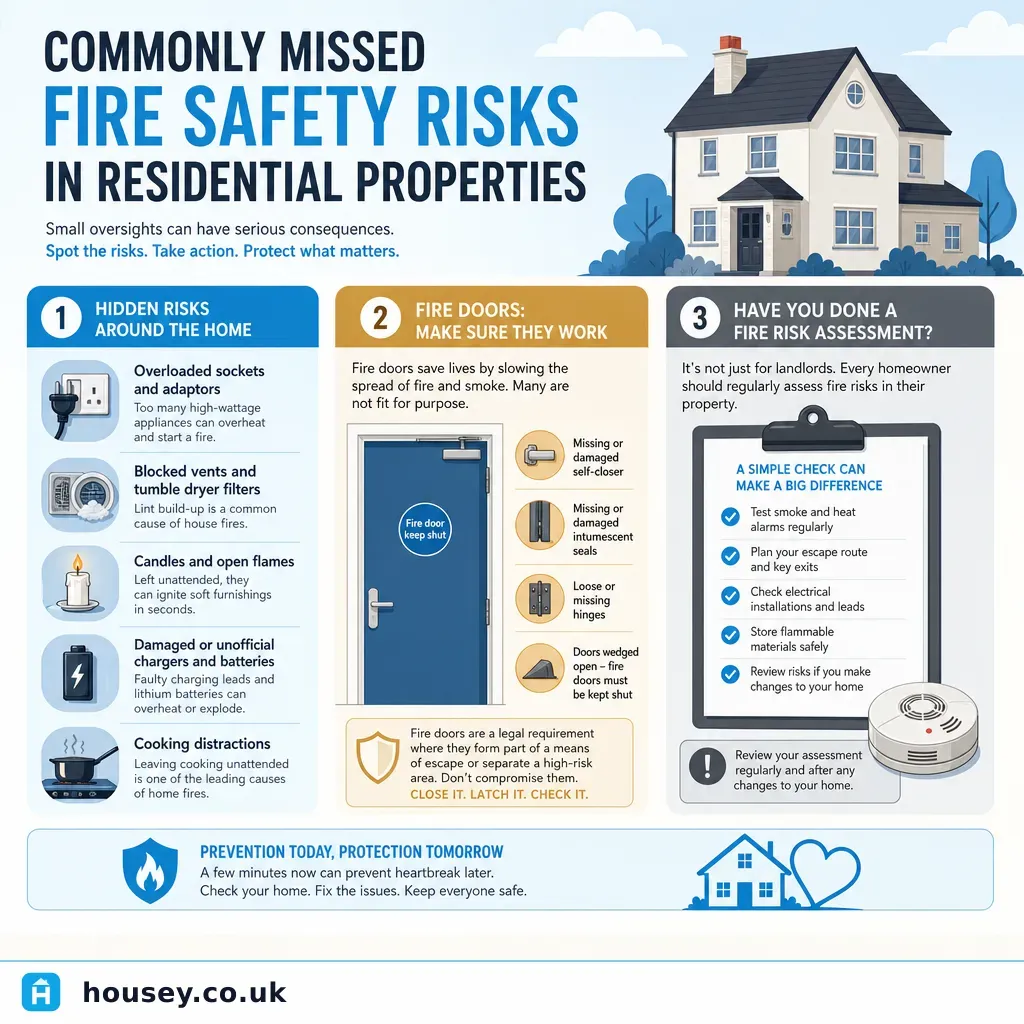
Commonly Missed Fire Safety Risks in Residential Properties
Commonly missed fire safety risks in UK homes include damaged fire doors without intumescent strips, breached compartmentation in roof spaces and floor voids, daisy-chained extension leads, and recessed downlighters without fire-rated covers. These risks often go undetected without a professional inspection and are particularly significant in older converted properties, HMOs, and flats where passive fire protection is critical to safe evacuation.
 Surveys & Inspections
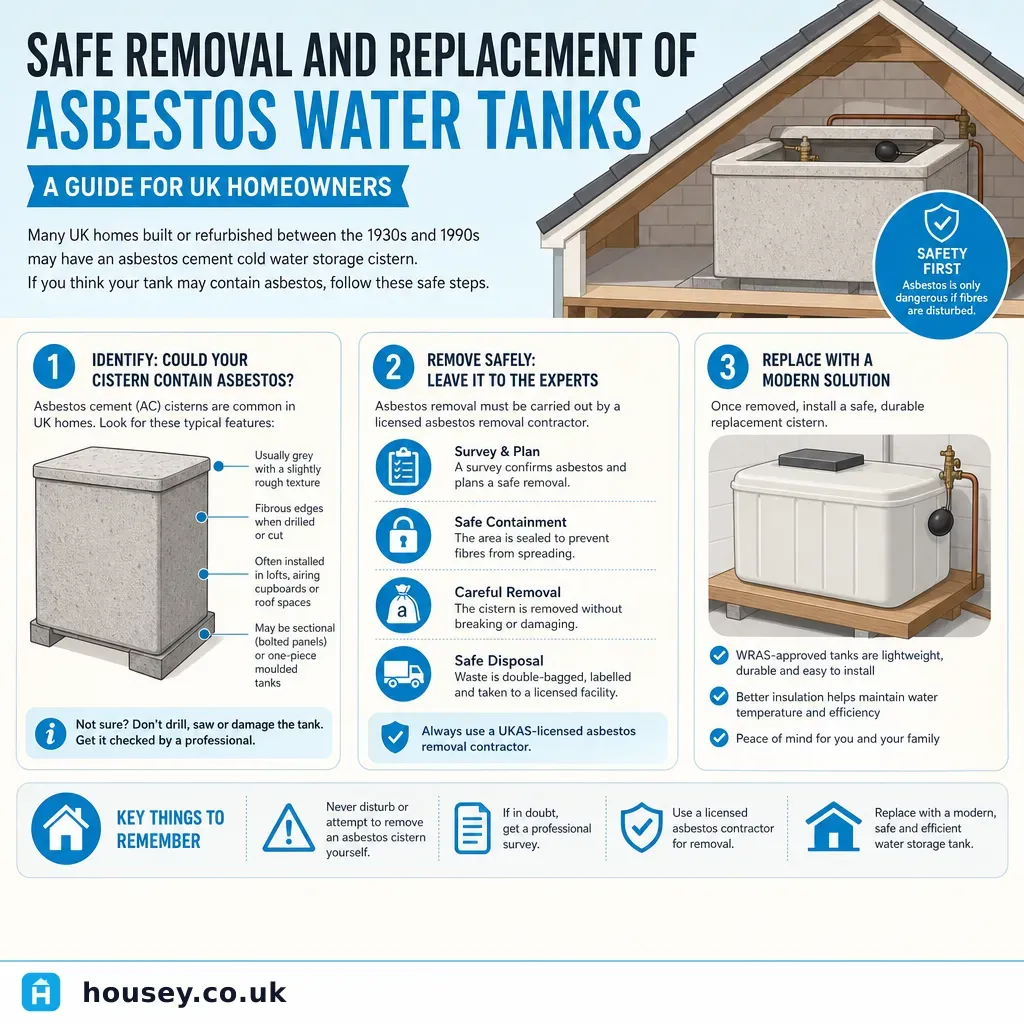
Safe Removal and Replacement of Asbestos Water Tanks
Asbestos cement cold water tanks, found in many UK homes built before about 1980, must not be drilled, cut, or broken without proper controls. Commission a Type 2 asbestos survey to confirm the material, then instruct a competent contractor. All asbestos waste must be disposed of at a licensed hazardous waste facility.
 Surveys & Inspections
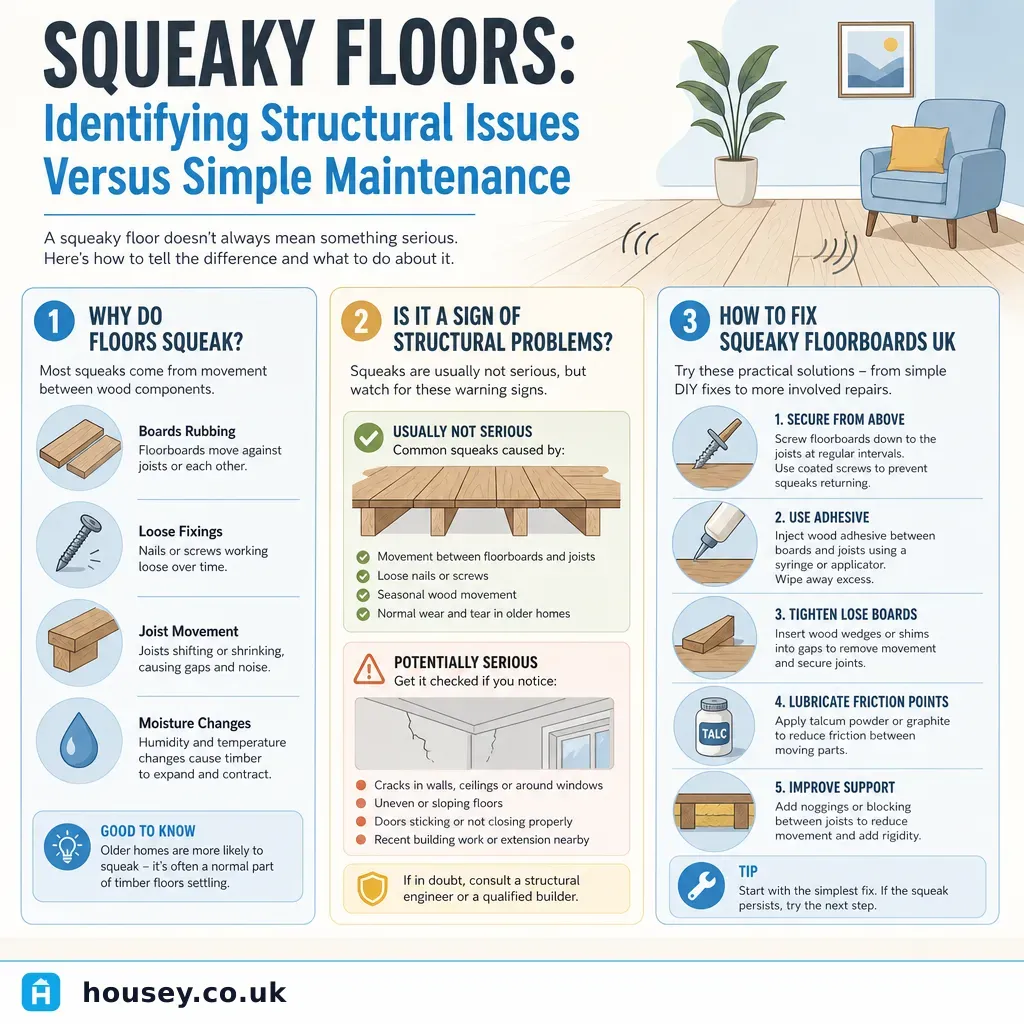
Squeaky Floors: Identifying Structural Issues Versus Simple Maintenance
Most squeaky floors in UK homes are caused by floorboards rubbing against each other or against fixings as they expand and contract — a maintenance issue rather than a structural one. However, squeaks accompanied by visible deflection, soft spots, or a sudden worsening in character can signal joist decay or subfloor failure and warrant a professional inspection.
 Surveys & Inspections
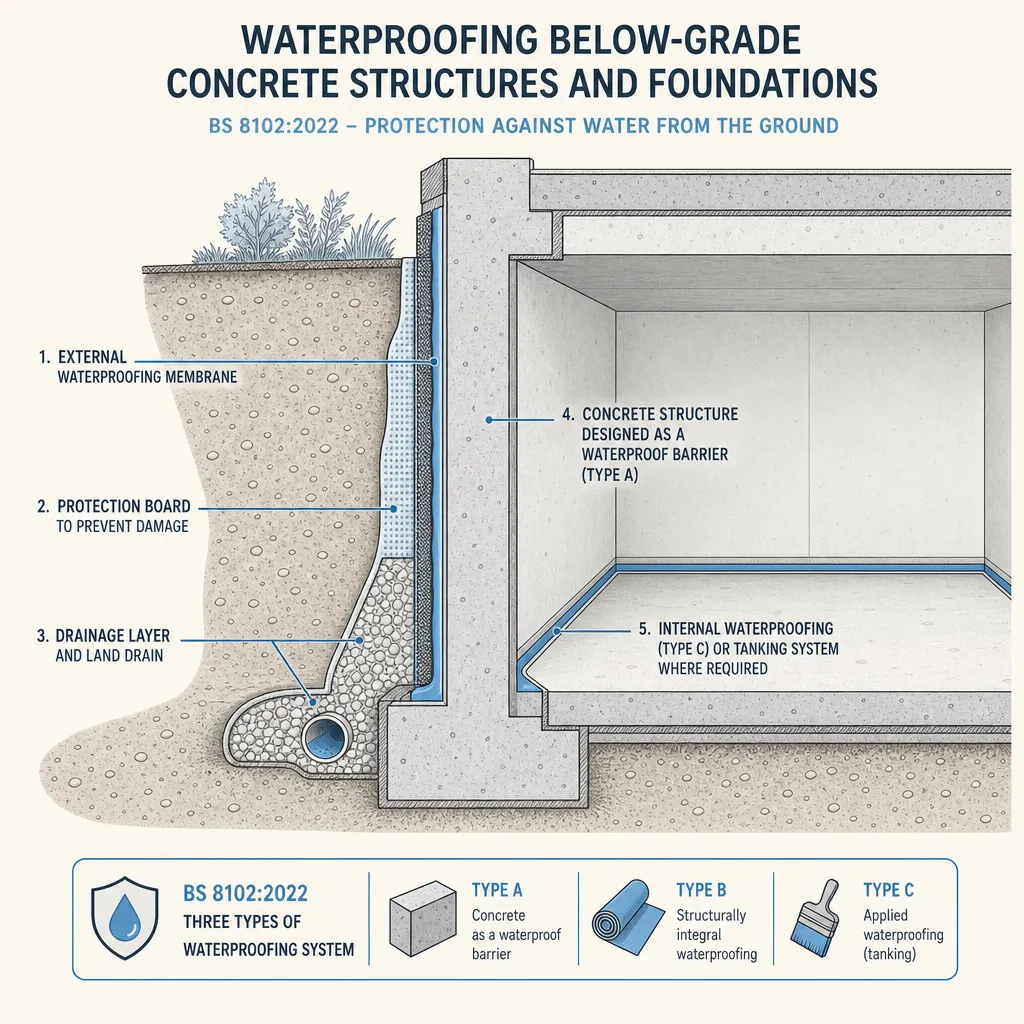
Waterproofing Below-Grade Concrete Structures and Foundations
Below-grade waterproofing in the UK should be designed to the grade of protection required under BS 8102:2022. Three system types exist: Type A (barrier or tanking), Type B (structurally integral concrete), and Type C (cavity drain). For habitable basements, Grade 3 protection is the target, usually achieved using a combination of systems designed by a CSSW-qualified professional.